
Objectives
WP6 brings the project into real communities.
It translates the knowledge gained from the MOOC and training activities into practical fieldwork, enabling students and stakeholders to work on real urban resilience challenges under conflict conditions.
WP6 aims to:
- Implement 40 real-world case studies in Palestine and Ukraine
- Link MOOC learning with hands-on field activities
- Build practical skills in data collection, analysis, and resilience planning
- Ensure all field data follows FAIR principles
- Share findings through reports, webinars, and publications
- Evaluate outcomes to support continuous improvement
Tasks
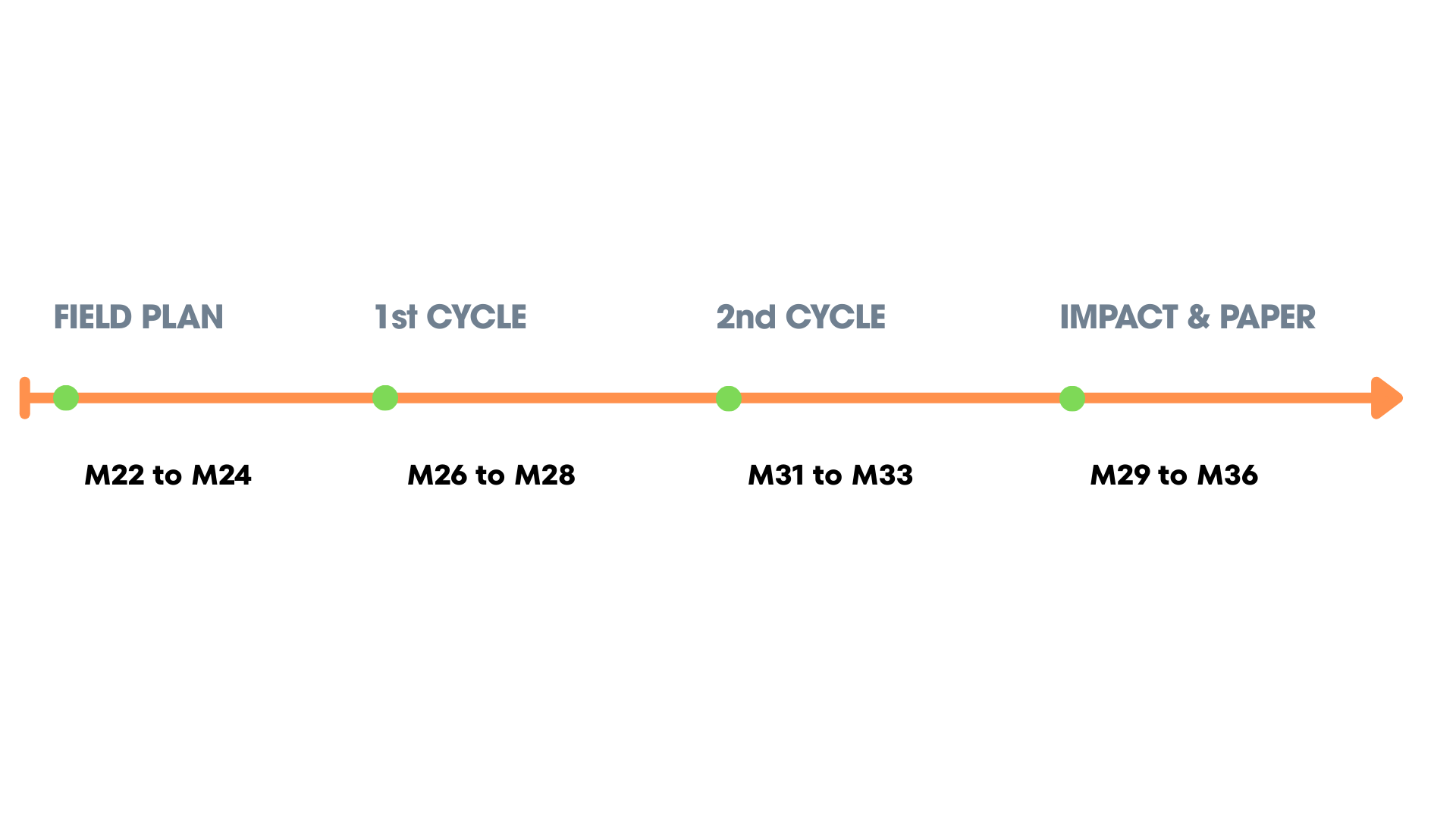
T6.1 – Fieldwork Planning & Stakeholder Engagement
Develop a detailed implementation plan for the case studies, including:
locations, roles, timelines, safety protocols, and engagement with local institutions, municipalities, NGOs, and utilities.
T6.2 – Stakeholder Workshops-3
Four hybrid workshops (two in Palestine, two in Ukraine) introduce the fieldwork phase.
Each workshop hosts ~50 MOOC participants and 30 stakeholders to align expectations, responsibilities, safety, and logistics.
T6.3 – Implement 40 Case Studies
Students carry out case studies in two cycles, each linked directly to the MOOC.
Activities involve data collection, community engagement, and testing local solutions.
T6.4 – FAIR Data Upload to Repository
All field data is structured, documented, and uploaded to the data repository for reuse.
This ensures transparency, continuity, and open access.
T6.5 – Dissemination of Findings
Case study results are summarised in two reports and shared in two public webinars, enabling broad knowledge sharing.
T6.6 – Evaluation of Case Study Outcomes
Surveys and structured feedback evaluate fieldwork impact, learning outcomes, and FAIR compliance, informing improvements.
T6.7 – Academic Publication
Partners prepare a journal article or conference paper reporting findings, methodology, and lessons learned.
T6.8 – Quality Assurance
POLIMI, OsloMet, and all partners conduct QA review of WP6 deliverables.
T6.9 – Dissemination of WP Activities
The project website and social channels promote workshops, reports, and results throughout WP6.
Deliverables
D6.1 – Case Study Reports and Outputs
Two combined reports summarising the 40 case studies, methodology, findings, and supporting data uploaded to the repository.
D6.2 – Webinars & Publication
Two recorded webinars and one peer-reviewed publication based on fieldwork outcomes and best practices.
Timeline