FORWARD is a European cooperation project supporting universities and communities in Palestine and Ukraine affected by war.
It helps higher education and local stakeholders continue learning, research, and resilience-building when campuses, labs, and public systems are damaged or inaccessible.
War disrupts not only buildings, but the ability to learn, collect data, do fieldwork, share knowledge, and support communities at a critical time. FORWARD works to rebuild these connections.

The Challenges
Higher education is one of the sectors most affected by war. When universities lose infrastructure, staff are displaced, and students cannot access classrooms or technology, learning and research are put on hold. In Palestine and Ukraine, this disruption happens at the same time that communities face extreme needs in water, energy, food security, housing, and equity — all areas where universities play a crucial role. FORWARD responds to this reality by ensuring that education and research continue despite crisis.
Universities Challenges
- destroyed or inaccessible classrooms and labs
- unstable internet and limited devices
- interrupted fieldwork and practical training
- loss of supervision and research continuity
- limited access to learning and research resources
Urban Resilience Challenges
- water scarcity
- energy instability
- housing and sheltering crises
- food insecurity
- gender inequalities in access to services
Education, research, and community problem-solving become disconnected—exactly when they are needed most.
FORWARD is designed to rebuild these connections.
Urban Resilience
Urban resilience is essential when communities face severe disruption. It describes how cities and societies adapt to shocks, maintain essential services, and recover sustainably. In war-affected regions, systems like water, energy, housing, and food security become fragile and unequal. FORWARD uses urban resilience as the core lens to connect academic training with real community needs, helping societies rebuild stronger, safer, and more inclusive systems.
In conflict settings, urban resilience matters because:
- basic systems fail: water, food, housing, energy
- vulnerabilities increase, especially for women and children
- communities must adapt quickly to changing risks
- rebuilding must start even while crisis continues
Urban resilience requires:
- interdisciplinary learning, linking engineering, IT, planning, health, and social sciences
- real case studies based on field data
- collaboration across borders and local stakeholders
- evidence-based solutions, not theory alone

In conflict settings, urban resilience matters because:
FORWARD uses practical case studies, co-created with local stakeholders, to test solutions in real contexts.
Open Science

In crisis, knowledge can become fragmented: access to data is limited, collaboration stops, and local stakeholders work in isolation. Open Science solves this by enabling transparent, accessible, and ethical sharing of knowledge. By using FAIR and CARE principles, FORWARD ensures that data collected from communities is usable, respectful, and shared responsibly. Open science becomes a bridge between universities and communities, even when physical infrastructure is lost.
Open science helps overcome this by promoting:
- accessible knowledge for all actors
- shared methods and datasets
- collaboration despite damaged campuses
- trust and transparency
- community participation
FORWARD uses FAIR principles (Findable, Accessible, Interoperable, Reusable) to structure data so it can be reused across sectors, and CARE principles (Collective benefit, Authority, Responsibility, Ethics) to protect the rights of communities.
In war contexts, open science is not only a research model— it is a lifeline for continuity and inclusion.
War Regions Needs
FORWARD operates in regions where higher education and community systems face severe disruption due to war, primarily Palestine (Gaza and the West Bank) and Ukraine. Local universities, municipalities, NGOs, and community groups work together with European partners to co-develop case studies, share data, and strengthen resilience from within the affected communities.
Palestine
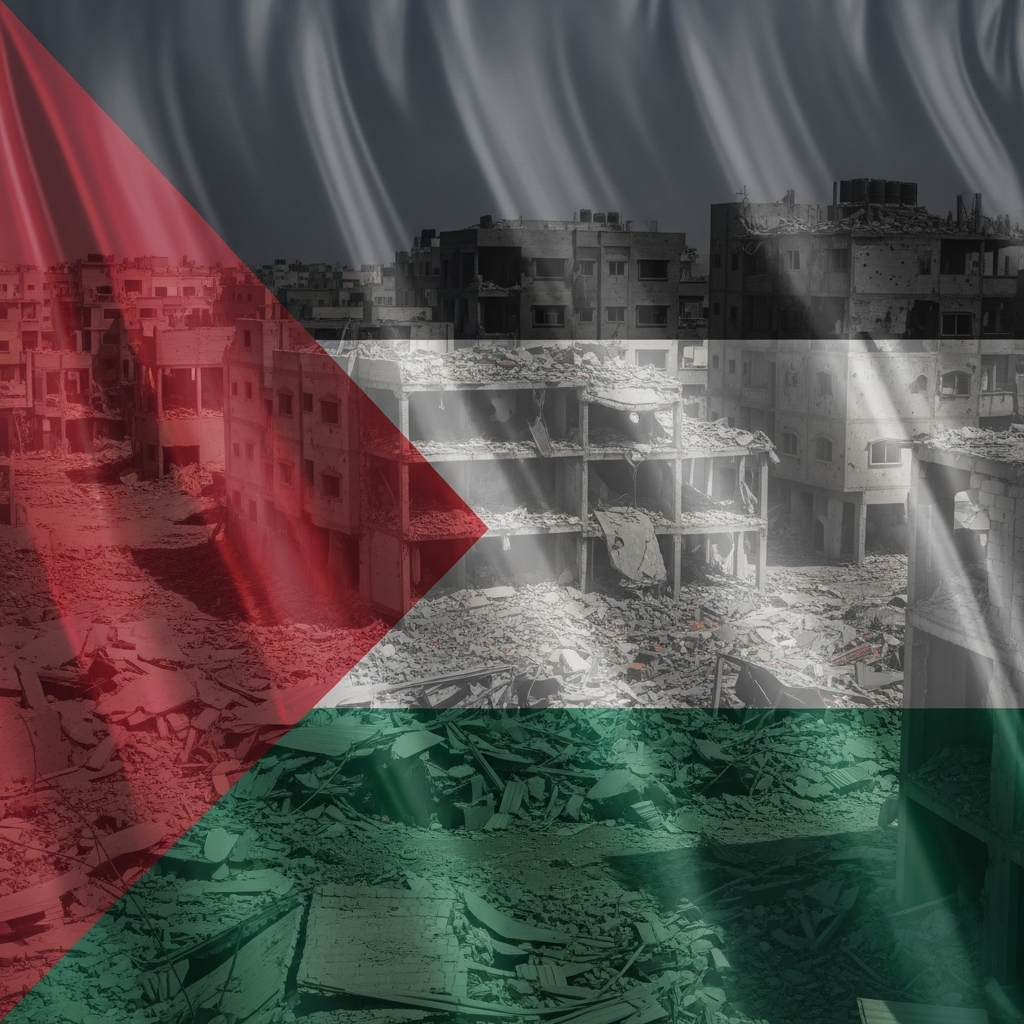
Universities and communities face:
- severe urban infrastructure damage
- limited access to water, energy, and housing
- lack of data for decision-making
- barriers for women and marginalized groups
Local universities report urgent needs for:
- digital recovery, FAIR data skills
- resilience-focused curricula
- stakeholder engagement
- recovery strategies for water and energy systems
FORWARD responds by building skills, tools, and knowledge exchange.
Ukraine
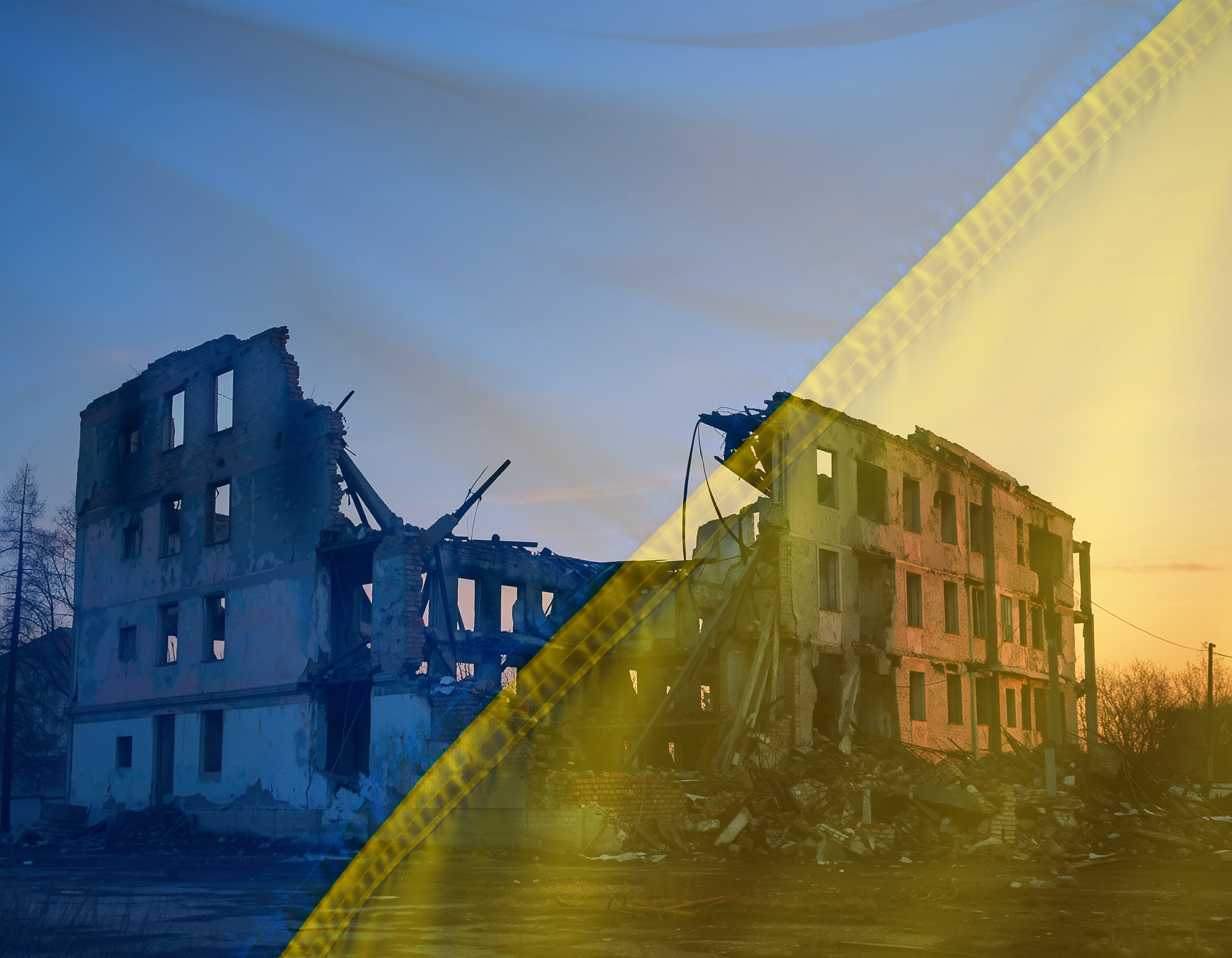
War has disrupted higher education and essential systems:
- damaged infrastructure, blackout risks
- disrupted data collection and sharing
- food systems under pressure
- gender inequalities deepening
Universities request strong capacity-building, especially in:
- FAIR data sharing
- GIS, AI, and digital tools
- community-focused fieldwork
- gender-sensitive approaches
FORWARD creates opportunities for joint learning between regions.
Project Objectives
1 — Rebuild Higher Education in War Contexts
Ensure continuity of learning and research.
2 — Improve Digital Access and Tools
Cloud platform, repository, devices for training.
3 — Promote Open Science & Ethical Data
FAIR + CARE principles embedded in training.
5 — Promote Equity & Gender Inclusion
Gender-sensitive design in all modules.
6 — Build Long-Term Capacity
Train-the-Trainer approach, curriculum integration.
7 — Foster Collaboration and Knowledge Sharing
Active stakeholder network, and collaborative events and exchanges.
FORWARD is designed around a set of strategic objectives that rebuild higher education capacity, support open science practices, and address urgent urban resilience needs in war-affected regions. Each objective connects directly to transforming learning, data, and community engagement into practical outcomes for students, universities, and local partners.
FORWARD Approach
FORWARD uses an interdisciplinary, participatory, open science-driven approach. It works through a step-by-step model that connects digital infrastructure, practical training, and real-world fieldwork. The project begins by identifying local needs and priorities in Palestine and Ukraine, then builds a shared cloud platform that hosts open training modules, a FAIR data repository, and interactive tools. Students and staff learn through six modules and a MOOC that combine open science with urban resilience themes. They then apply these skills in 40 real case studies, working with communities to collect data, analyze challenges, and design solutions. A train-the-trainer approach, stakeholder workshops, and integration into university curricula ensure that knowledge stays in the region, strengthens institutions, and continues beyond the project. By linking online learning, open science, and community-based fieldwork, FORWARD helps education and research continue even during war.
Background Context
Universities in Palestine and Ukraine face severe disruption due to war: damaged campuses, displaced students and faculty, unstable internet, limited access to labs and equipment, and almost no opportunity for practical training. At the same time, communities must solve urgent urban resilience challenges in water, energy, food security, housing, and gender equity.
FORWARD is built directly on priorities expressed by universities, municipalities, civil society, and international assessments. It responds to a shared need for:
- digital access during crisis,
- open and ethical data management,
- practical case-based learning,
- fieldwork linked to real needs, and
- resilience-focused curricula.
The project uses this context not only as a challenge, but as a starting point for building long-term capacity in higher education and community resilience.
Methodology
FORWARD combines digital infrastructure, open science, training modules, and real-world fieldwork into one integrated methodology.
Our approach is built on four connected pillars:
- Cloud-Based Infrastructure:
A shared platform hosting a FAIR-compliant data repository, e-learning environment, and VR tools to support learning when campuses are damaged or unsafe. - Open Science & FAIR/CARE Practices:
Training materials and fieldwork data follow FAIR principles to ensure data is usable and reusable, while CARE ensures ethical protection of community knowledge in crisis contexts. - Training & OER/MOOCs:
Six modules (Open Science + Water, Energy, Food Security, Housing, Gender Equity) are developed collaboratively, transformed into OERs and a MOOC, and integrated into local curricula. - Fieldwork Case Studies:
40 case studies connect theory to practice, allowing students to collect data, work with communities, upload datasets to the repository, and co-develop resilience solutions.
Main Activities and Results
FORWARD turns education and research into tools for resilience during war. The project builds digital infrastructure, develops open urban resilience training modules, and implements real fieldwork case studies in partnership with local communities. By combining online learning with practical action, FORWARD helps universities remain active centers of knowledge, even when campuses are disrupted.
FORWARD creates a practical and ethical learning ecosystem that combines:
- cloud-based digital infrastructure
- six training modules (Open Science + five urban resilience themes)
- a MOOC and open educational resources
- 40 real case studies in Palestine and Ukraine
- FAIR data repository and open sharing
- VR-based simulations
- fieldwork linked to online learning
Students and staff learn resilience by doing, not only theory, and communities benefit from data-driven local solutions.
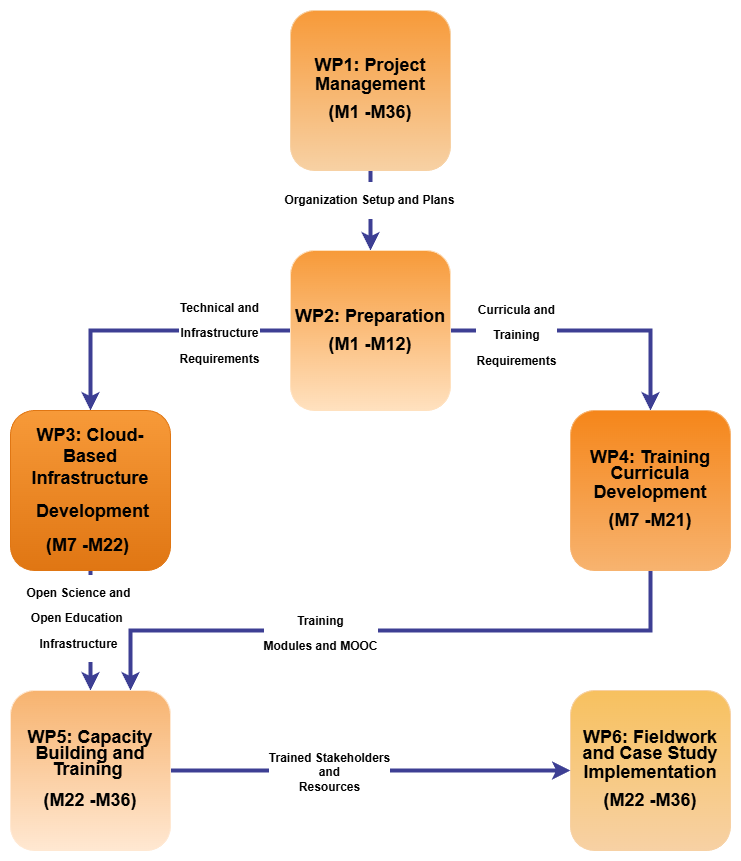
Work Packages
WP1 – Project Management (M1–M36)
Coordination, planning, QA, kick-off and final events.
WP2 – Preparation (M1–M12)
Website, FAIR competency assessment, prioritizing cases, procurement.
WP3 – Cloud-Based Infrastructure Development (M7–M22)
Cloud platform, data repository, VR/AI tools, sustainability plan.
WP4 – Training Curricula Development (M7–M21)
Six modules, OERs, MOOCs, case studies, curriculum integration.
WP5 – Capacity Building and Training (M22–M36)
Train-the-Trainer, MOOCs for 200+ learners, stakeholder network.
WP6 – Fieldwork and Case Study Implementation (M22–M36)
40 case studies, FAIR data upload, webinars, publications.