

B3 research notes · Life cycle assessment
Assessing an existing structure starts with a practical question: what is actually there? Laser scanning and BIM can improve the documentation of geometry and quantities. Life cycle assessment and cost analysis can then connect this information with decisions about materials and interventions.
Document the information chain
A scan-to-BIM workflow connects field observations, point clouds, model geometry and quantities. Each step contains assumptions. Recording them makes it easier to understand which parts of a comparison follow from measurements and which depend on interpretation or scenario choices.
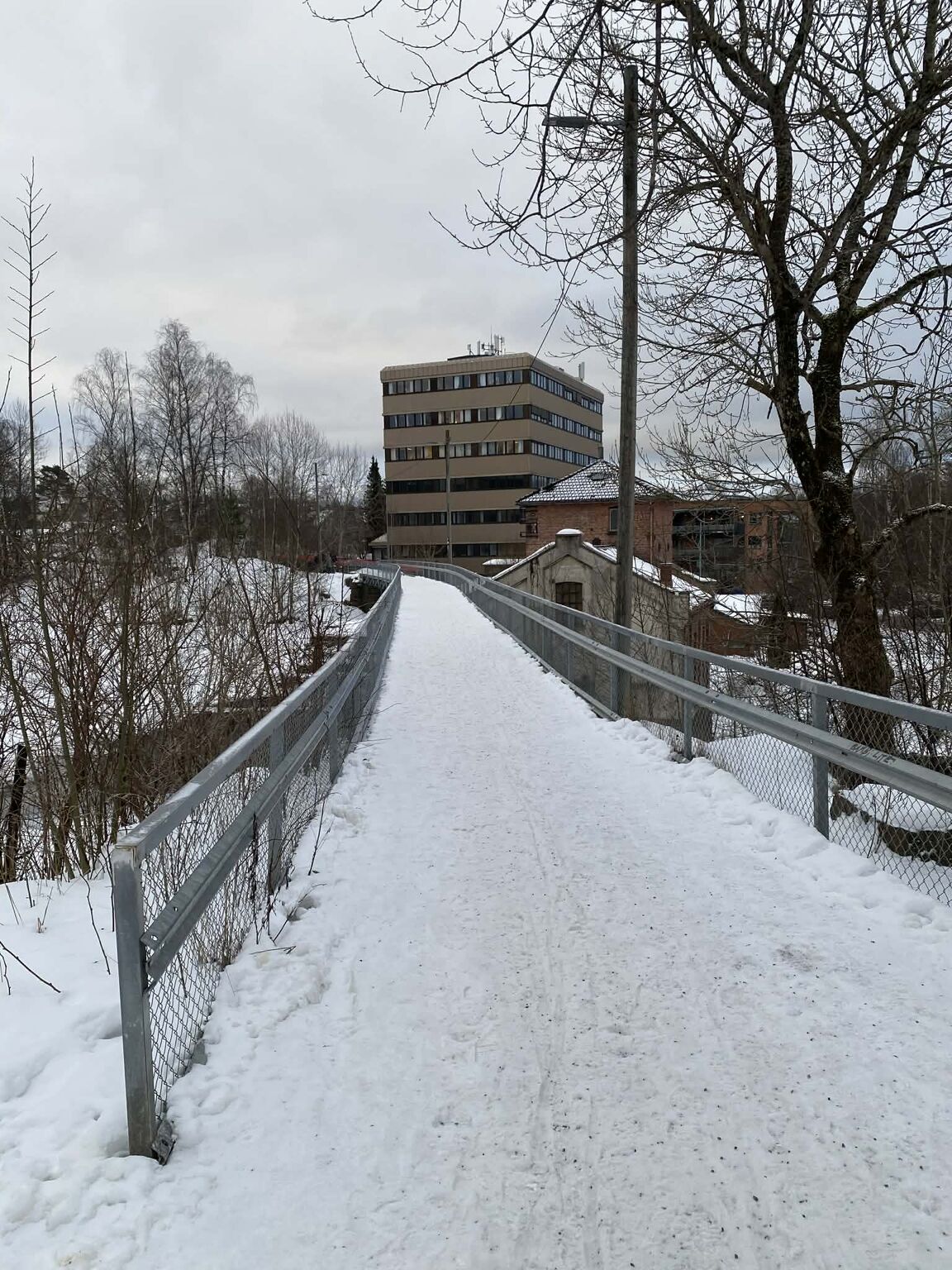
Moa Khair, Rojan Gilo Barkal and Haidar Hosamo investigate carbon and cost screening of existing pedestrian bridges through an auditable scan-to-BIM-to-LCA/LCC workflow. The research connects a master’s case study with a publication in Results in Engineering.
Use scenarios to support decisions
A material comparison requires a clear scope, consistent functional requirements and transparent assumptions about service life and maintenance. Sensitivity analysis helps explain where a conclusion depends on uncertain inputs.
Digital documentation supports the comparison. Engineering judgement is still needed to evaluate the suitability of an intervention for the existing structure.
Read the research
Peer-reviewed bridge carbon and cost study in Results in Engineering