Previous semesters 2025-2026
2025 Spring
Project 1: Design a proof-of-concept for an electronic surfboard with a lifting-foil
Design a proof-of-concept for an electronic surfboard with a lifting-foil — e-foil surfing.
These systems have propulsion and a lifting-foil (or foils) below the surface, and a board with batteries and controllers above water. When in use, the lifting-foil will ensure that the board is lifted free of the water.
Commercial systems that can be used for surfing exists. Your challenge is to create a proof-of-concept for an e-foil surfer that can be built with commercially available components.
Another group has already created a very simple proof-of-concept. We need an ambitious and hard-working group to take it further.
Supervisor: Professor Vahid Hassani.
Project 2: Design and construction of a wind tunnel force balance
OsloMet has acquired an open-circuit low-speed wind tunnel for which we seek a force balance for educational projects.
The objective of this project is to design and build a force balance system for a wind tunnel that measures at least the time-averaged lift and drag forces on various aerodynamic and bluff bodies. If possible, also the pitching moments could be included.
The motivation is to design and build a low-cost force balance with a user-friendly interface for calibration and display of the measured values.
Skills wanted within the group: Mechanical and electronic knowledge. Some programming/ scripting knowledge. Knowledge about design will be useful.
Supervisor: Professor Ramis Örlü.
Project 3: Virtual horticultural health companion
Self-contained, compact system for growing plants on a small scale in a small apartment setting with LLM and therapeutic light system integration.
The system must fit on top of a chest of drawers or similar. It should include automated grow light and watering system and a timed therapy light to combat Seasonal Affective Disorder (SAD).
In addition, there should be a speech based LLM to function as personal companion. This LLM should be given a «personality» related to the system.
The supervisor can provide further details, and suggests that competencies from industrial design, computer science, and electrical and mechanical engineering will prove useful.
Keywords: CAD, 3Dprinting, Physical prototyping, local LLM, Raspberry Pi, Arduino, User testing, Mental Health, Isolation/loneliness, Horticulture, Therapy light, Image analysis, System integration, Hydroponics.
Supervisor: Engineer Mikael Omlid.
Project 4: Resurrect Pepper the robot
Your goal is to create an artificial host for the Department of Computer Science able to receive guests, answer questions and give a guided tour of the main activities in the department, especially the AI Lab.
To that end you will use a robotic platform called Pepper, a remnant of early, user-friendly, humanoid robots. But here is the challenge: our Pepper robot may be beyond all hope!
Your task is to make one last attempt to resurrect Pepper! Or decide that its time has come. In that case we can use a cluster of Raspberry pi’s to create a virtual host leveraging the most advanced tech in Natural Language Processing, Large Language Models and Agentic AI, you will tell us! Something related is done Fall 2024.
Supervisor: Associate Professor Gustavo Borges Moreno e Mello.
Project 5: Portable renewable energy station
Design and build of a portable renewable energy station for remote communities.
The community has to be identified in the first instance. Once this has been done, the requirements of end users have to quantified.
Once this is achieved a comprehensive research exercise has to be undertaken to access the potential energy source, their uses and how the station can be utilised to benefit the community.
Analysis will have to be carried out on sources, load, consumption, design (employment and transport), energy storage and a cost analysis.
Supervisor: Associate Professor Andrew Quinn, Glasgow Caledonian University.
2025 Autumn
Project 1 & 2: sensory-brain mechanism
Humans’ ability to keep their balance upright during bipedal locomotion is unique because the human body’s anatomy contradicts basic principles for stability. The brain plays a central role in processing and interpreting the sensory information from the environment (proprioception), which is reflected in controlling the motor system.
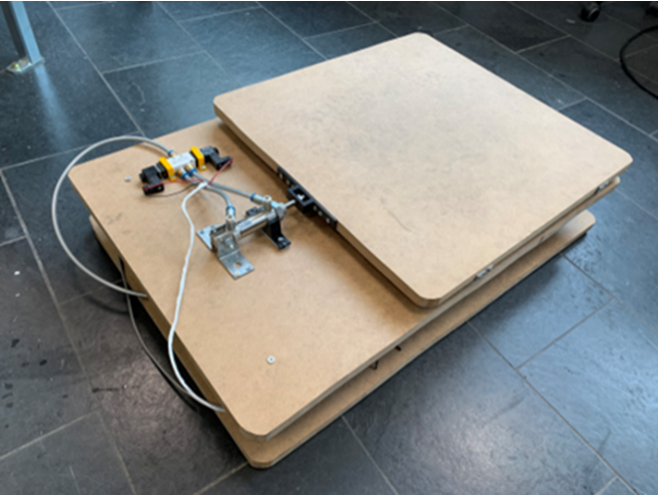
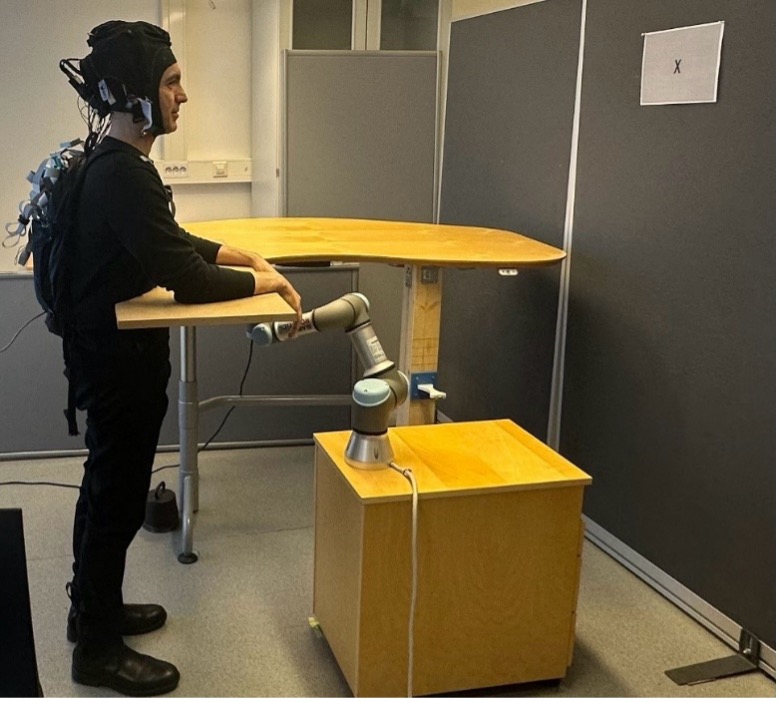
Cutaneous feedback is one of the sensory sources that provides sensation about the body’s stability, boundaries, and orientation relative to the environment, which is fundamental for balance and our interactions in any environment. The behavior of the mechanoreceptors is investigated by an experiment at the ADEPT lab ( MEK, OsloMET), and previous EPS groups (over several semesters, see the image below) have made a customised platform that induces mechanical stimuli on the soles of the participants’ feet and hands. We also use robots for a repeating pattern, but in a different condition (not loaded tissue).
The neural activity is assessed indirectly with a Laser Doppler Flowmetry (LDF) instrument that measures blood perfusion. A wavelet analysis analyses the required data in time, frequency, and time-and-frequency domains. At the current time, our experimental setup needs to be updated in order to go any further with such a setup.
Supervisor: Professor Peyman Mirtaheri
Project group 1:
The platform has been made with modules that may change the angle of the calcaneus bone to make shear forces with certain pronation angles. However, the movements are made roughly and the platform is too unstable to stimulate the skin. In addition, the platform has a larger range of motion, which will apply the forces on the ankle rather than the heel’s skin.
One possible suggestion would be to limit the range of motion or make the motion with 3D-printed gears (we have a 3D printing lab at MEK) that change the speed of the existing pneumatic actuators. The idea was also to add a vibrotactile tactors in addition to sudden shear forces to compare the results.
In this setting, a group of at least 4 people is needed. No neuroscience background is needed, however, background in mechnical engineering and electrical engineering would be helpful to counter this project.
For project group 2:
The lateralisation index is a measure used to quantify the degree of asymmetry in brain activity between the left and right hemispheres. It is often calculated by comparing the power or energy consumption in corresponding regions of the two hemispheres during specific tasks or stimuli. This index helps in understanding how different brain regions contribute to various cognitive and sensory processes, and can be particularly useful in studies involving brain modalities like EEG and fNIRS. We have made several measurements and have a database with data representing such a hybrid modality, however, there is a lack of knowledge and a pipeline to produce a true hybrid between these modalities.
This project focuses on energy consumption and power dissemination in different brain regions with respect to the lateralisation index concept. Thus, the project must focus on a pipeline to manage and analyse the existing data. This pipeline should include steps for preprocessing and data fusion approaches to simplify the interpretation of complex brain activity data. Hopefully, through this project, it will be possible to present a new approach to the lateralisation index focusing on the energy consumption/power dissipation parameter. It is advantageous to have computer science students in this project.
Project 3: Visualising how data flows through smart devices in the connected home
Many homes today are equipped with a vide variety of “smart” or connected technologies such as smart fridges, energy meters, robot vacuum cleaners, doorbells, and baby monitors. However, most users have only limited knowledge about how big data flows through these devices and other connected networks and infrastructures in and out of the home. Make a proof of concept of an interactive visualisation tool/system that can 1) help users to understand how data “travels” in and out of the home through smart devices, and 2) act to gain better control over privacy and data security in the home.
Supervisor: Researcher Henry Nsaidzeka Mainsah
Project 4: Automated Modular Pallet-Based Mini Greenhouse
The goal of this project is to develop a fully automated, modular mini greenhouse utilising standard EUR/EPAL pallets and pallet collars. The greenhouse system should automate essential horticultural tasks, including watering, fertilising, temperature regulation, sunlight/shade management, and the removal of leaf litter and debris. The solution must integrate environmental sensors and cameras to enable monitoring and control. The system should be modular, allowing growers to easily scale by connecting additional pallet-based greenhouse modules
Design Requirements:
- Base Platform should be standard EUR/EPAL pallets (1200 mm x 800 mm) with pallet collars for modular scalability.
- Automated irrigation, fertilisation, climate control (temperature and ventilation), adjustable shading/supplemental lighting, and automatic debris management.
- Monitoring should include integration of environmental sensors (moisture, temperature, humidity, nutrient levels) and cameras for remote monitoring.
- Operation Modes should be designed for both grid-connected setups (mains power and water supply) and off-grid scenarios (solar power, battery storage, rainwater harvesting).
- User Interface should be simple and intuitive controls for user interaction and data review (local panel or remote via app/web interface).
One or more days most weeks should be planned for work at second campus, outside city centre. Accessed by free shuttle bus.
Supervisor: Engineer Tore Mikael Omlid
Project 5: Set the virtual table: Using Mixed Reality to create an enjoyable dining environment for hospital patients
According to both Norwegian and international studies around 30% of adult hospitalised patients are at risk of suffering from undernutrition after hospitalisation. Enjoyable dining environments can improve food intake and patients’ well-being and recovery. Mixed Reality (MR) is increasingly used in patient care. Improving the dining environment of hospitalised patients is a potential area of application of MR. This study aims to develop a MR application to create an enjoyable dining environment and evaluate the users’ acceptability and perceived utility of this application.
We will investigate which VR/ MR technologies are suitable for this setting. Students are allowed to loan the VR glasses and/or MR headsets like HoloLens (those are already available in OsloMet) when working on this project. At the current stage, we are not evaluating with real patients. So we can test with almost anyone, with role-playing.
Desired competencies: Developing VR/ MR environment, background in VR/MR in general, user testing.
Supervisor: Associate professor Way Kiat Bong and associate professor Antonio Padilha Lanari Bo.
Project 6: Promoting Gender Inclusive Innovation Ecosystems
Are you passionate about innovation in your chosen field of study? Subject-experts wanted to help us understand gender inequality in technical disciplines. Why? For the sake of sustainable and impactful innovation! Innovation is believed to be the sine quo non of significant wealth generation in an economy. Gender inequality in innovation has profound negative implications both from an economic and a sociopolitical point of view.
Any ecosystem in which ideas develop and are implemented, should have gender inclusive characteristics that are enduring. The process of innovation, and the products and services which evolve from it, should integrate gender and diversity to reflect the pluralism and intersectional identities present in all societies.
Little is known about how gender inequalities germinate and how to combat them. This research proposes an anthropological approach to examining why gender inequality persists and the means via which gender-balanced innovation ecosystems, which are key to achieving sustainable development, may be promoted.
Interviews will be conducted in distinct innovation ecosystem sectors, such as technology, construction etc, to ascertain how the actors perceive the state of gender equity in their ecosystem. Factors which inhibit or promote gender equity will also be researched. The end product will be a body of work which explores, from an empirical standpoint, the requirements for establishing gender inclusive innovation ecosystems.
Desired competencies:
This project is at the intersection of innovation, sociology, technology, gender, diversity, equity and development studies. A key requirement is hence a healthy interest in the above fields and a passion for promoting justice and equality!
Supervisor: PhD Candidate Ayanna T. Samuels
Project 7: Continue «Portable power unit» from last semester
The brief last semester was: «Design and build of a portable renewable energy station for remote communities. … a comprehensive research exercise has to be undertaken to access the potential energy source, their uses and how the station can be utilised to benefit the community.»
The group focused on nomads in Mongolia. Their report will be available, as will a variety of components. A more specific brief will be available soon.
Supervisor: Associate Professor Andrew Quinn, Glasgow Caledonian University.
2026 Spring
Project 1: Participatory Design for social robots for hospitalised children
(Please check pictures from the previous «Teddy» project at the bottom of this page: https://uni.oslomet.no/eps/semester-structure/ )
Hospitalisation is a stressful experience for children, with the following fears and concerns: unfamiliar environment, separation from parents and family, investigations and treatments, and a loss of self-determination.
Previous research has shown that animal therapy is effective in improving the well-being of children in hospitals; however, this approach is expensive, and hygiene concerns make it problematic. Robots have the potential to be an alternative to animal therapy, where they provide comfort and companionship for children.
The foundation Stiftelsen Sykehusbarna develops plush bears for children in Norwegian hospitals to give them comfort, distraction, and a sense of accomplishment. Studies suggest that social robots might have the potential for improving children’s well-being in healthcare settings when the child feels safe with the robot. Such robots have been applied for distraction during medical procedures, emotional support for dealing with disease, and support of well-being during a hospital stay. However, current commercial robots often don’t fulfil children’s particular needs. There is a need for more knowledge about how robots can be designed to influence children and their families. Using a Participatory Design approach, we will invite children and their parents to prototyping workshops where we will co-create social robots. Based on the workshops, we can further develop a robot prototype and test it with the users.
Supervisor: Claudia Magdalena Sikora, PhD Candidate; Weiqin Chen, professor
Project 2: Promoting Gender Inclusive Digital Innovation Ecosystems
Passionate about creating change for good? Students who are passionate about entrepreneurship, innovation, gender equity, and technology wanted! Help us understand gender inequity in technical innovation! Why? For the sake of sustainable and impactful innovation!
Innovation is believed to be the sine-quo-non of significant wealth generation in an economy. Gender inequity in innovation has profound negative implications for all, both from an economic and a sociopolitical point of view. Any ecosystem in which ideas develop and are implemented should have gender inclusive characteristics that are enduring.
Little is known about how gender inequalities emerge and how to combat them. This research proposes an anthropological approach to examining why gender inequity persists and the means by which gender-balanced innovation ecosystems may be promoted.
We have already begun a systematic literature review (SLR) and a related interview process to respond to the research questions. Now we want your help with the following:
- Completing the SLR
- Interviewing inspiring individuals involved in technical innovation to help us understand this problem.
- Creating a poster or other visual presentation that can be used to inform fellow students within your discipline
Desired competencies:
This project is at the intersection of innovation, sociology, technology, gender, diversity, equity and development studies. A key requirement is hence a healthy interest in the above fields and a passion for promoting justice and equality!
Supervisor: Ayanna T. Samuels, PhD Candidate
Project 3: Biomimetic Octopus-Inspired Manipulator System
The goal of this project is to develop a biomimetic octopus-inspired robotic system, starting from a single engineered tentacle and scaling up to a full “body” with eight coordinated tentacles. Each tentacle should emulate key functional aspects of octopus arms such as compliance, multi-degree-of-freedom motion, and adaptable gripping.
Design Requirements:
- Tentacle Module: Design and prototype at least one functional tentacle with segmented or continuum motion. Actuation can be hydraulic, pneumatic, cable-driven, thermally actuated, or other justified mechanisms.
- Full-Body Architecture: Propose and, as far as feasible, prototype a central “body” structure that mechanically and functionally integrates eight tentacles into a coordinated system.
- Sensing and Feedback: Integrate basic sensing (position, pressure, force, contact, or simple vision) to enable at least one closed-loop behaviour such as controlled gripping force, obstacle avoidance, or position tracking.
- Control and Operation Modes: Implement a control concept that allows both manual and semi-automated operation of the tentacles (joystick inputs, pre-programmed motion patterns, or simple task routines). Highlight how the control could scale from one tentacle to eight.
- System-Level Engineering: Explicitly document how concepts from electronics, thermodynamics, hydraulics/pneumatics, and machine-systems design have been used to address efficiency, power supply, cooling/heating, safety, and maintainability.
- Use-Case Scenario: Define at least one realistic application scenario (e.g., underwater inspection, handling fragile objects, search-and-rescue in confined spaces) and show how your design choices support this use case.
Most of the practical work should be planned to take place at the Makerspace, with a possibility of under-water testing at OceanLab. Students are responsible for coordinating access and scheduling both among themselves and in line with Makerspace availability.
Supervisor: Fikriye Kaya, phd
Project 4: A system for reducing environmental effects of everyday digital consumption
Did you know that the 5 apps running in the background of your smart phone equals the CO2 emission of a gasoline-fueled car driving 500 km? Do you know the carbon energy footprint of a prompt on ChatGPT or Gemini? Probably not. For most people, it is difficult to understand the environmental footprint related to their digital consumption. This is not least due to the complex ICT infrastructure that is needed to support people’s private use of digital technologies. It is also difficult to know what to do to reduce the the environmental impact of our everyday digital consumption. To address this, many apps have been created to help you track and offset your carbon emissions, but these also produce CO2 emissions.
Make proof of concept for a system that raises awareness and helps people to cleverly reduce their unsustainable digital consumption.
Supervisor: Henry Nsaidzeka Mainsah, professor
Project 5: A continuation of wind-tunnel project
This project requires at least one electrical engineering student!
Spring 2025, EPS students constructed an addition to a small wind-tunnel. This addition was for students testing airflow in a simple manner without the need for a technician present. Now we want you to pick up where they left off.
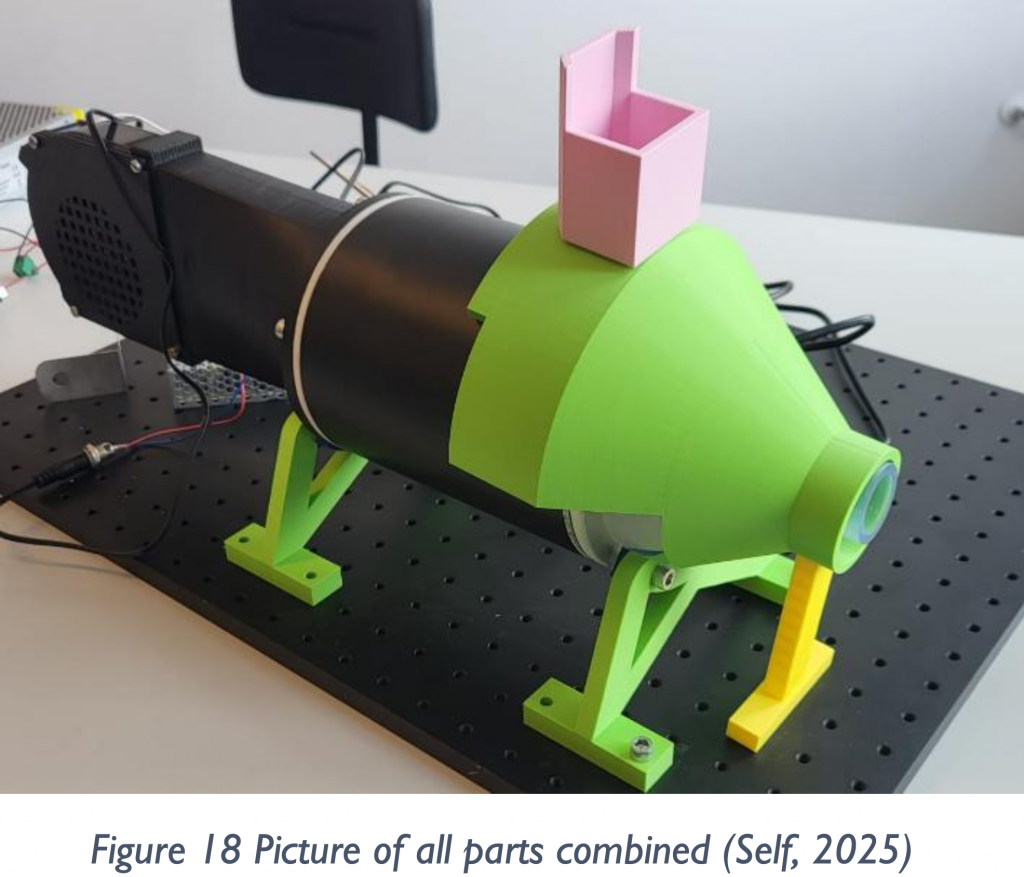
The exact mission is still undecided! But below is an image from the previous group’s report. There is a smoke module (not shown), an acoustic module (not shown), and a control panel (not shown). The design in the image allows these modules to be added to the wind-tunnel. The students can then manipulate flow, add sound-waves, and watch the changes in the smoke to see a visualisation of the air-flow.
Suggested further work, from the previous group:
«Areas for Future Development: Despite the project’s overall success, several areas present opportunities for expansion in future student groups. Although the acoustic module will be implemented, future work could focus on integrating more extensive acoustic functionality to in increase the amount and variety of experiments able to be performed with the facility. The velocity measurement module is another area for development. While not prioritised in this project, knowing the exact airspeed outputted by the facility is useful for calibrating sensors. Lastly a big area for improvement could be to create a standardised set-up for different sensors to be calibrated. With guides, mounting systems and easy installation procedures it would be made very easy to use the facility for that purpose.»
Skills wanted within the group: Mechanical and electronic knowledge. Some programming/ scripting knowledge. Knowledge about design will be useful.
Supervisor: Ramis Örlü, professor