Bhutan. Traditionally portrayed as ‘sandwiched’ between the powerful geopolitical players, India and China, this small Himalayan kingdom is set on building a brand new Gelephu Mindfulness City (GMC) and on repositioning itself as a strategic economic gateway connecting South Asia with Southeast Asia.
About the size of Switzerland and home to roughly 800,000 people, Bhutan has earned global attention for doing something radically different: instead of measuring progress through Gross Domestic Product (GDP), it focuses on Gross National Happiness (GNH). It is the GNH principles that Bhutan – led by the global vision of its fifth king, His Majesty King Jigme Khesar Namgyel Wangchuck, seeks to embed in the emerging megacity of Gelephu – a special administrative region (SAR) envisioned as an oasis of mindfulness, prosperity, compassion and human flourishing, an alternative path of development amidst increasing global uncertainties and geostrategic challenges – one grounded in Bhutanese values.
Can this vision succeed and become a real alternative to the failed megacities of South Asia and the Middle East mired by corruption scandals, financial speculation, labour and human rights abuses, and failures to deliver on their utopian promises?
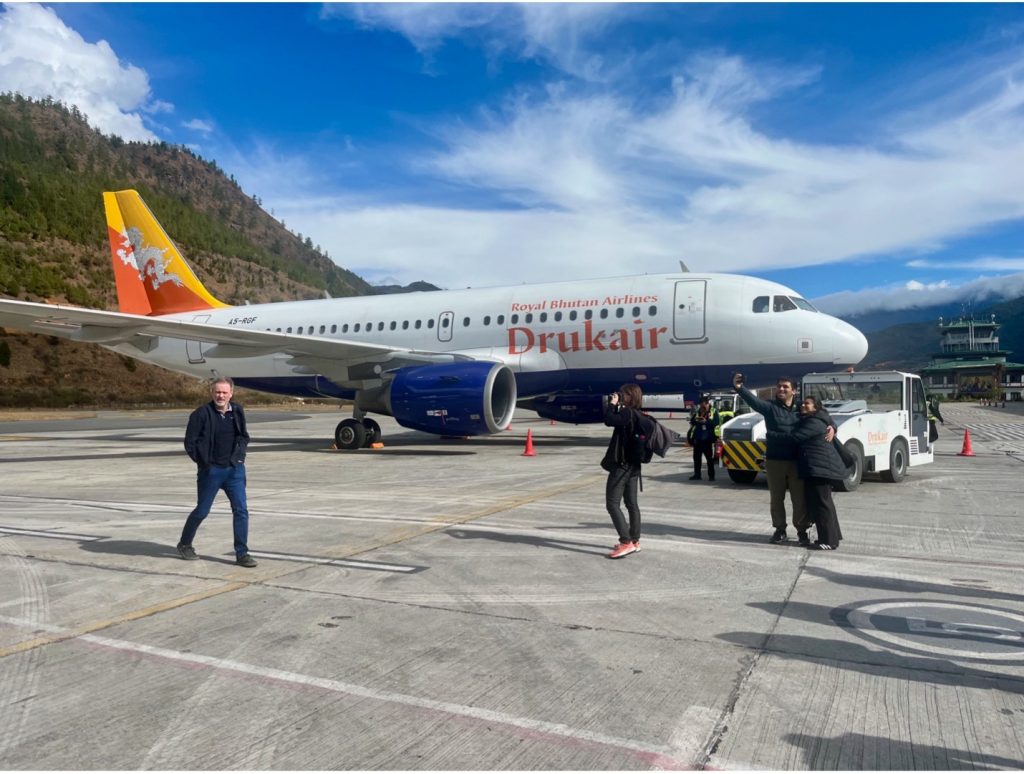
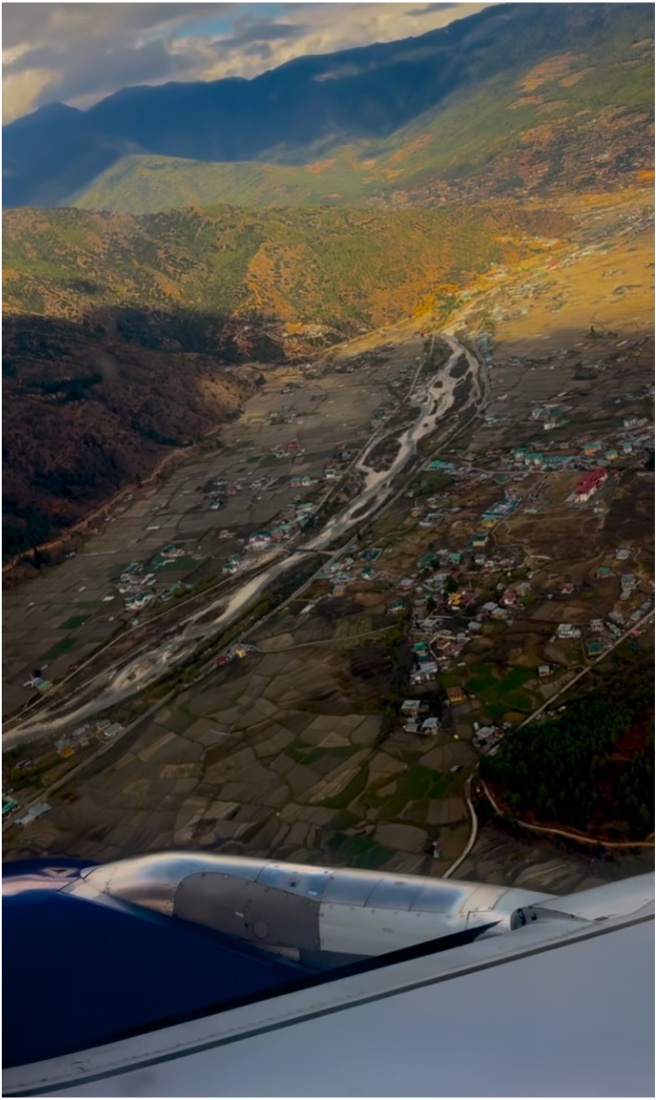
This was just one of the questions we, four researchers and one HR-advisor from The Work Research Institute at Oslo Metropolitan University, contemplated as we landed at the Paro airport. Our mission — sparked by the Policy Lab at OsloMet — was to search for inspiration for new ways of thinking about future, governance and regulation, while building new international research collaborations, partnerships and developing future research projects.
So how did we end up on a plane to Bhutan? It all began when one of the research directors at AFI, Tereza Østbø Kuldova, was contacted by the Indian embassy in Oslo and asked whether she would like to meet with a delegation from Bhutan in search of new research collaborations and networks in Norway. Few weeks later, Tereza and her colleague Kristin Reichborn-Kjennerud welcomed Dendup Chophel, a Bhutanese anthropologist and a postdoctoral fellow at the University of Copenhagen, at AFI.
The hours spent discussing the Norwegian and Bhutanese model, the similarities and differences between our countries and the ideologies underpinning our governance models, both grounded in strong societal values, sparked an immediate desire to learn more, explore, understand and collaborate for mutual benefit.
While Bhutan may look to the Norwegian model and to Nordic countries as an inspiration for its own reforms, there is much that Norway could learn from Bhutan’s focus on the primacy of happiness and sustainability in governance.
Both Tereza and Kristin have spent years researching the failures, pitfalls and unintended consequences of western governance and regulatory models, from anti-corruption, compliance to urban transitions. When Dendup extended an invitation to Bhutan on behalf of the JSW School of Law in Paro, we immediately recognized multiple possible and exciting paths for future research collaboration.
But Tereza also recognized that we needed more expertise from our side to address the questions raised in our discussion, hence, she recruited three more team members onto this mission of OsloMet to Bhutan: Inger Marie Hagen, an expert on the Nordic model of industrial relations, Arne Bygdås, who is enthusiastically building up future studies at OsloMet, and Christina Lindskog, HR advisor and university diplomat in the making.
Few months and several Zoom meetings later, our team, equipped with a letter from the rector, Christen Krogh, designating Tereza as the Special Envoy for Research Internationalization to the Kingdom of Bhutan, and supported by funding from the Policy Lab at OsloMet and encouragement from its leader, Kåre Hagen, finally landed in Paro on the 22nd of March, welcomed by representatives of the JSW School of Law and Tshering Tashi.
What follows is a blog summarizing some of our encounters with the beautiful country, its scholars, lawyers, intellectuals, diplomats – and even the princess Sonam Dechan Wangchuck.
We thank Dendup Chophel and Nima Dorji for organizing our visit and putting together such an exciting program which has given us a unique insight into the Kingdom of Bhutan, we remain eternally grateful.