The SCORAI Conference of 2025: Mainstreaming Sustainable Consumption was arranged in Lund, Sweden in April with several presentations from DISCo on the programme. Link to all presentations can be found at the bottom of the page.
Manisha Anantharaman was one of three keynote speakers at SCORAI 2025. Her talk can be found here (YouTube link).
Presentations
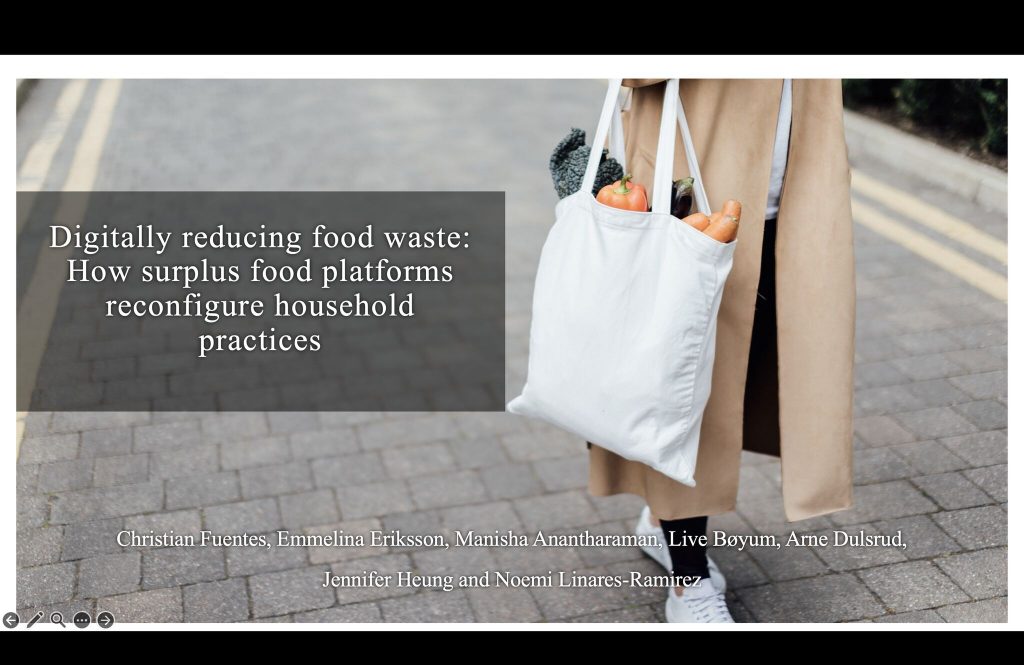
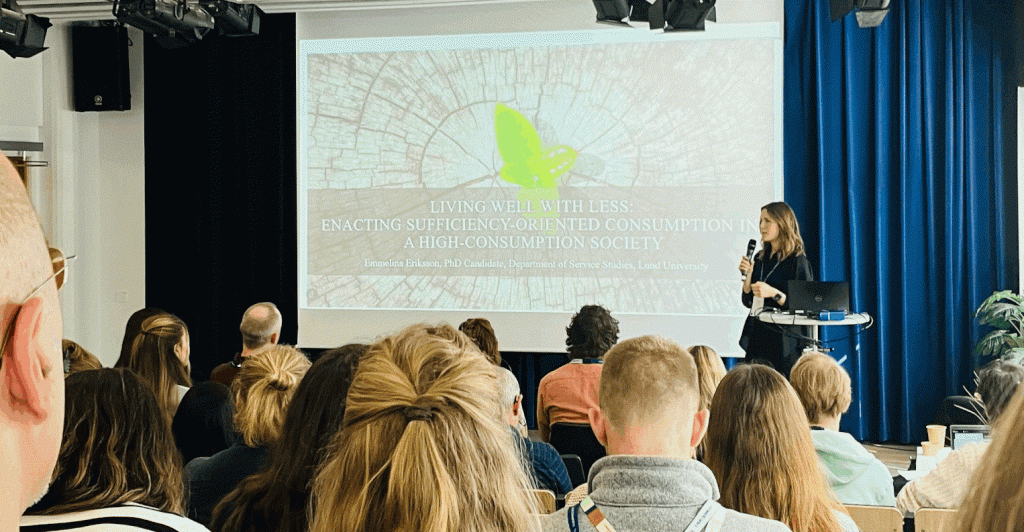
Emmelina Eriksson‘s presentation Digitally reducing food waste: How surplus food platforms reconfigure household practices shows how digital surplus-food platforms such as Too Good To Go (TGTG) reshape everyday household food practices and their potential to reduce food waste. The presentation builds on 35 ethnographic interviews (digital walk-throughs + app observations) with TGTG users in Sweden, Norway, and the USA during 2024 in WP2.
Surplus food platforms and food waste
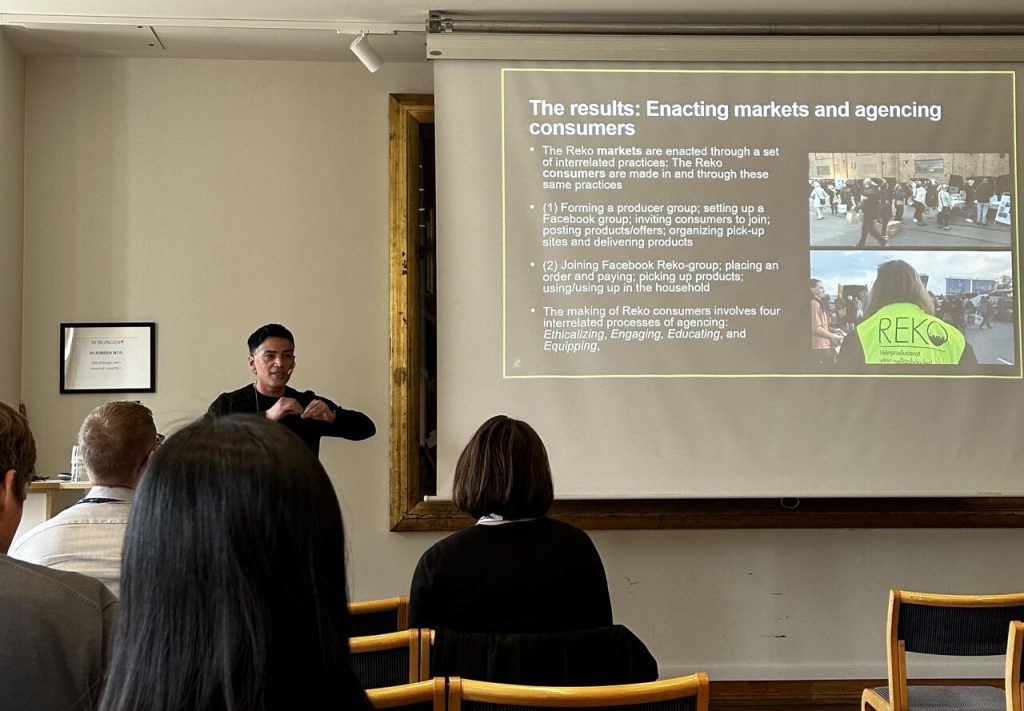
Christian Fuentes‘ presentation Locally grown consumers: The socio-material agencing of alternative food consumers argues that alternative food networks, like Sweden’s REKO-rings, don’t merely attract a ready-made niche of ethical customers; they actively produce the kind of consumers they need. Drawing on practice theory and consumer agencing, he uses ethnographic work with REKO Facebook groups and pick-up sites to show how customers are gradually shaped into loyal, skilled, and values-driven “local food” consumers.
Digitalization of (sustainable) consumption
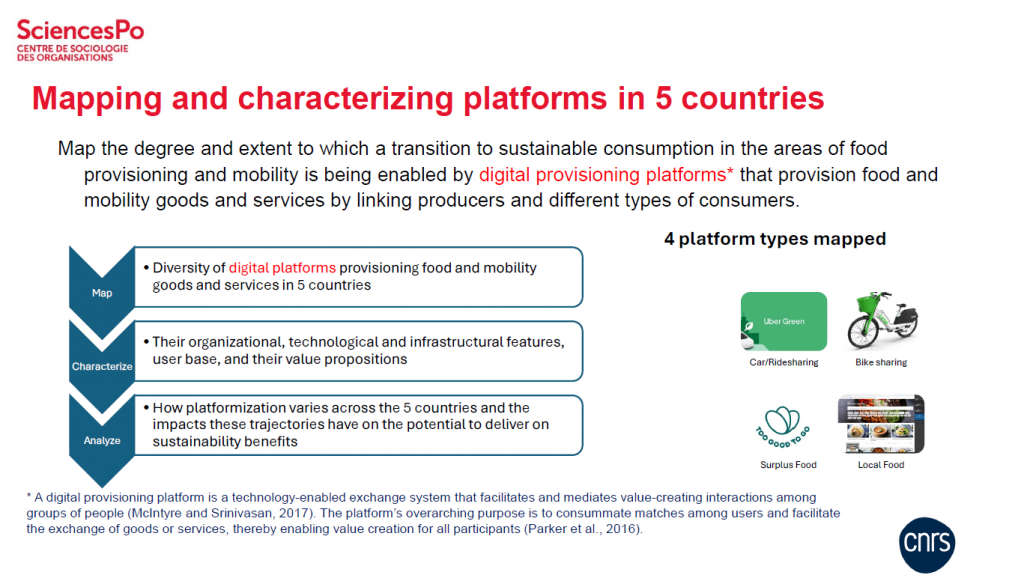
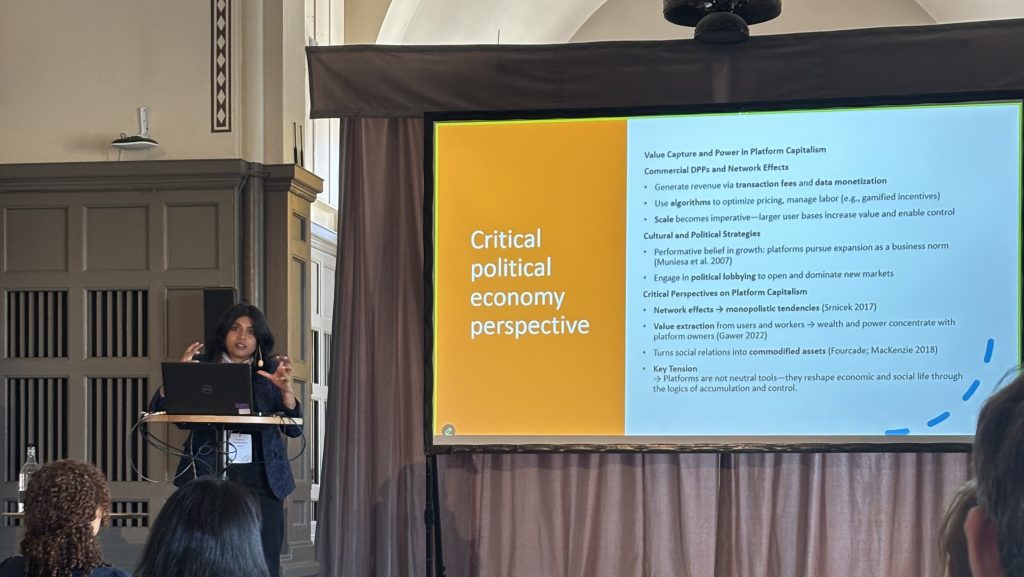
Manisha Anantharaman presented results from WP1, which maps and compares digital provisioning platforms for food and mobility in the USA, Sweden, Norway, Turkey and Japan. In her presentation she asks whether these platforms advance sustainability by democratizing access to goods and services or, instead, reproduce “platform capitalism” that concentrates power and value.
Live Bøyum presented the results from the Norwegian qualitative interviews on mobility from WP2, discussing whether the digital “sharing economy” really delivers environmental gains, using shared mobility in Oslo (bikes, e-scooters, car-sharing) as a case. Through 22 interviews, the authors find that micro mobility mostly displaces walking, cycling and transit, while car-sharing is an occasional add-on for errands that a private car can’t handle.

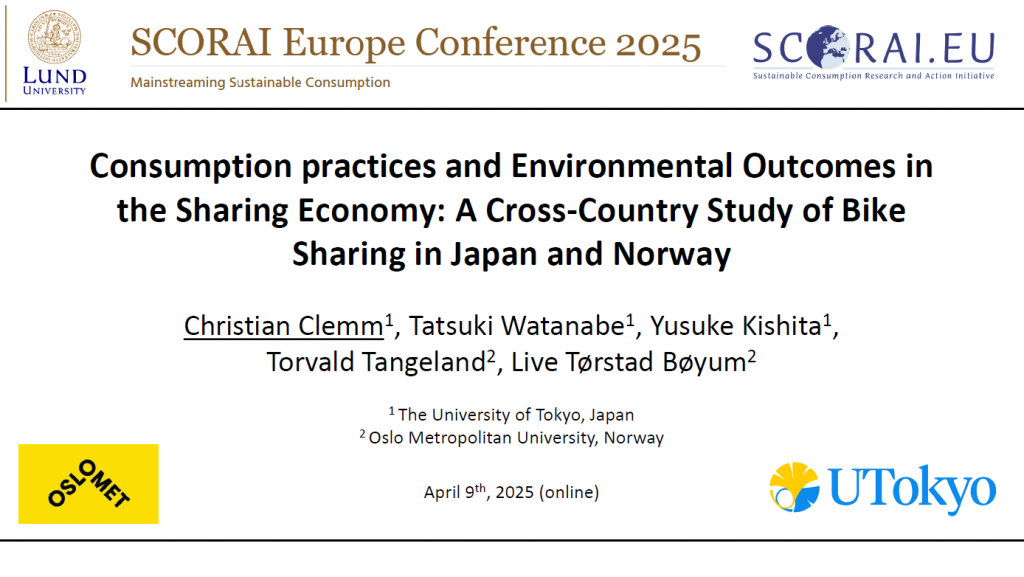
Christian Clemm presented digitally from Japan. His presentation proposes a modelling framework that links future consumer behavioral transitions with the environmental impacts of sharing-economy services. It combines multinomial-logit choice models and multi-agent life-cycle simulation to test hypothetical policy- and business-model scenarios. The broader goal is to identify which mixes of platform design and public policy can steer sharing businesses toward genuine emission reductions rather than backfire.
The next opportunity to hear presentations from the DISCo project will be at the SRI congress in Chicago in mid June.
View Zenodo for full presentations
DISCo’s output may be found at our Zenodo page.