
From 26 to 28 October, the Oslo Centre for Children’s Rights hosted the NORDLOCH Oslo Conference 2026 at OsloMet. Three days of register-based and longitudinal research on children in contact with child protection services made for a demanding and, we think, very good conference.
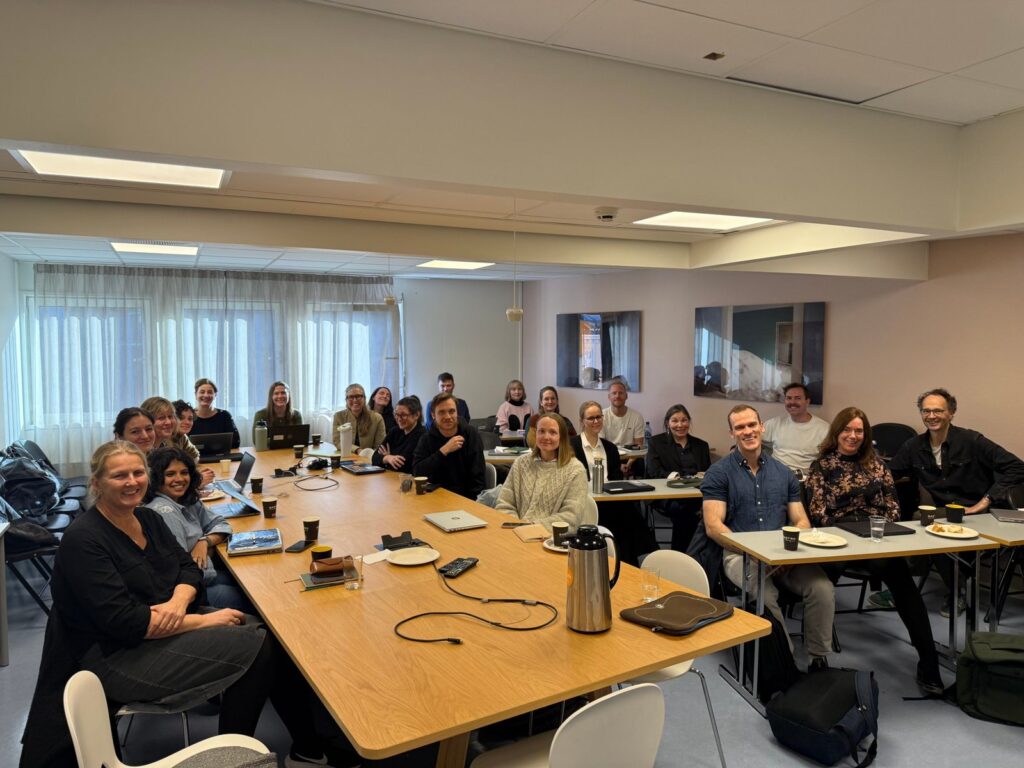
Interest outran the room. Registrations exceeded capacity, and applicants presenting relevant research were given priority. Thirty-one participants took an active part one way or the other, from Norway, Sweden, Finland and Denmark, and from Germany, Switzerland, the Czech Republic and the United States. Two national agencies, Bufdir and Socialstyrelsen, joined in presenting how policy makers engage register research.
Monday: doctoral projects and policy dialogue
The conference opened with a public forum for PhD fellows. One doctoral project follows a 1953 Stockholm birth cohort to age 64 to study continuity, change and desistance in offending after out-of-home care. Another examines child maltreatment and health outcomes among young adults with a residential youth care background.
Work of this kind returns us to a basic point. A placement is a decision made by the state, and the state’s responsibility for the child does not end there.
In the afternoon, Bufdir and Socialstyrelsen gave Norwegian and Swedish perspectives, and contributions from OsloMet addressed artificial intelligence and case records, the UPSTREAM project and children’s rights in register research.
Tuesday and Wednesday: Papers along the child’s path
Thirteen papers then ran in five sessions, following children into and through child protection. The opening paper asked whether cash transfers prevent maltreatment, using the Norwegian cash-for-care reform. A second paper followed almost 300,000 children born 2002–2007 and examined how socioeconomic gradients in intervention differ across immigrant-origin groups.
Further papers examined how childhood adversity is measured and how its timing shapes mental health, and how children move through out-of-home care, from placement and reunification to breakdown and psychotropic drug use after residential care.
Wednesday turned to children in care, with papers on kinship foster care, disabled youth in child protection, and public and private institutions. The session on transitions to adulthood followed self-esteem over ten years among young people leaving residential youth care. The programme closed with criminality among former child protection clients from adolescence to midlife.
What we take with us
Several papers followed children for a decade or more, and one into their sixties. Nordic registers can hold public intervention to account across the length of a life. They cannot, by themselves, tell us whether the state acted lawfully, proportionately or in the child’s best interests. Keeping both questions in the same room was the point of NORDLOCH, and it worked.
On to 2027
NORDLOCH will meet again in 2027, and we look forward in particular to welcoming those who could not be given a seat this year. Venue and dates will be announced on OCRights once we know whether the conference is hosted in Denmark or Finland. Our thanks go to every presenter, co-author and discussant, to Bufdir and Socialstyrelsen, and to colleagues at the Department.
The NORDLOCH Oslo Conference 2026 received support from the Research Council of Norway (project 363542).