National Library, Royal Institute of Management, Folk Heritage Museum, and the Tarayana Center for Research and Development
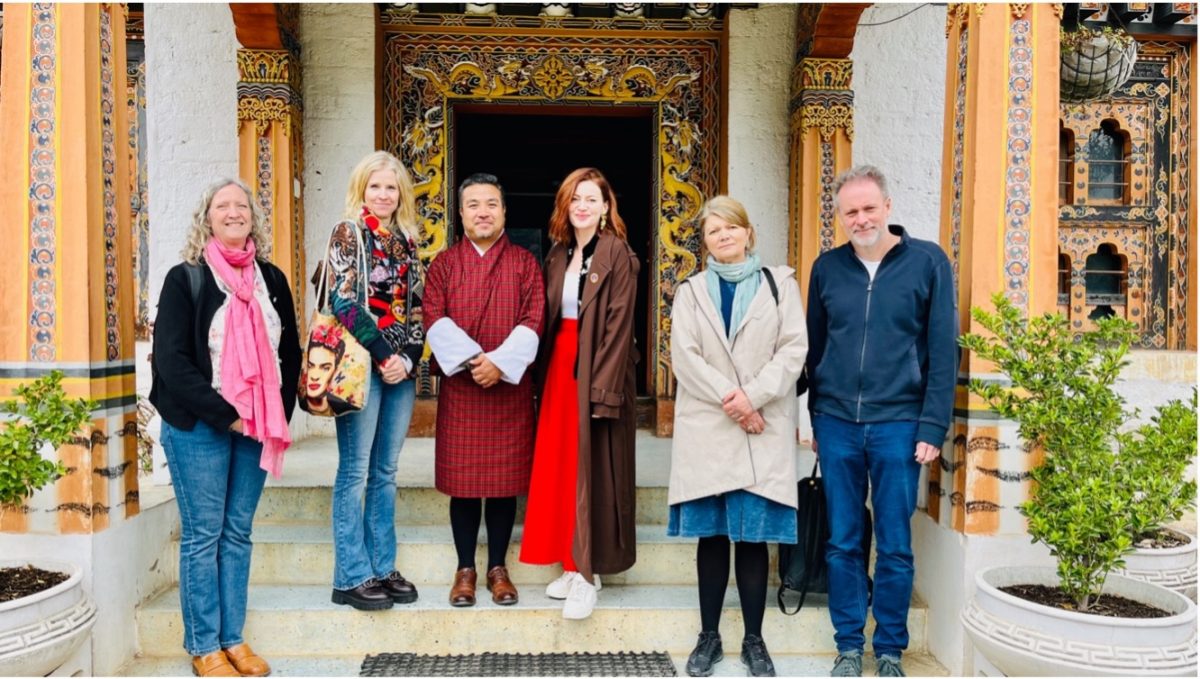
First, we were honoured to visit the National Library and Archives of Bhutan and learn much from Yeshey Lhendup, the Chief Research Officer, about Bhutan’s and Buddhist literary heritage and culture, the organization and research performed at the institution, as well as the ongoing efforts at manuscript conservation and digitalization. The institution preserves and promotes literary and cultural heritage, supports research communities, builds and maintains national collections, and provides access to Bhutan’s documentary heritage and information resources. It possesses over a million Buddhist scriptures and texts in the languages of Dzongkha and Chöké, and Sanskrit books, in addition to other books and documents and has digitized thousands of rare manuscripts. We were impressed with the ongoing work and the efforts at preservation, as well as work with local communities, students and researchers.
Our next meeting was digital, with Dasho Tashi, former Auditor General, who is now the Head of Gelephu Mindfulness City’s new Audit and Anti-corruption Investigation Bureau (ACIB). This was particularly insightful meaning for both Kristin and Tereza who learnt a lot about the ongoing anti-corruption work (for more see here) and the organization and ideas that drive Bhutanese audit institutions.
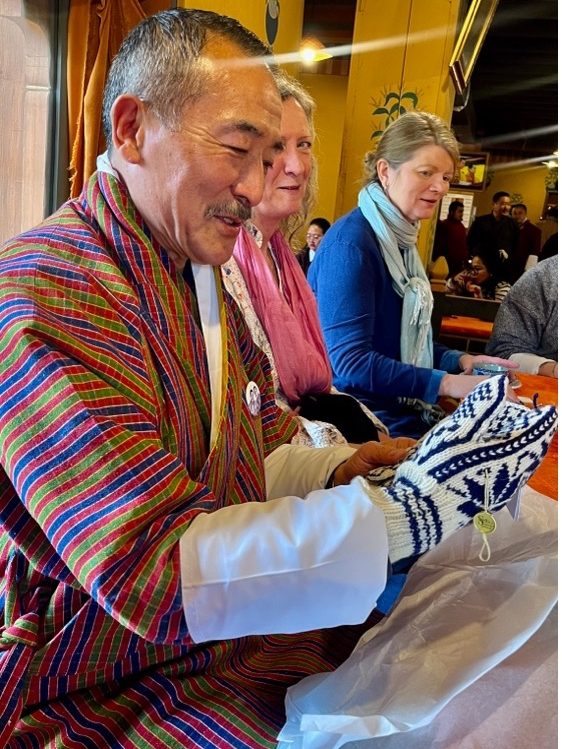
Afterwards, we headed towards the Folk Heritage Museum where our OsloMet delegation received a guided tour and lunch at the kind invitation of Dasho Kesang Wangdi, Deputy Chairman of the Royal Privy Council, chair of the Bhutan Trust Fund for Environmental Conservation and the Snowman Run and former ambassador to Thailand and Australia, among his other diplomatic engagements. We learnt a lot during our tour of the museum about Bhutanese traditional crafts, and we even got to dance together with local performers. Thereafter, we enjoyed the traditional Bhutanese lunch at the museum restaurant and engaged in enlightening conversation about Bhutan, sustainability, happiness and geopolitics. In addition to Dasho Kesang Wangdi, we had the pleasure to speak to Pema Lektup Dorji, Foreign Secretary and former Permanent Representative of Bhutan to the United Nations and to Kama Tshering, Managing Director of the Bhutan Trust Fund.
Our next stop was the Royal Institute of Management, which educates the civil servants of Bhutan and performs research on many overlapping subjects to those of our Work Research Institute. We had the pleasure to meet with Dorji Penjore, Head of the Centre for Research & Innovation at RIM and editor of the Bhutan Journal of Management, and an engaged anthropologist, Namgay, Assistant Professor working on anti-corruption, and a young bright researcher Kuenga Norbu, specializing on research methods. We discovered many shared interests in regard to labour regulation, anti-corruption, future studies and foresight, and decided to continue our collaboration.
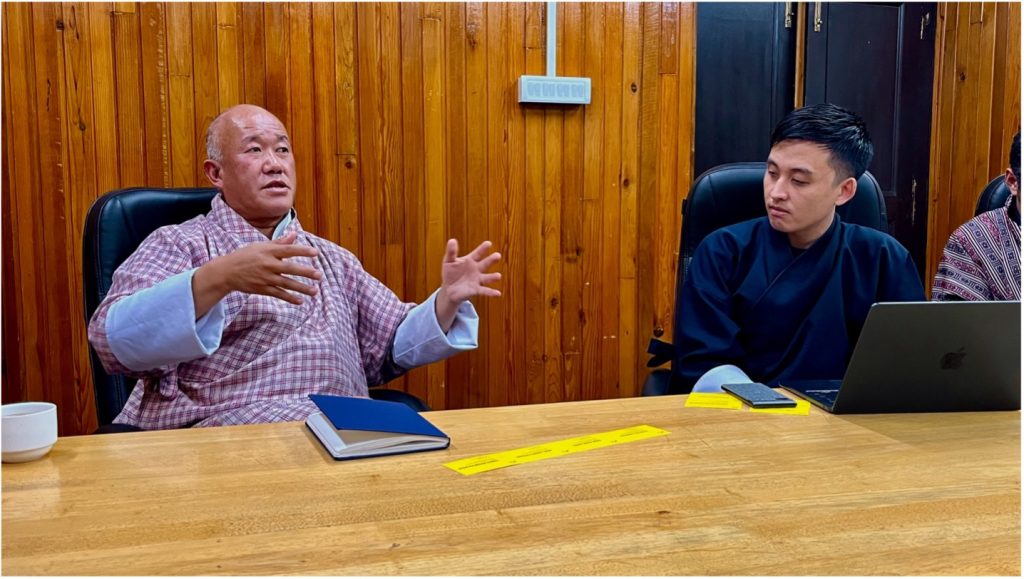
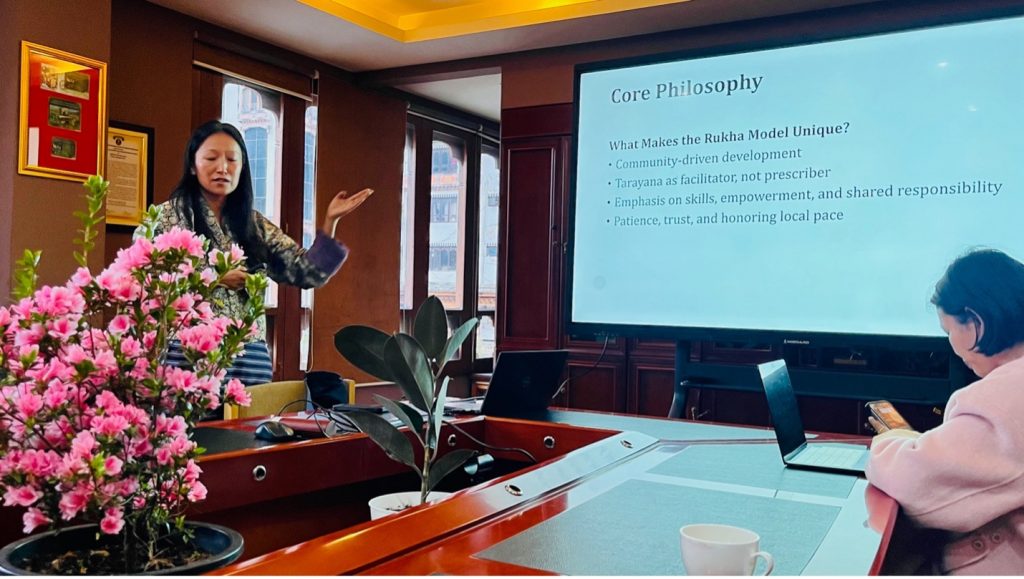
After this enlightening meeting, we had the pleasure to visit the Tarayana Centre for Research and Development (TCRD), part of the Tarayana Foundation, which performs action-oriented research and seeks to develop and empower local communities. Sonam Pem, the Executive Director of the Tarayana Foundation, held an impressive presentation on the holistic development model of Gross National Happiness at the grassroots level which they developed – originally in the Rukha village in Wangdue Phodrang district and later implemented across other locations and rural communities, while each time attentive to the local conditions, modifying the approach as necessary. This was particularly interesting to us, given our own action-oriented research traditions at the Work Research Institute (AFI). We much appreciated the long-term and genuine engagement with local communities, taking the time needed to create meaningful and lasting change. We also discussed the problems of sectorization and the ways in which they can be ameliorated by actors such as Tarayana; this also resonated with challenges we experience in Norway.