Ongoing research projects at CIM

AID-Spine project
The objective of this project is to use machine learning methods on large survey and health register data to identify people with different treatment trajectories and health outcomes after surgical and/or conservative treatment for spinal disorders.

AIS-Life project
This project aims to investigate health and welfare trajectories of individuals with AIS across their life course, including those who have transitioned into adulthood.

AI-driven patient avatar for physiotherapy education
This project will co-develop and implement an AI-driven patient avatar to enhance first-year physiotherapy students’ communication, history-taking, and clinical assessment skills.

BACE-N project
This project is a longitudinal cohort study investigating the course, burden, healthcare utilization, and prognostic factors of back pain and disability in older adults seeking primary care.

BACK Bank
The project aims to establish a digital information bank to enhance confidence, support informed health decisions, and reduce unnecessary healthcare utilization among people with back pain across the lifespan.

Bridge Builder project
In collaboration with relevant user groups and healthcare professionals, the project will conduct needs-identified research, with users actively involved in both the planning and implementation phases

Co-occurent project
This research project combines epidemiological and machine learning approaches to investigate the causes, consequences, and long-term outcomes of co-occurring pain and psychological distress in adolescence and emerging adulthood.

Digital Expert Twin
This project develops a Digital Expert Twin – a Retrieval-Augmented Generation (RAG) system powered by large language models – to support both patient communication and clinician decision-making.

GLYCOSTAR: GLYcomic OSTeoARthrithis Research
GLYCOSTAR are addressing two specific aspects of glycosylation and OA.
Understanding the pathway that leads to the decreased lubrication found in OA patients, as well as exploring a connection between OA and an unhealthy gut microbiota (dysbiosis).

HEYoung Intervention Study
The project will conduct the initial stages of a full-scale RCT on the effectiveness of a personalized intervention for adolescents with persistent pain interfering with daily life.

HEYoung Study
The overall objective of the Health in young adults (HEYoung) Study was to identify risk factors, risk profiles, and risk trajectories for mental and musculoskeletal disorders in young adults. .

Intelligent Scoliosis Brace
In this project, we aim to design and develop prototypes of an intelligent scoliosis brace cover integrated with wearable sensors that wirelessly communicate with a user-friendly mobile application.

Machine Learning for the Analysis of Physiotherapy Records
This project uses artificial intelligence and natural language processing to transform physiotherapy records into structured data, enabling characterization of private physiotherapy patients and comparison with population-based health registry data.

MUSKHEL
Using a mixed-methods approach, the MUSKHEL study aims to advance understanding of musculoskeletal health literacy in adolescents and its association with persistent pain.

OA-AID TKR
The overall aim of the “Remote monitoring after total knee replacement (OA-AID TKR)” study is to assess if remote monitoring is non-inferior to face-to-face consultations at the hospital after total knee replacement surgery

PAINMENT
This project investigates the long-term impact of adverse experiences in childhood and adolescence (AECA) on adult health care use, particularly for co-occurring musculoskeletal pain and mental distress.

ProLove
In this project, we are investigating the effectiveness of somatocognitive physiotherapy compared to standard treatment in a randomized controlled trial.

SVAI project
The overall aim is to use innovative technology to train health care providers to deliver vocational advice interventions to people at high risk of long-term sick leave due to musculoskeletal disorders more effectively by utilizing large language models

Physiotherapy for Non-Surgical Spine Patients
Using qualitative methods, this study aims to improve understanding of the physiotherapy management, experiences, and biopsychosocial characteristics of patients with low back pain who are not candidates for spine surgery.
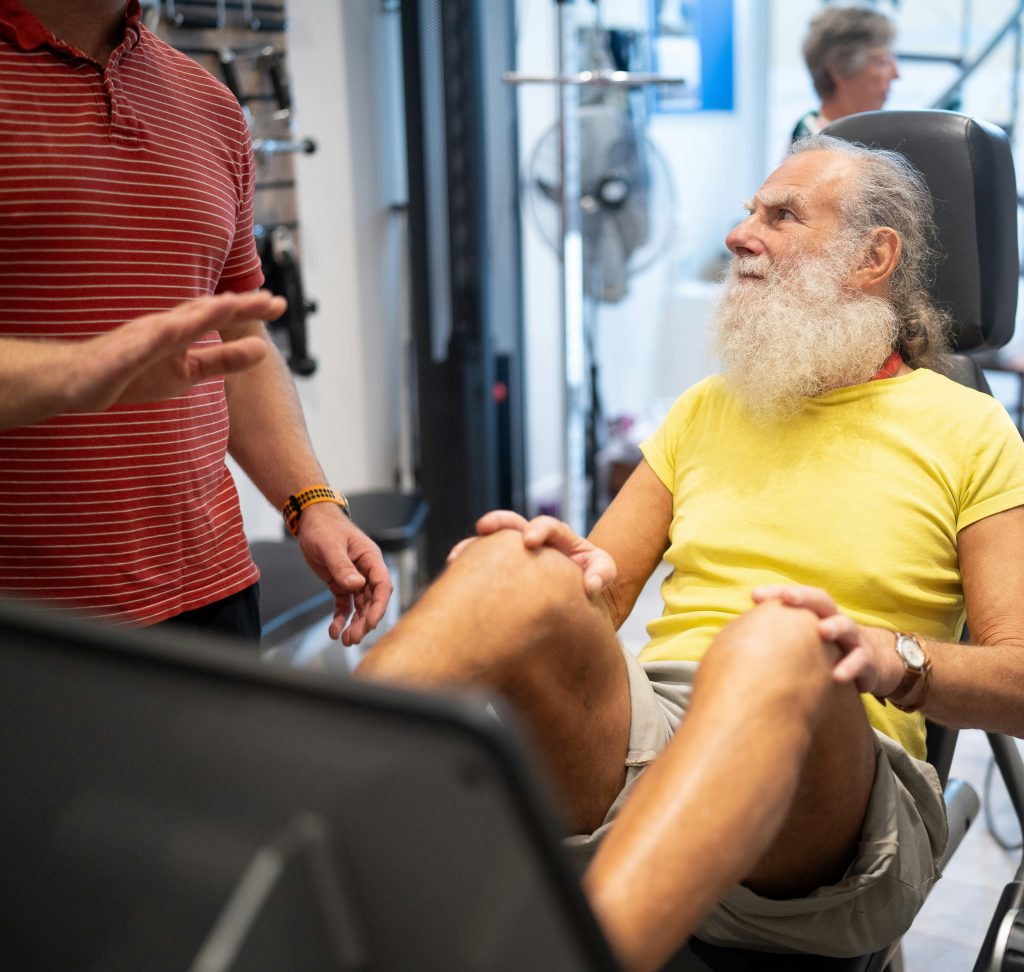
The HIPS-study (The Hip self-management Study)
This randomized controlled trial investigates the clinical and cost-effectiveness of a structured self-management intervention for adults with GTPS compared with usual care.

Young user involvement group
The project aims to develop, implement, and sustain a structured model for engaging adolescents and young adults with pain as active partners in musculoskeletal research.
The following research projects have been concluded

MI-NAV project
The main objective of this project was to evaluate the effectiveness and cost-effectiveness of usual case management alone with usual case management plus MI or usual case management plus Stratified Vocational Advice Intervention (SVAI) on RTW among people on sick leave due to MSK disorders.
Ad-Shoulder Trial
This project aimed to assess critical aspects of self-managed exercise interventions for shoulder pain and inform a future randomized controlled trial.
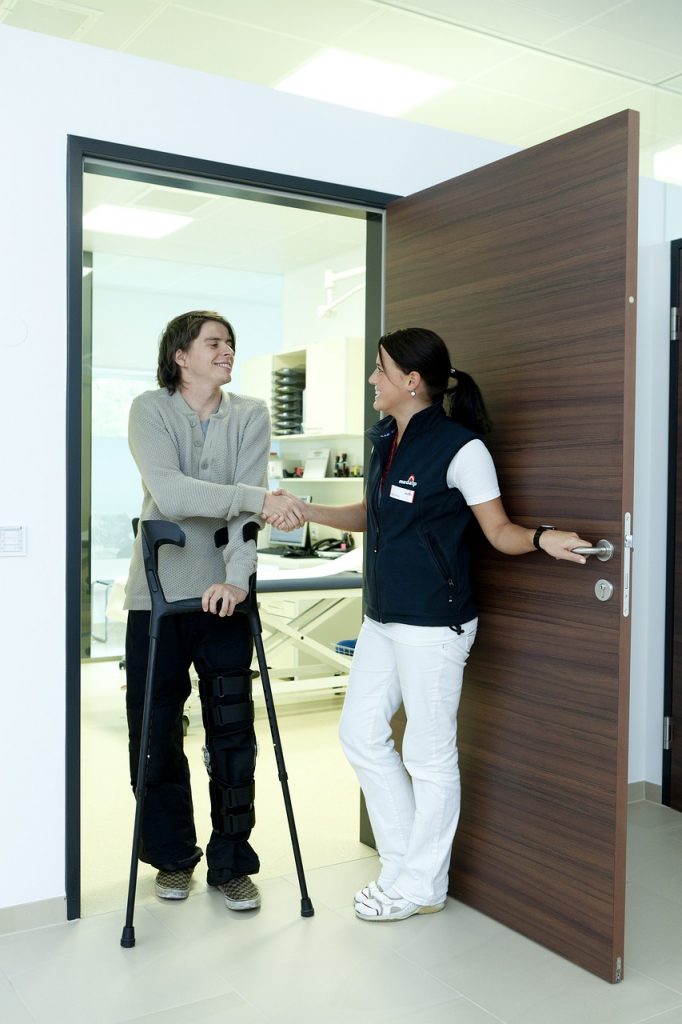
FysioPol
The FysioPol project is the first quality register of physiotherapy in Norway, and data from the FysioPol database can be used to assess core physiotherapy issues.