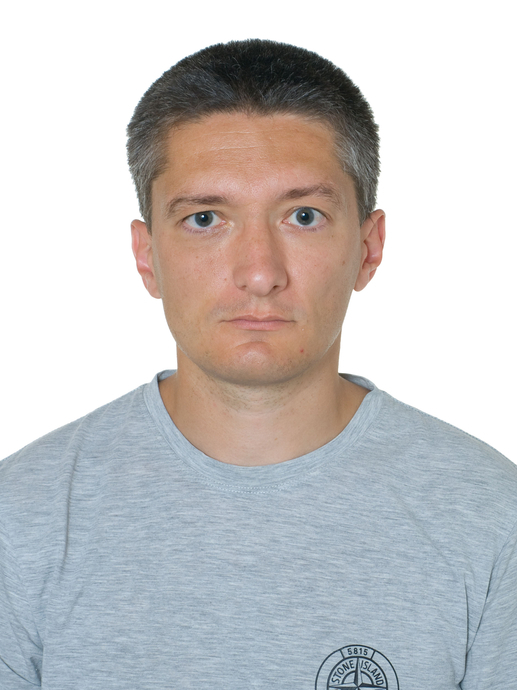
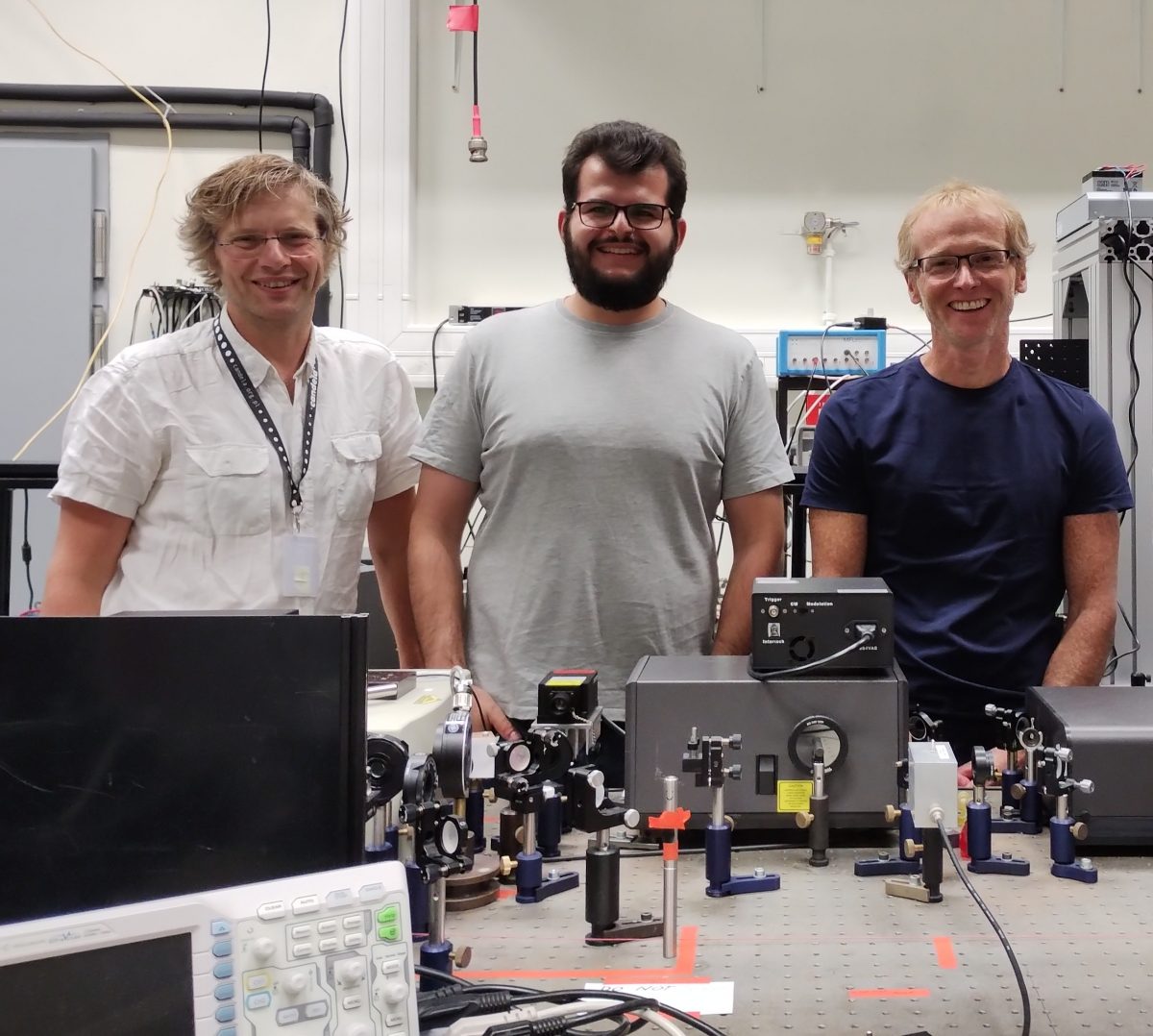
Yesterday, November 23rd, our visiting researcher Maksym Teslyk sucessfully defended his PhD dissertation at the University of Oslo.
Not only did he defend his thesis, he also gave two lectures on different topics this day, which was a long one for him, no doubt. I had the pleasure of being present at the first of these lectures, in which he told a very interesting story about the subtle quest for actual quantum advantage in computing. While we know that it does exists for several problems, it’s fundamental nature appears somewhat elusive.
In any case: We at the OsloMet Quantum Hub want to say CONGRATS, Maksym!
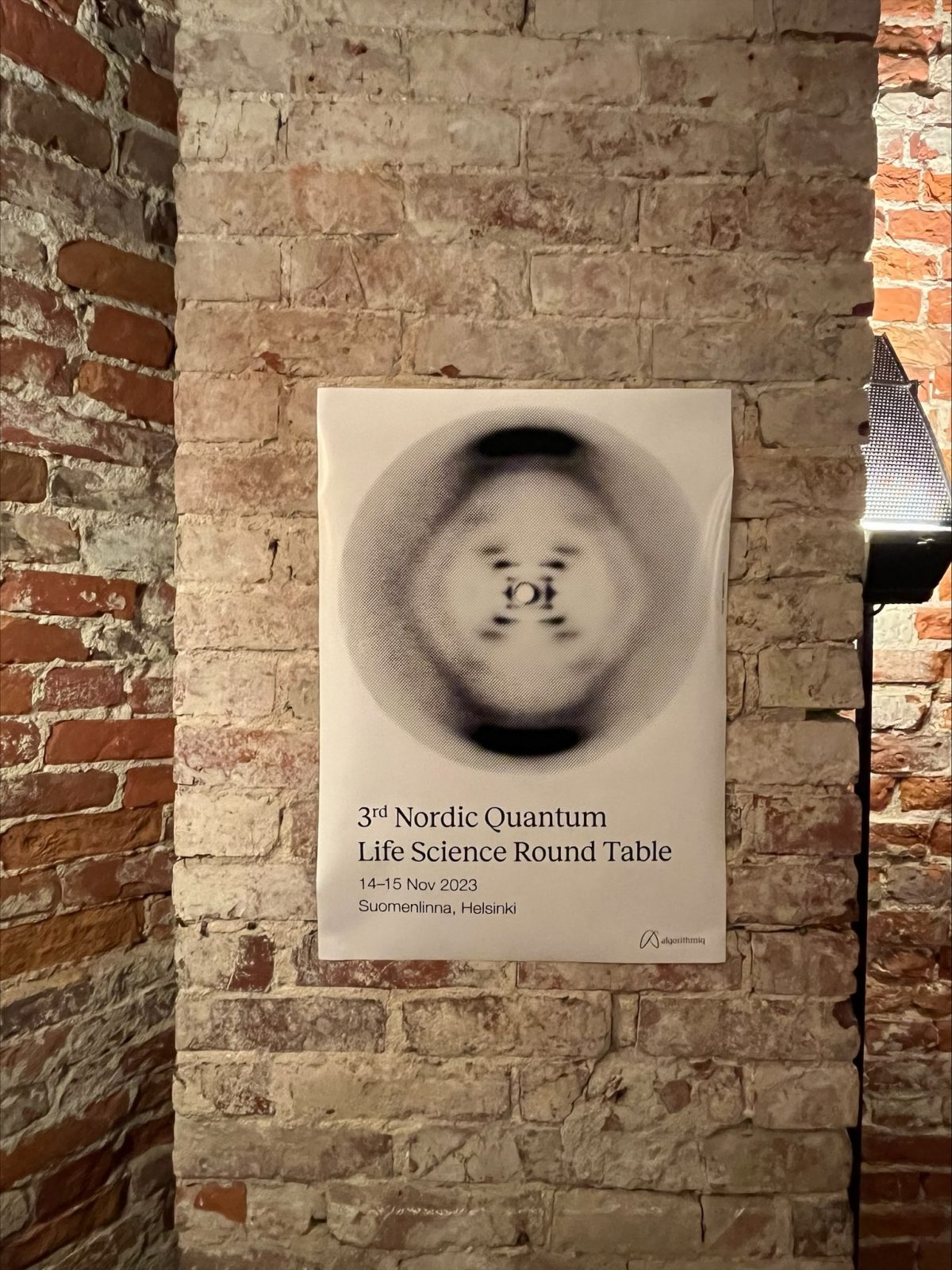
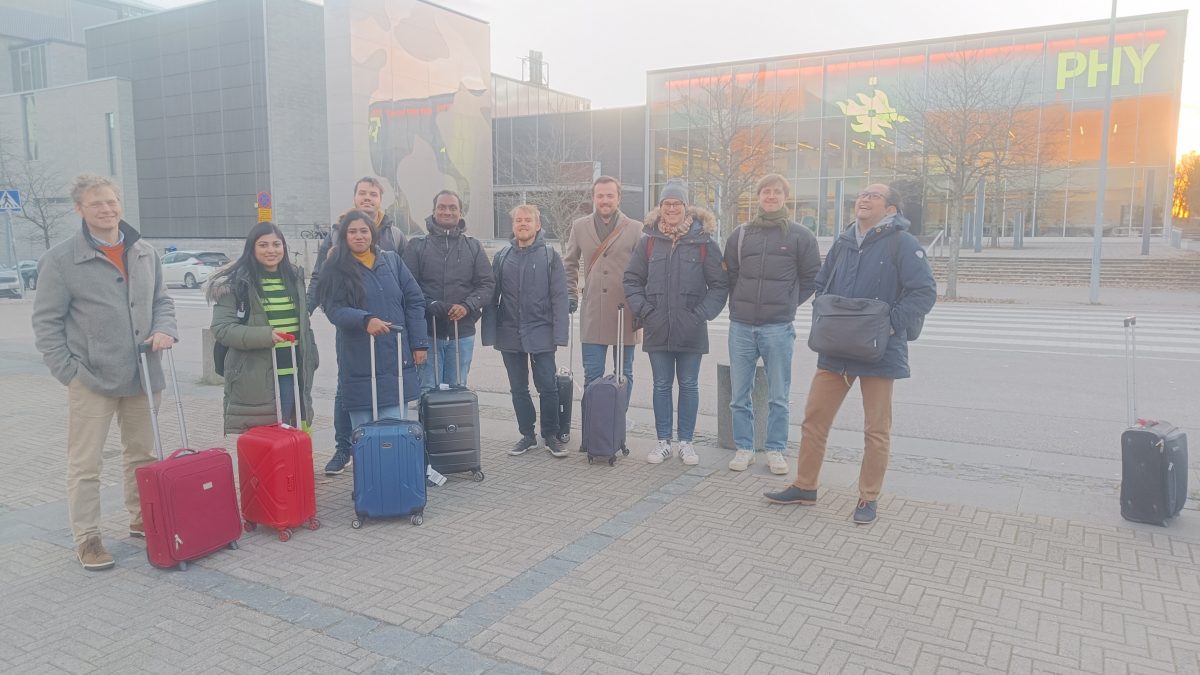
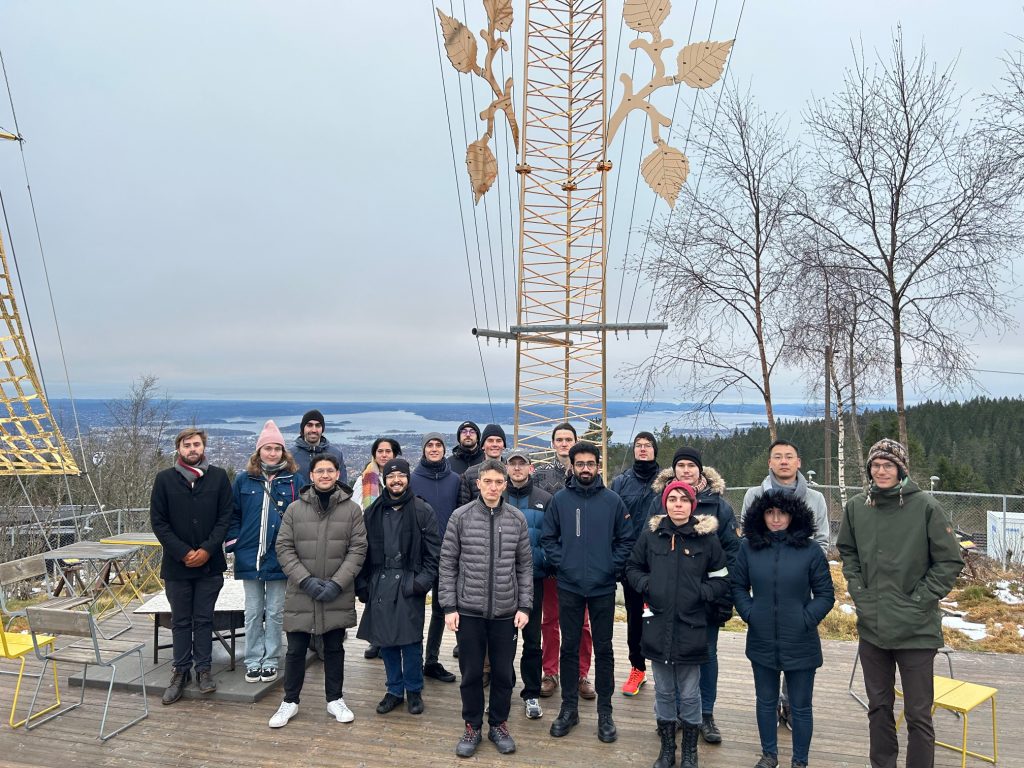
Mid November a bunch of us had the pleasure of going to Helsinki, the captial of Finland and, arguably, the Nordic capital of quantum startups. In any case, what we learned did confirm that there is a lot of interesting Finish activities going on in the quantum area – both theoretically and experimentally.
Perhaps the most interesting part was a visit to the Low Temperature Lab at Aalto university. (By “low temperature” we are not referring not mean average Finish Winter temperature, we are talking milli Kelvins.) Several setups, involving extremely cold “fridges”, were constructed for various quantum sensing applications – including an ambitious quest to measure quantum effects in gravity.
Our trip, aiming both at learning more about Nordic quantum activities and at raising cohesion within our hub, also involved a visit to Helsinki University. In addition to an inspiring visit to a lab aimed at curious school children and youths, we learned about diverse topics such as quantum machine learning, post quantum cryptography and the benefits of using a combinatorial approach to quantum circuits – only to name a few.
For a few photos from the trip, please follow this link.
November 7th to 9th we had the pleasure of hosting a November School on Quantum Computing. At the risk of appearing cocky: Beforehand we were very proud of the program we had put together. And the lecturers did not let us down!
Several aspects of quantum computing were addressed. To name a few:
Quantum error correction
Quantum annealing
Quantum reservoir computing
Quantum hardware
Quantum computing for quantum chemistry
Quantum software engineering
Quantum states encoded in neural networks
Quantum noise
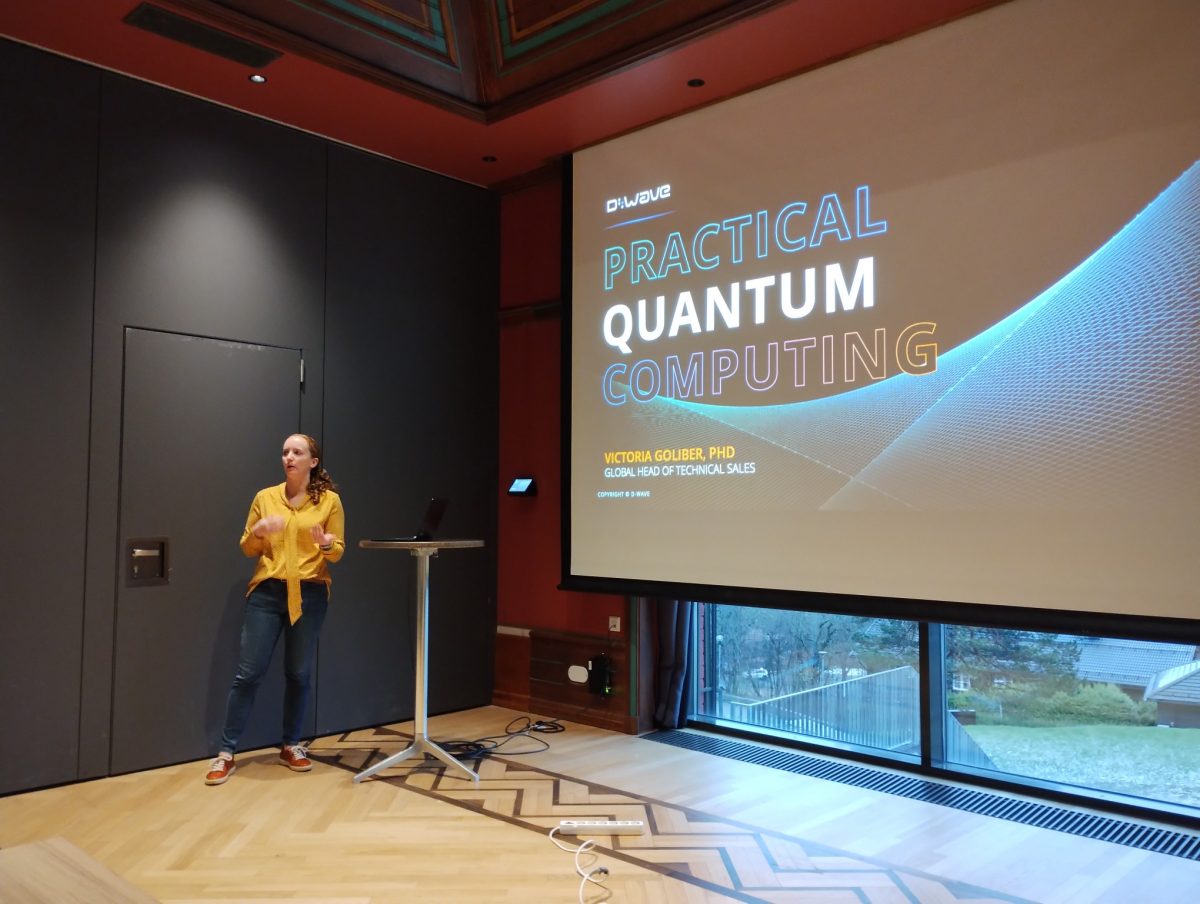
The lecturers included both academic researchers and representatives from the industry, specifically from D-Wave and IBM.
We believe it is fair to say that many large quantum leaps were made in the participants’ knowledge in quantum computing. In addition to our own PhD and Master students, people from Chalmers University of Technology, the University of Oslo, Lund University, Simula and the Norwegian School of Economics.
The venue provided a very nice atmosphere for getting to know more of the many flavours of quantum computing – and the growing community of people within the field.
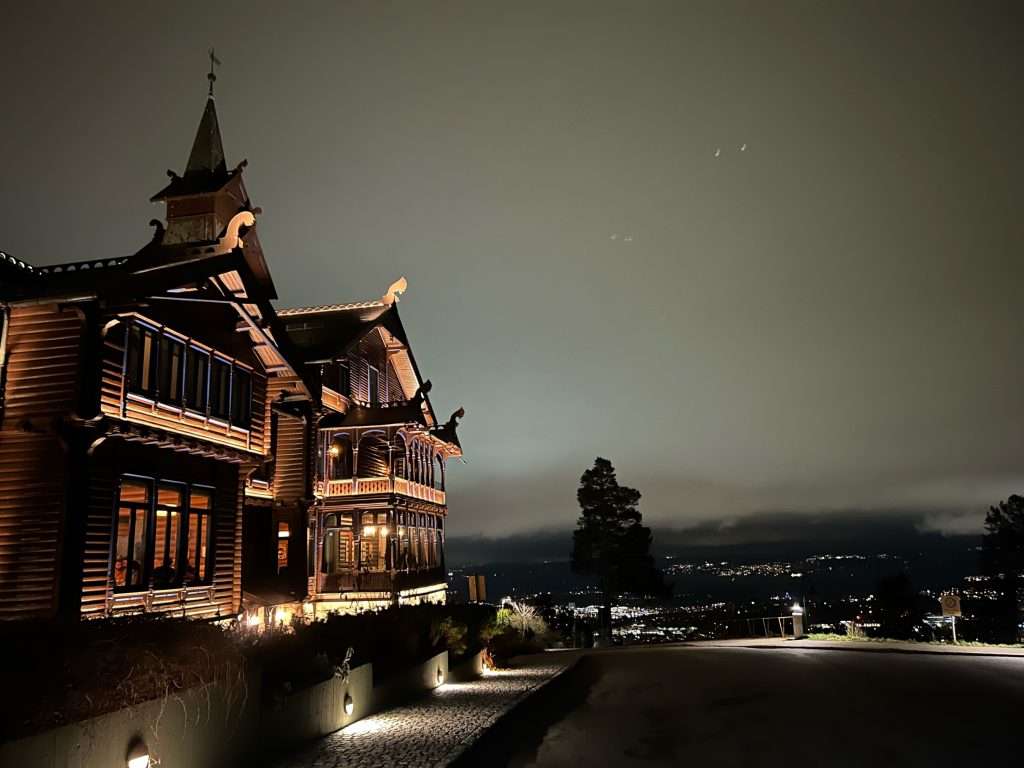
Read more about it on the School’s website. Here you will also find the slides from most of the lectures – and a gallery. As small excerpt from this gallery is seen below.
Proud organizers: Andre Laestadius and Sergiy Denysov.The venue: Holmenkollen Park Hotel.Some of the participants at Roseslottet.
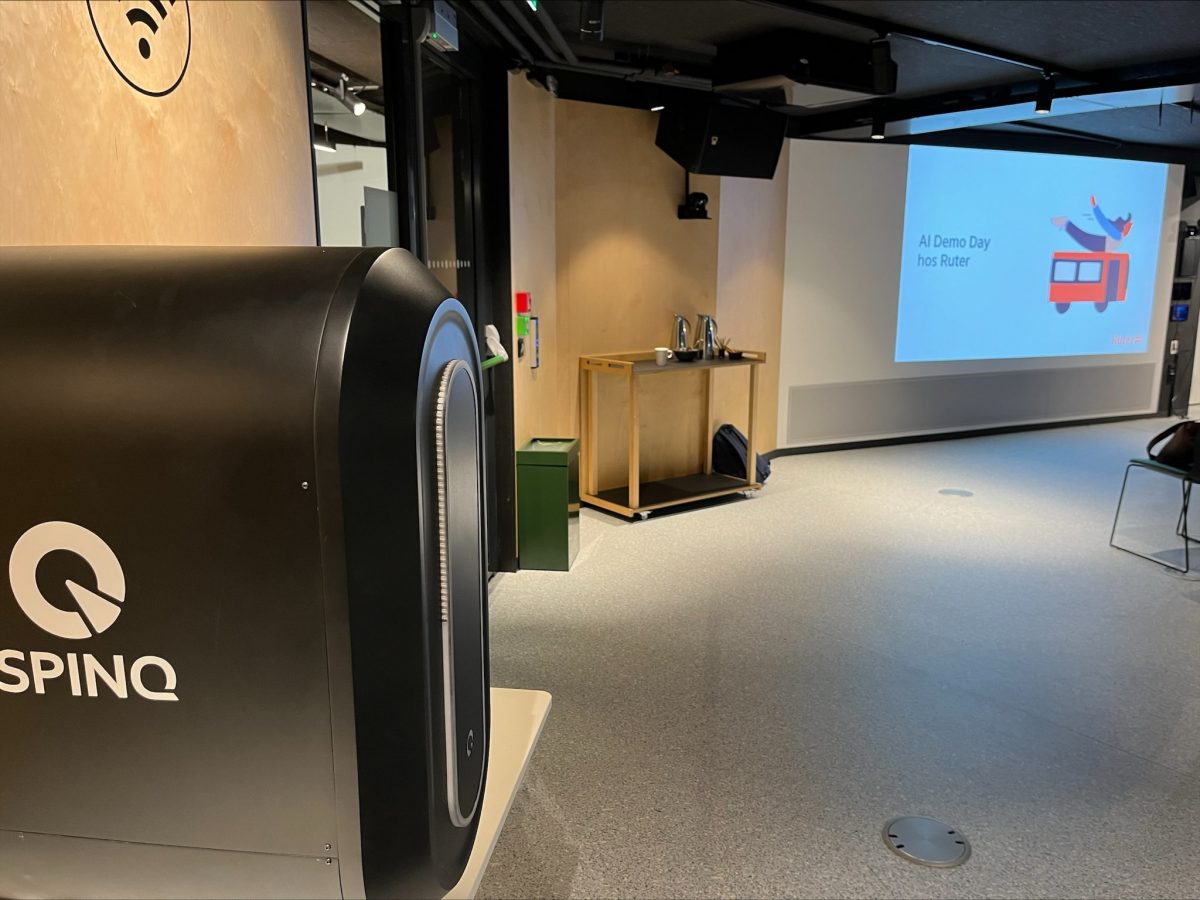
AI and Machine Learning are vitally important for Ruter and Quantum Advantage is something the company is paying a serious attention to. This year Ruter’s AI department runs the second project on gauging the potential of quantum computing as a tool to address the specific use-cases Ruter deals with on daily basis.
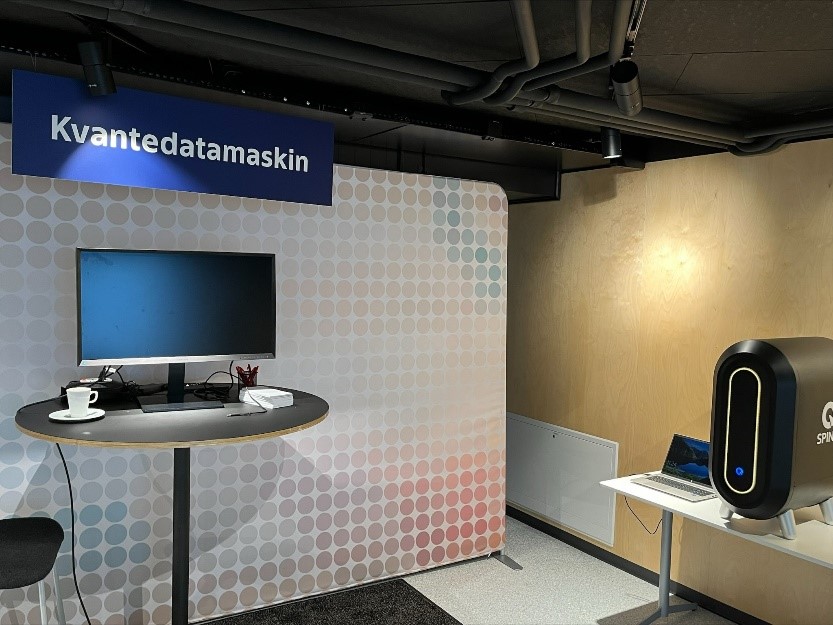
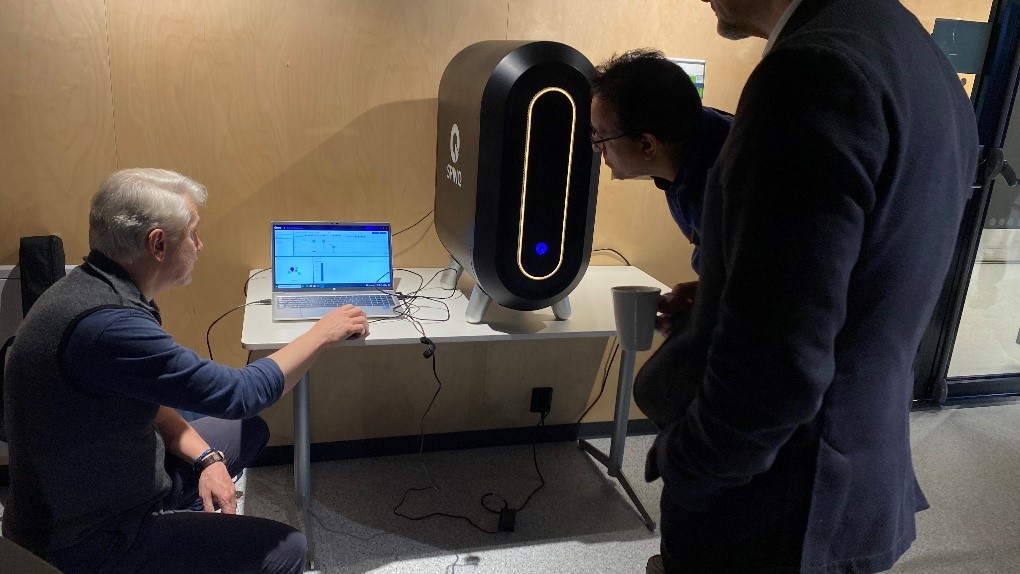
Last Friday we were invited to the Ruter’s AI Day and asked to present one of our quantum computers. We did so and gained a substantial interests from the event participants. It was nice to see that quantum computing provokes thoughts – and curiosity – even in the senior IT professionals.
Typically, atoms and molecules exposed to strong laser field, which, incidentally, was the topic of this year’s Nobel prize in physics, are described theoretically and computationally without considering magnetic interactions. However, with strong enough fields and low/high enough photon energies, this approach breaks down – rendering the problem much tougher.
This was one of several topics for discussion.
Morten and I also had the pleasure to learn about ongoing activities within quantum information technology at the University of Warsaw – both theoretically and experimentally. We were quite impressed by their various labs – and their efficient setups.
Impressive was also a relevant word for describing the city. Well worth a visit!
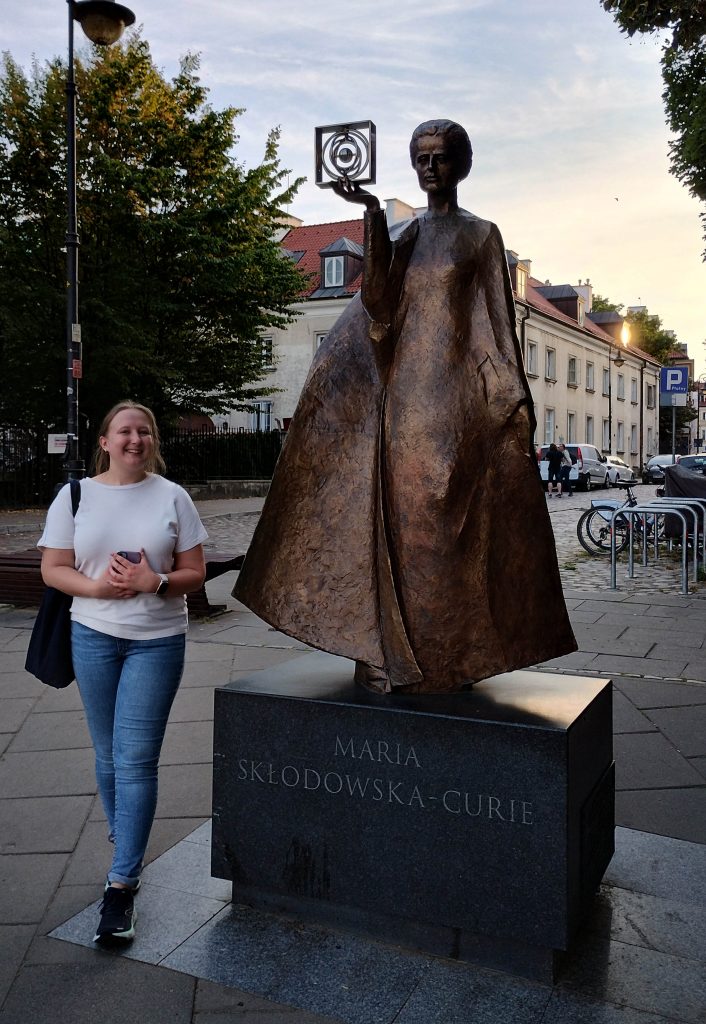
Something to stretch towards: Julia Derlikiewicz (left) and Marie Skłodowska Curie (right).
We thank our hosts, Katarzyna, Julia, Deeksha, Jurek, and Mihai, so much for their overwhelming hospitality and hope that we can return the favor at some point.
We are pleased to see that the Kode24, and online magazine for developers, has taken an interest for quantum computing – again. Under the heading “Hva er greia med …” [What’s the deal with …], this interview, conducted by journalist Kurt Lekanger, introduces a few of the basics.
On Thursday 21st of September OsloMet’s QuntumHub and DQUANT hosted an introductory quantum science event called QuantumHub day – a free and open event for everyone!
The event is aimed to spark interest and educate people about arguably one of the most disruptive and influential technologies known to date.
Here, attendees were introduced to the quantum science field and got the chance to try Norway’s first quantum computers! Furthermore, the event included the experience of quantum dynamics at close range and the possibility to play Quantum Moves with wave functions. During the event, attendees were rewarded a free QuantumHub t-shirt.
QuntumHub day was an insightful and inspiring event which was met with good feedback and left new people interested and hopefully more knowledgeable in the field of Quantum mechanics and computing.
As a part of our contributions to this year’s Forskningsdagene, the OsloMet Quantum Hub had the pleasure of contributing to OsloMet’s actitiveis at Holmlia. The Makerspace at our faculty was responsible for making Ungforsk happen – with an very interesting program put together to spur the curiosity of youth school pupils. Indeed an impressive job planning, announcing and implementing. Kudos to Notto Thelle, Kersti Fosse Blålid – and all other colleges and voluenteers involved. Read more about what went on at Ungforsk here:
Slightly younger pupils were invited to a mini-Forskningstorg where one of the stands was dedicated to introducing them to quantum technology. Thanks, Aleksandar Davidov, Bendik Dalen and Kristian Wold, for your efforts!
The events took place 20th and 21st of September. A total of 400 pupils got a glimpse of quantum technology – first and foremost through playing Quantum Moves – a game developed at Aarhus University addressing quantum control and adiabatic quantum computing. Actually, the game is surprisingly addictive …
Olav-Johan Øye has, under the heading student stories, written a nice piece about Maryam and her work at Ruter – the public company that organizes public transport in the Oslo region.
Her work involves both quantum and AI technology. Read all about it here:
On Thursday 21st of September OsloMet will host a QuantumHub day. The doors will open at 16 and you are invited to check out the event at Pilestredet 35 (by Holberg plass), rooms: PI447, PI451 and PI460. During the event there will be the possibility to:
Try your own quantum computing programs
Experience quantum dynamics at close range
Play quantum moves with wave functions
Discuss with quantum researchers why the quantum universe is exciting and important
Receive QauntumHub merch! (limited supply)
The event starts with a short introduction seminar at 16.00, but feel free to join at any time. The event ends at 18.