A tour through the quantum hotspots of the Low Countries

Quantum Hub just wrapped a three-day study trip to the Netherlands’ quantum hotspots for ACIT students, PhD candidates, and faculty colleagues.

We kicked off in Amsterdam at the Amsterdam University of Applied Sciences with a welcome and an overview of the Dutch quantum ecosystem, followed by a tour of local quantum-education programs and an afternoon Qiskit workshop for hands-on practice. The day concluded with a roundtable discussion (which was actually rectangular) on how to teach future industry experts quantum technologies.
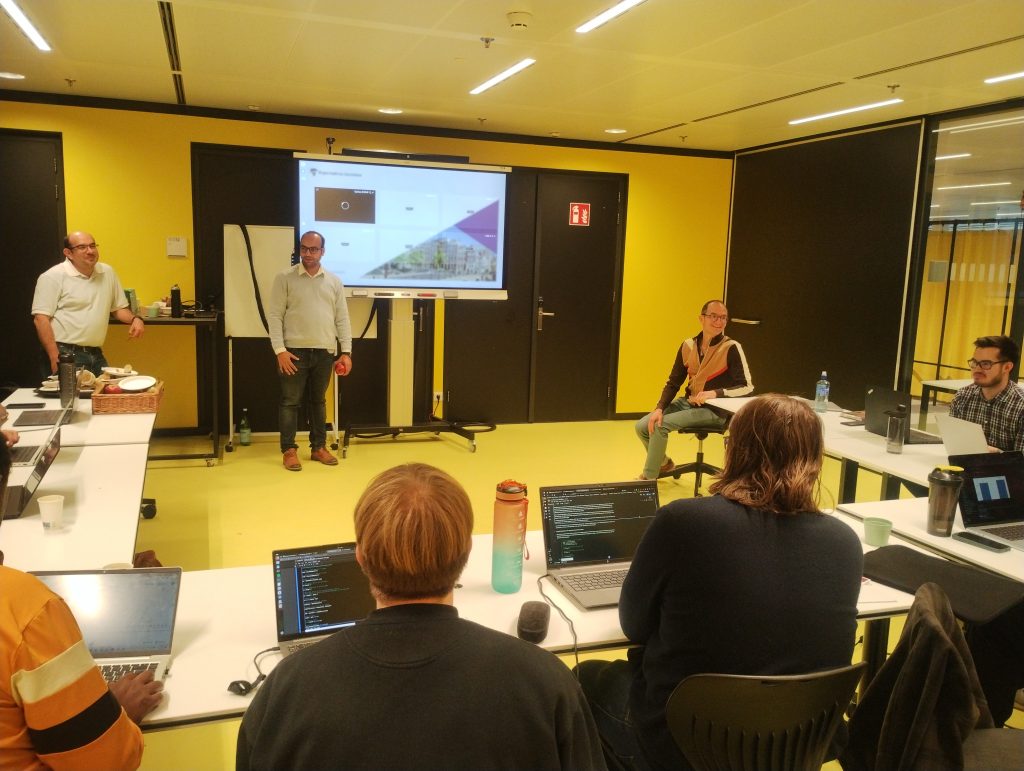
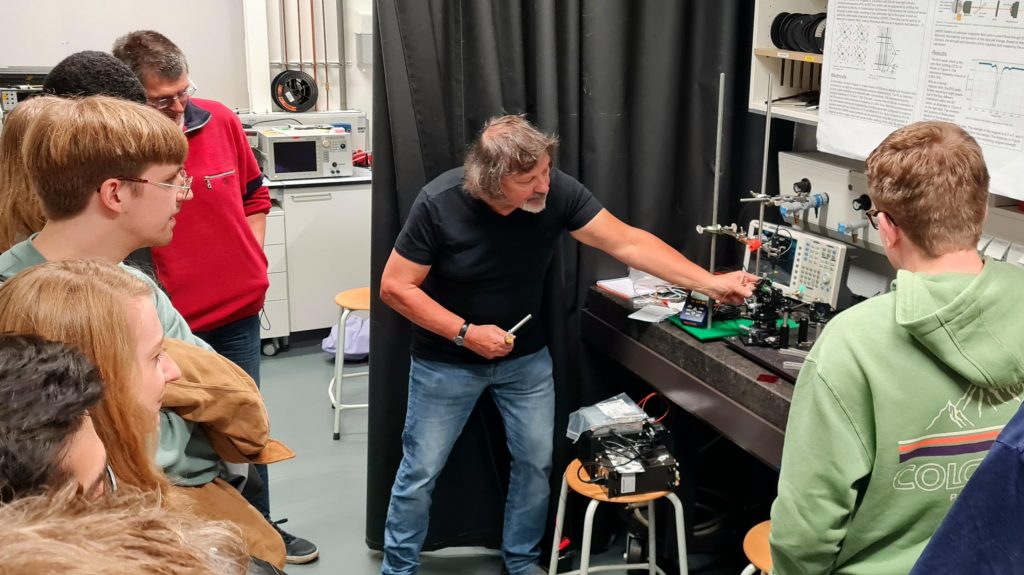
On day two we explored ethics in quantum computing with SURF before hopping a train to Eindhoven. There, at the Qubit Building of Eindhoven University of Technology, we heard about developments in the Dutch quantum-technology ecosystem and visited the Quantum Communication Lab.
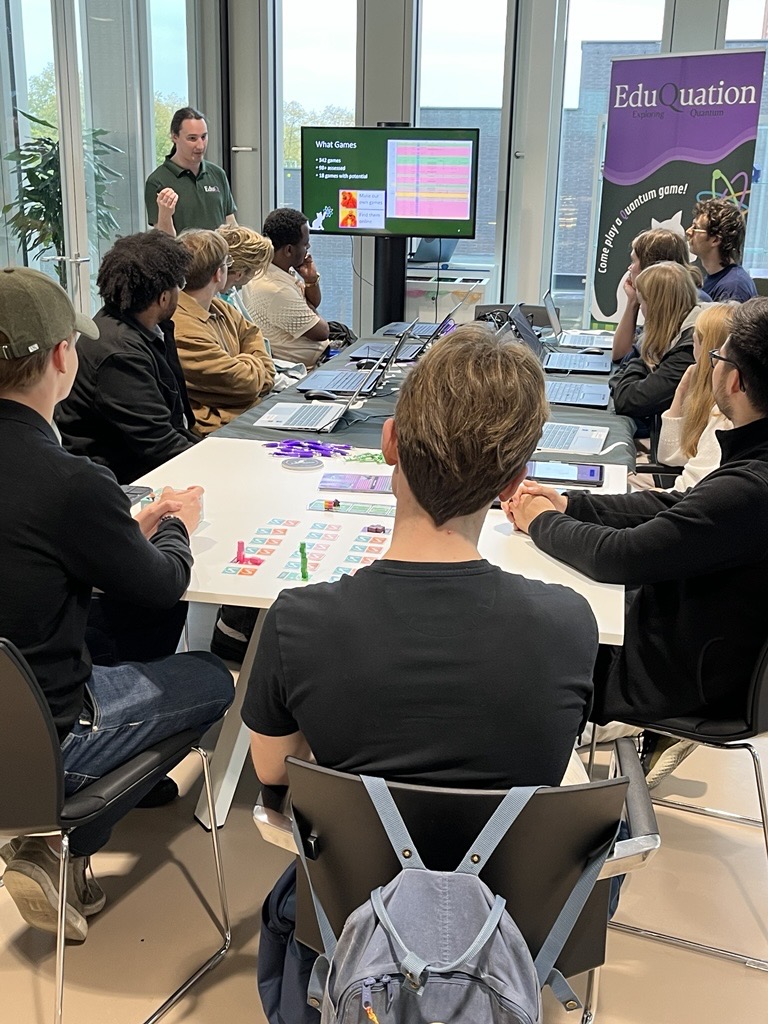
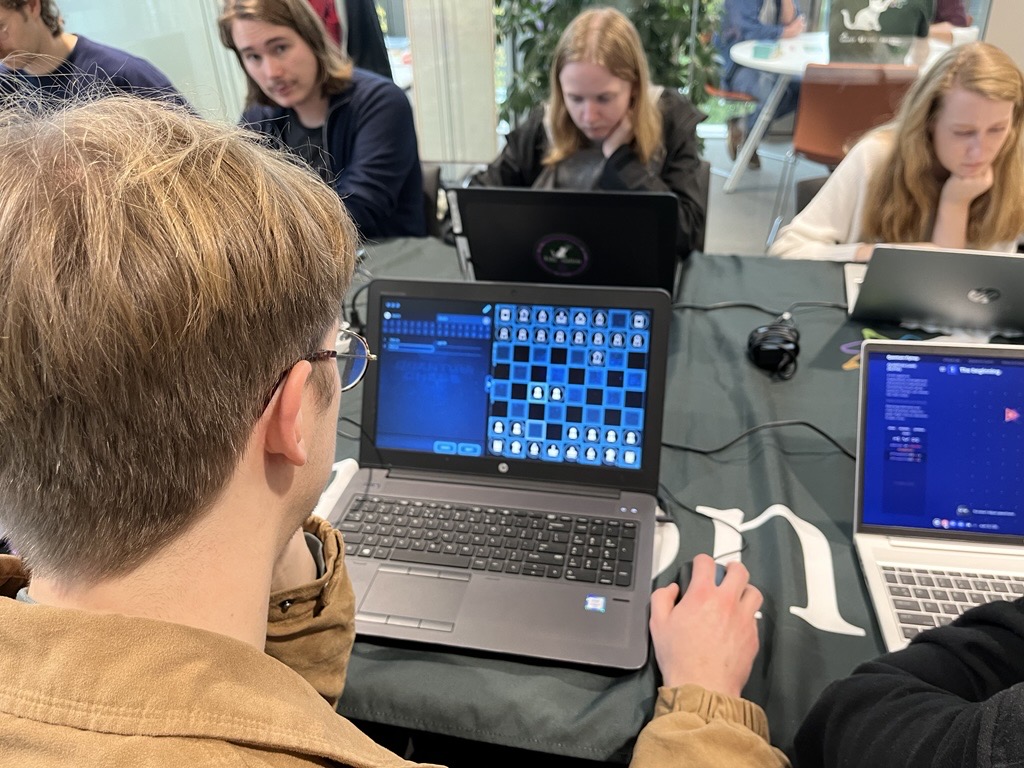
After a five-minute walk, we entered the neighboring Fontys University of Applied Sciences, where we visited two QT-related labs and played in the “Quantum Game Room,” with help from the EduQuation student team.
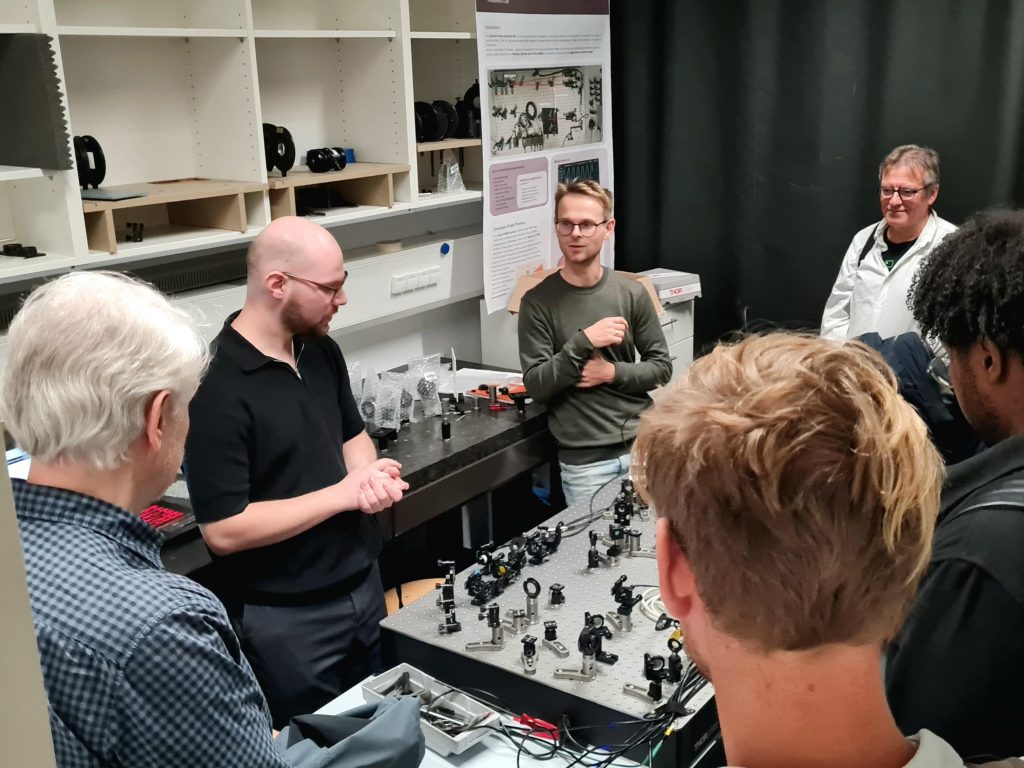
The final morning took us to LAB42 at Science Park, where we met colleagues from Quix Quantum, QuSoft, and the Quantum Application Lab. Their presentations spanned quantum photonics, algorithm design, and industry applications.
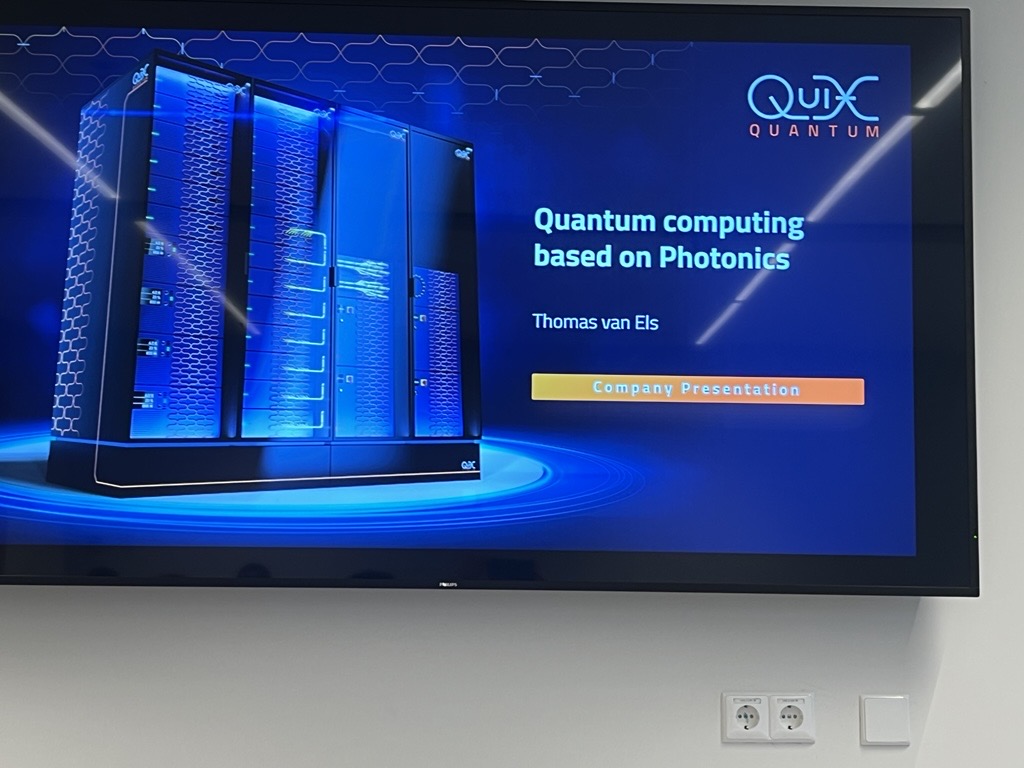
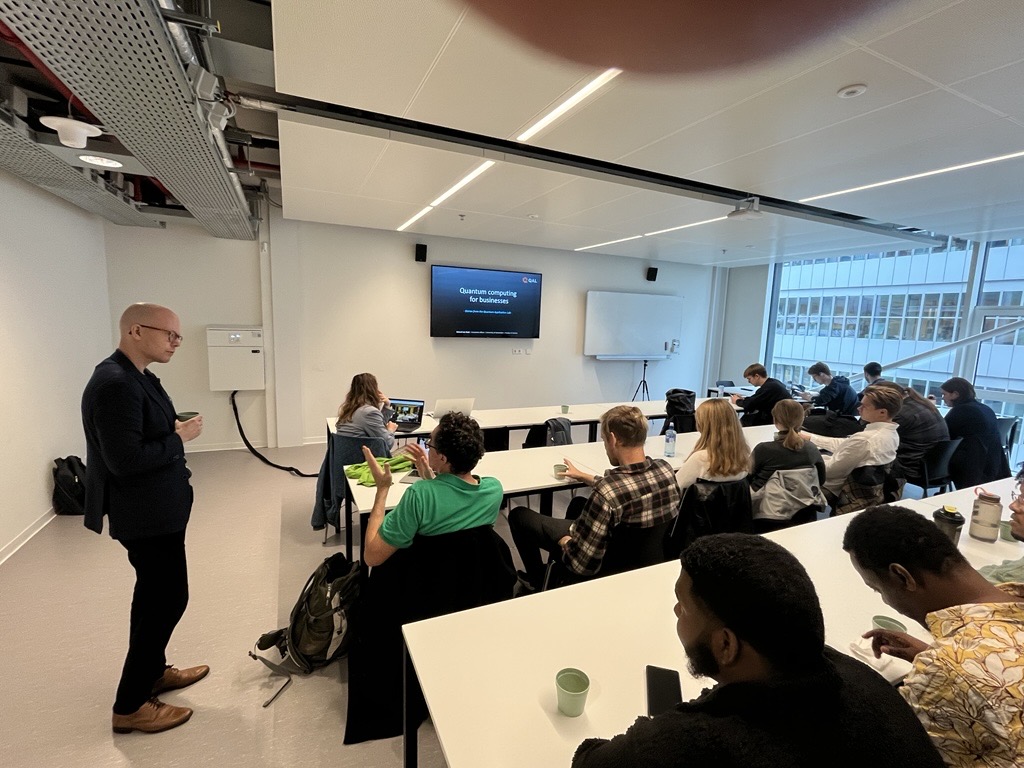
Huge thanks to our Dutch hosts—and especially to Yves Rezus, an external QH member, who took the lead in organizing the visit!
Quantum Hub at Homlia

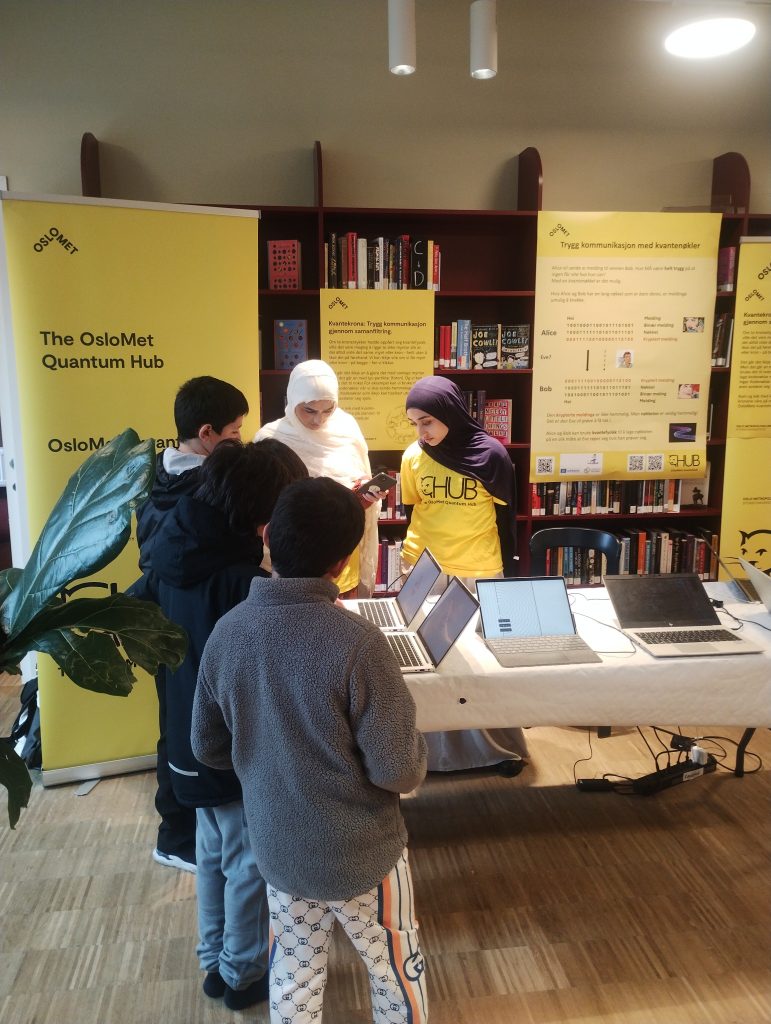
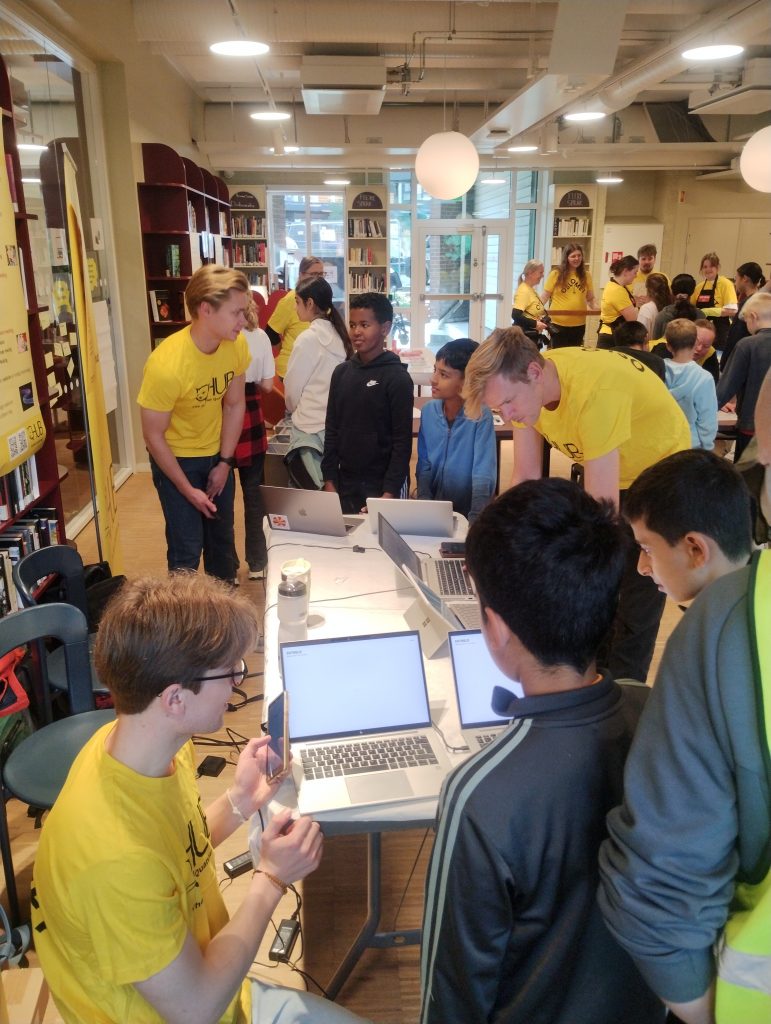
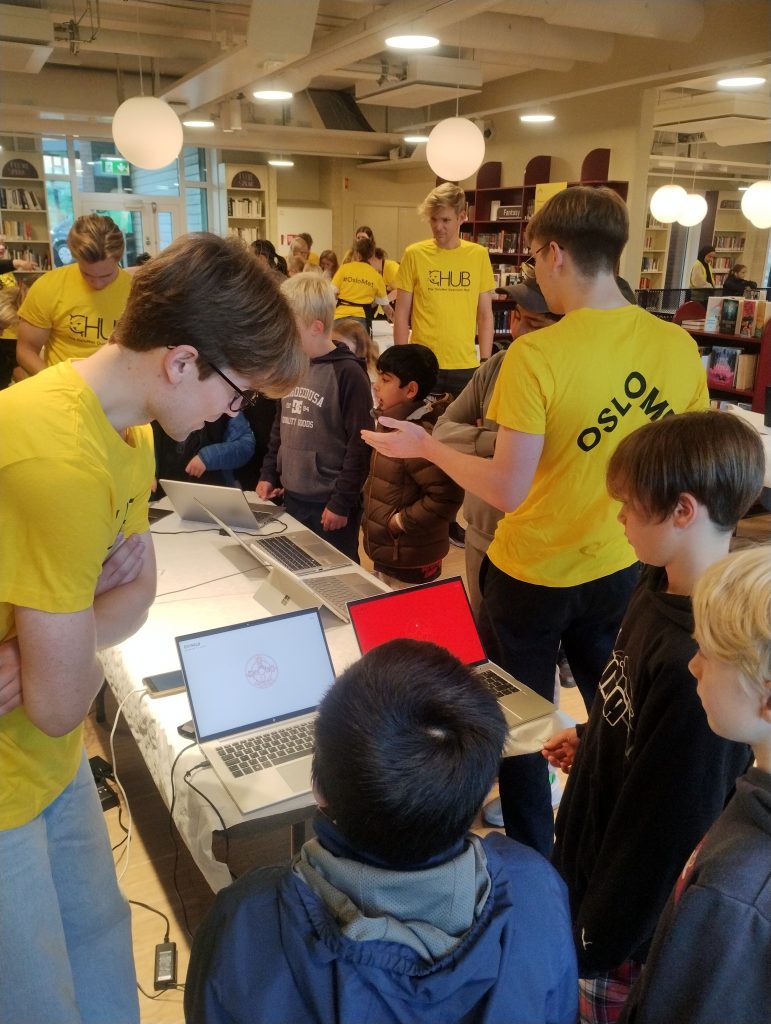
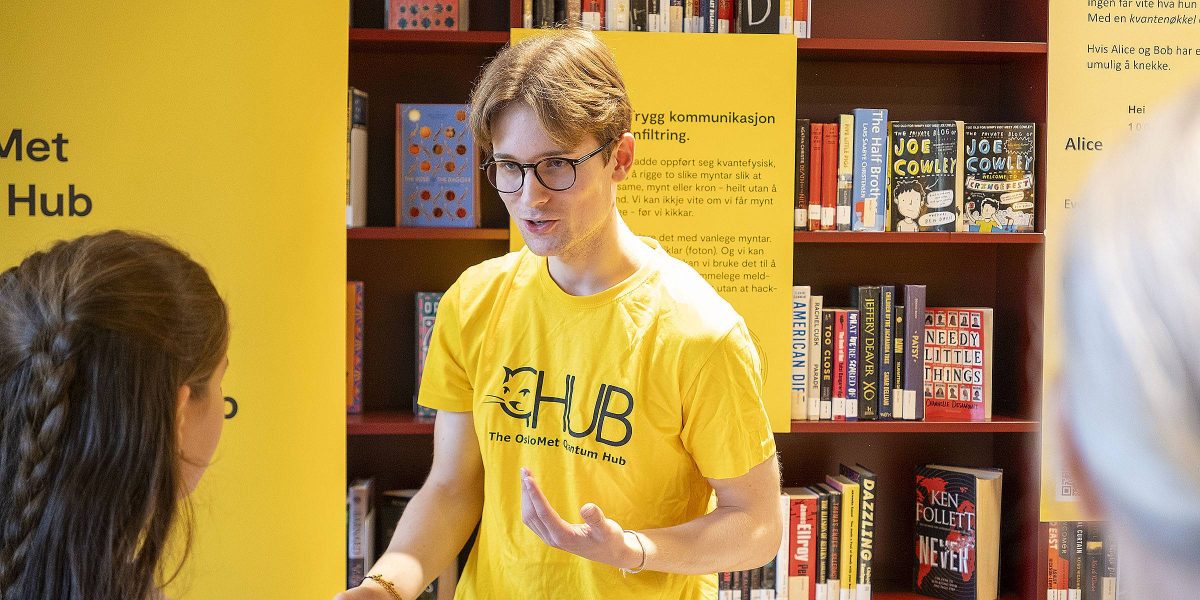
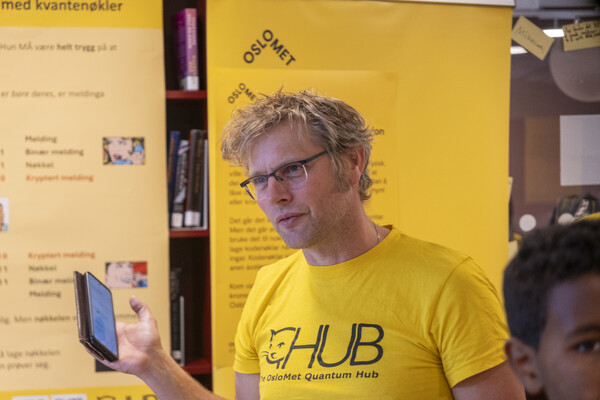
On Friday, September 19, school kids gathered at Deichman Holmlia where OsloMet’s Quantum Hub organized a research square — for the third year in a row.

Our Master’s and doctoral students invited their younger colleagues into the world of quantum physics. With simple examples intended to spark curiosity, they explained quantum physics using something as everyday as coins (funny but there are also quantum bills… perhaps they should be used next time at Homlia). High-school kids were also introduced to concepts such as “entanglement” and “quantum encryption”, and how this can be used to send messages even more securely than today.

Also read here and here.

A pleasant visit from UCEVA

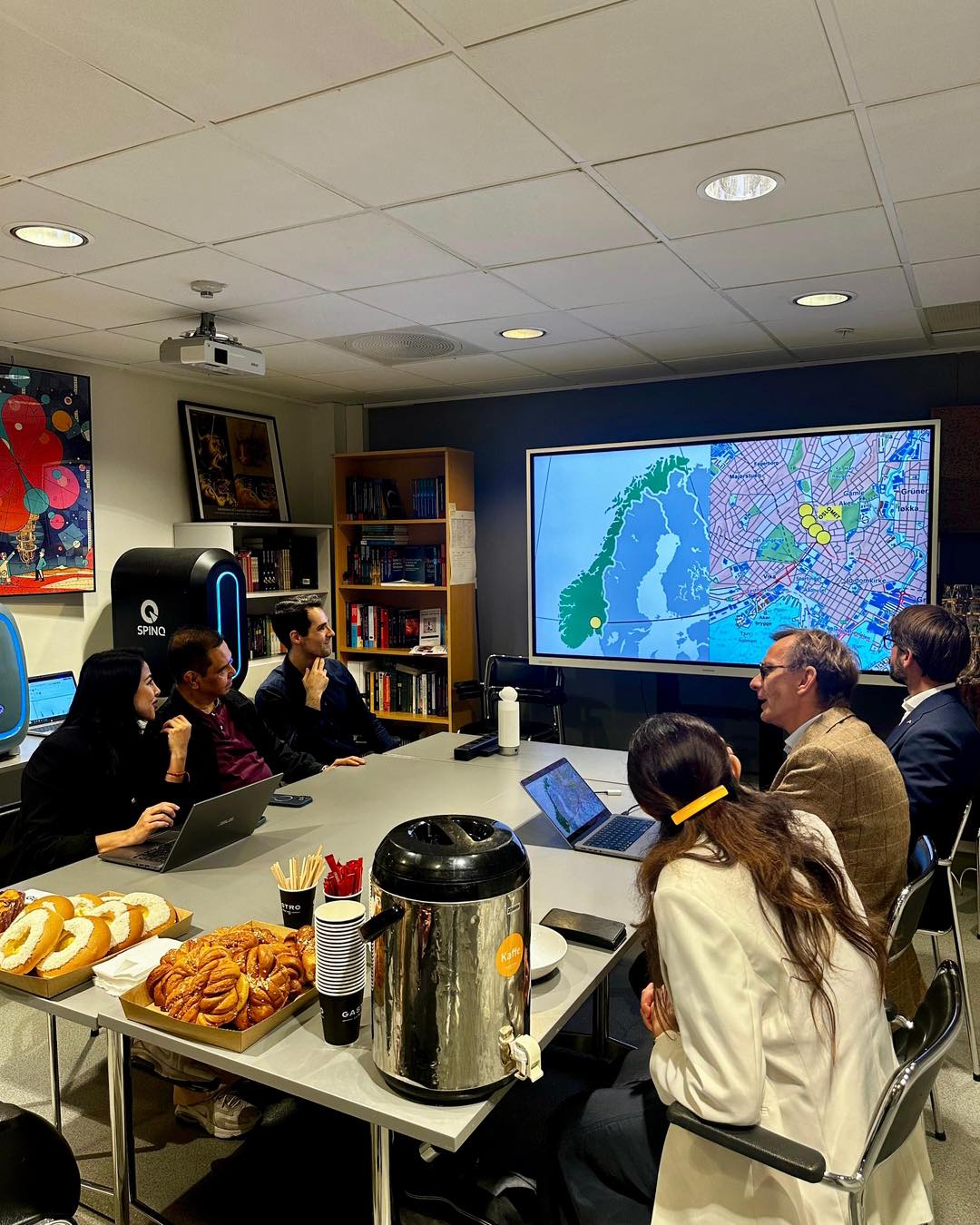
On October 5, OsloMet’s Quantum Hub welcomed a delegation from the Universidad Central del Valle del Cauca (UCEVA, Columbia), that included Juan Carlos Urriago Fontal (Rector), and Diana Katherine González (Director of Internationalization), together with José David Patón-Romero from the Simula Metropolitan Center for Digital Engineering (SimulaMet).

OsloMet leadership, including Rector Christen Krogh, TKD Dean Laurence Habib, and Head of the Computer Science Department André Brodtkorb, attended the meeting. Our rector provided an overview of OsloMet’s activities, while we presented the Quantum Hub’s initiatives and achievements. It was a pleasure to see the genuine interest expressed by Dr. Fontal and Ms. González, and we look forward to collaboration!

Sølve in the NRK morning news

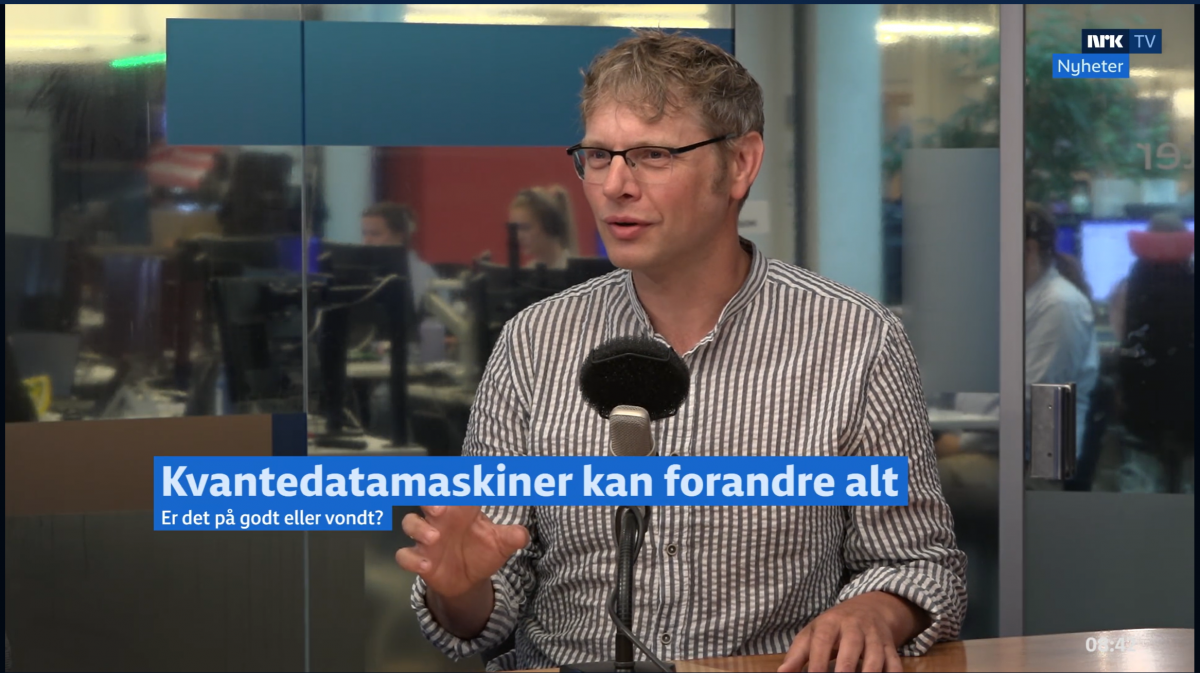
On July 14, Solve Selsto, the scientific manager of the Quantum Hub, was interviewed on NRK’s Morning News. He emphasized that all of Norwegian society—not just businesses and government agencies—stands to benefit from advances in quantum information technologies.

See the interview here (starts 01:41:10).

QIT Norway 2025

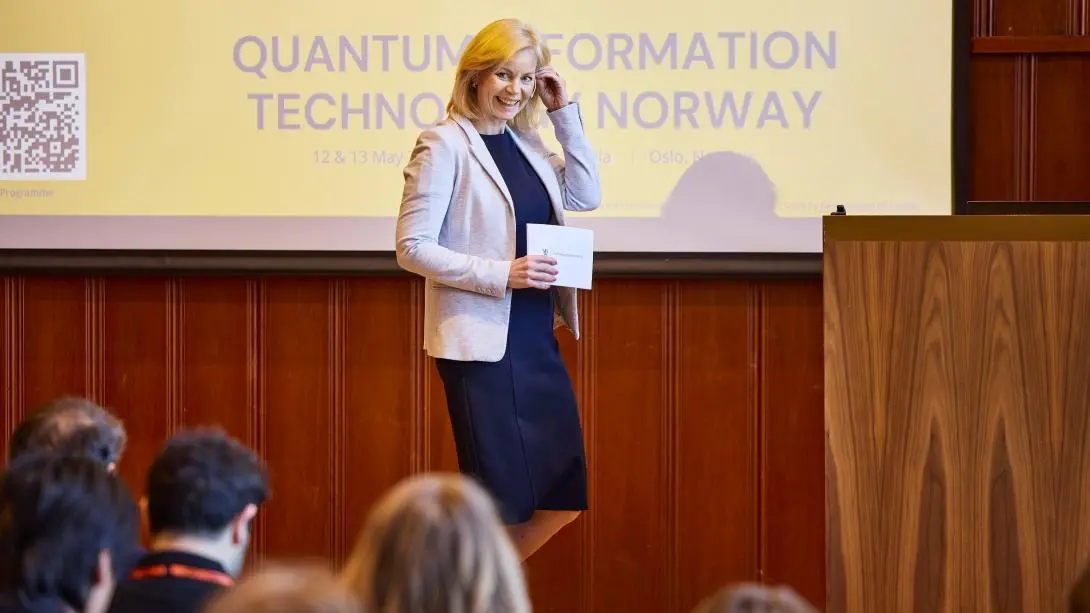
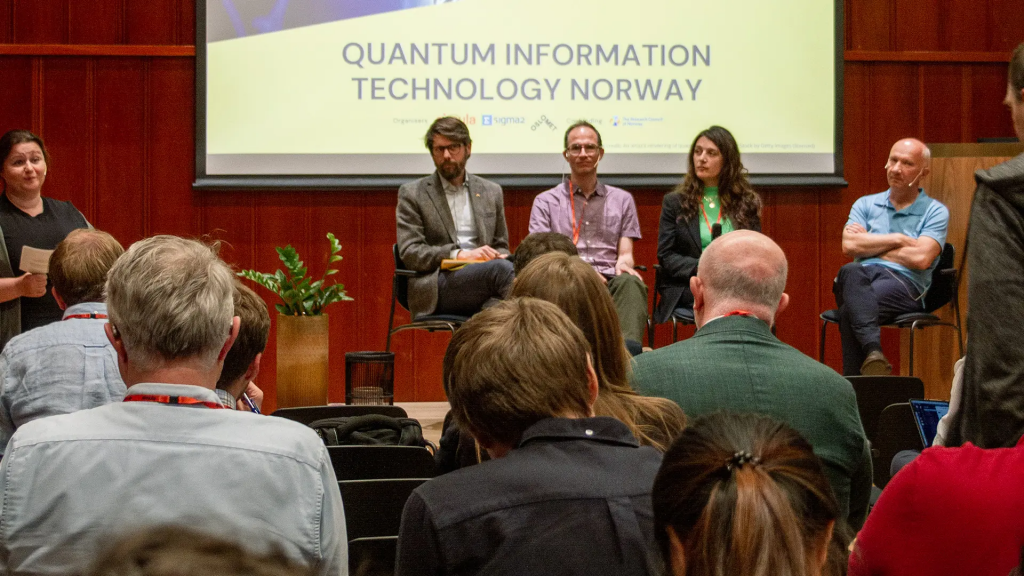
Quantum Hub, SimulaLab, and Sigma2 co-organized the second strategic forum on Norway’s national strategy for quantum information technologies (QIT). Hosted by Simula Research Laboratory on May 12–13, the event brought together researchers, policymakers, and industry leaders to discuss the future of quantum technologies in Norway

Two Quantum Hub members, André Brodtkorb and Yves Rezus, have participated in the panel discussion.

Read more about the event here

Spreading Quantum (knowledge) with Tekna

Last week, we were visited by Anna Kramar from Tekna (short for Teknisk-naturvitenskapelig forening, English: Norwegian Society of Graduate Technical and Scientific Professionals) that is a professional association with more than 110 000 scientists, technologists, and other graduate technical and scientific professionals in Norway.

It was inspiring to learn that Tekna also recognizes the need to enhance ‘quantum literacy’ and emphasize the significance of the upcoming Quantum Information Technology era.

We are excited to announce that we have agreed to organize a joint event at OsloMet in May, with the goal of highlighting the urgent need for Norway to advance in quantum technologies and join other countries that have already recognized their strategic importance.

The preparations are already underway!

Donut Physics

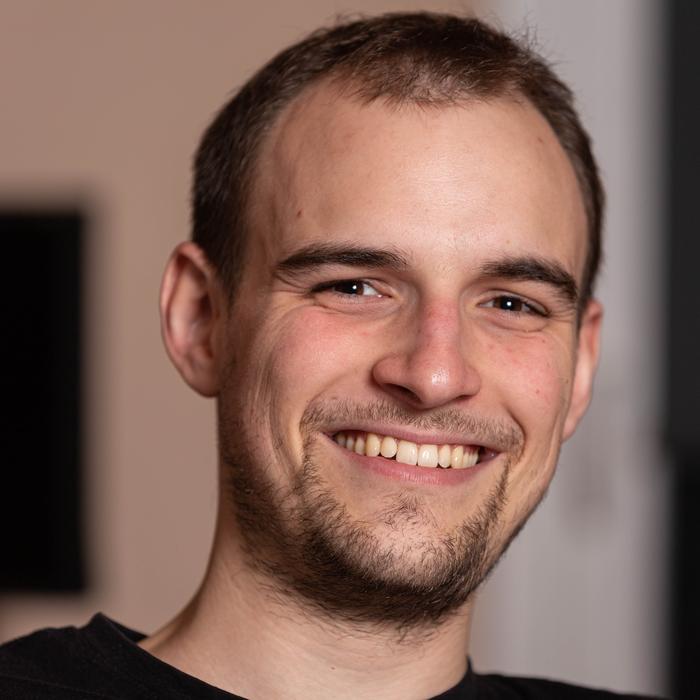
During January and February, we enjoyed very productive visits (and stays!) from Pedro Ribeiro (University of Lisbon) and Lucas Sá (University of Cambridge).

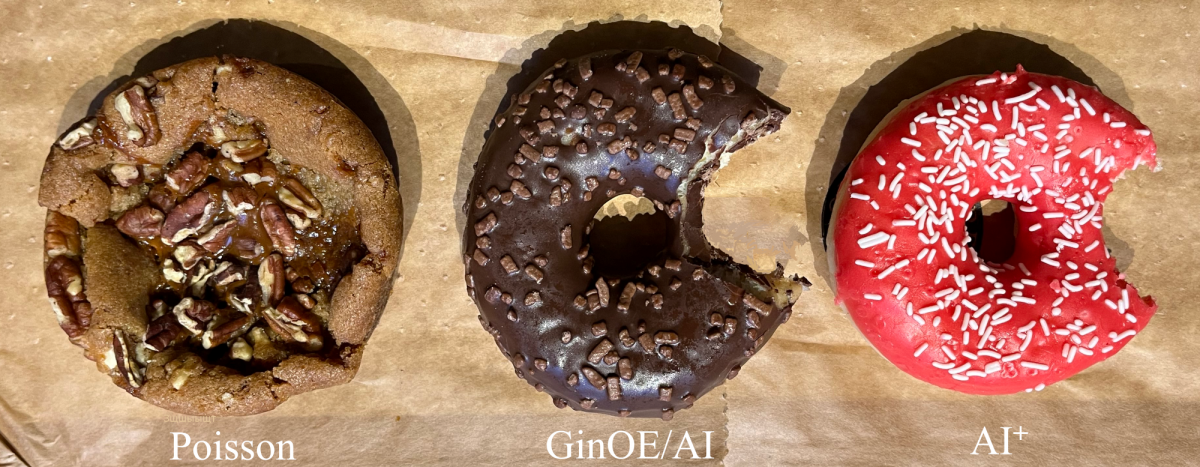
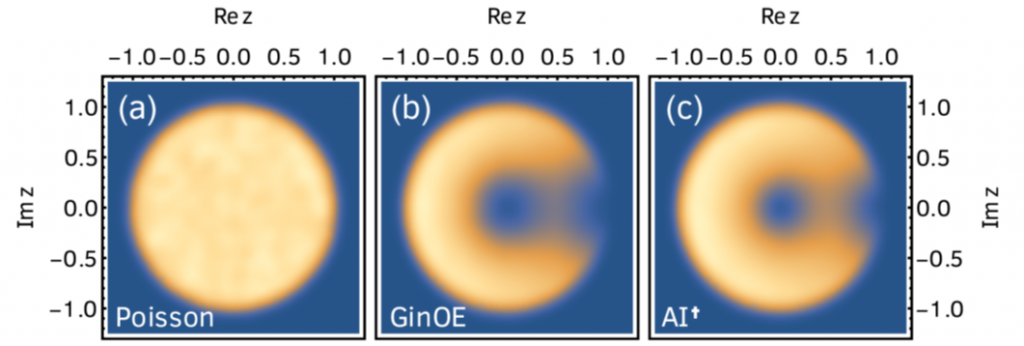
We discussed the first experimental detection of “Donuts”—the distribution of complex spacing ratios, CSRs, for various quantum channels (see the theoretical plots below). Depending on symmetry and (non)integrability, quantum channels can display CSR distributions of different shapes, classified as “cake” (integrable case) and “bitten donuts” (the depth of the byte depends on the particular symmetry the channel obeys).

Just before the New Year, Kristian Wold, PhD candidate & member of the Quantum Hub, ran series of experiments on two different quantum computers (in Finland and China), leading to a pleasant surprise: Donuts and cake were detected!

How to wisely spend 70 quantum millions annually?

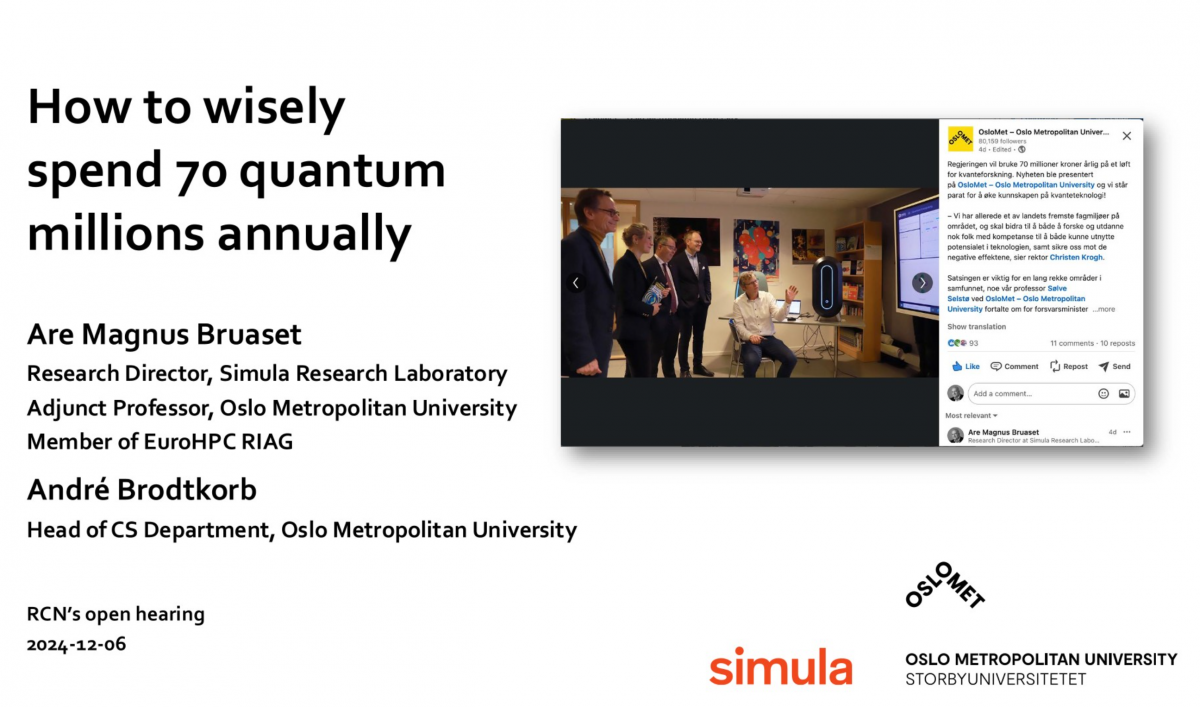
On December 6, Are Magnus Bruaset, a member of the QH Hub and Adjunct Professor at OsloMet (and Research Director of Simula Lab), together with André Brodkorb, a founding member of the QH (and Head of the Department of Computer Science at OsloMet), provided input to the Research Council of Norway regarding the establishment of quantum technology centers.

They emphasized the importance of fostering innovation and collaboration to advance Norway’s position in the rapidly evolving field of quantum technology. Especially underlined was the need for interdisciplinary efforts to bridge academia and industry.

Also, specific suggestions were made: 5-10 million a year should be spent on access to cloud-based quantum resources, which can be advantageously managed through @Sigma2.

The remaining NOK 60-65 million provides the opportunity to establish 2-3 complementary centres for research on different aspects of quantum technology. Such centers should have a funding for 5 years, so that important expertise can be educated for a future quantum workforce. The centres should collaborate on outstanding quantum education and academic meeting places on a national scale.

There were quantum channels. And now superchannels!

The 3rd Krakow-Torun-Oslo workshop, “Beyond Quantum” (November 26–December 1), has now concluded. It was an intense brainstorming week (as always) where the main topic—What’s next?—was discussed. Holmenkollen and the weather provided the perfect conditions for day-long sessions, interspersed with coffee sips and lunch breaks.

The main topic this year was superchannels, quantum operations that map quantum channels onto quantum channels (where quantum channels, in turn, map quantum states onto quantum states). Perhaps the topic for next year’s workshop will be super-superchannels (metachannels?).

Seminar: Frederik vom Ende

We invite all colleagues interested in open quantum systems and quantum information to the upcoming seminar by Frederik vom Ende from Freie Universität Berlin (please see the title and abstract below). The seminar will take place next Thursday, October 10th, at 13:00 in P35-PS439. Lunch will be provided on-site.

Quantum-Dynamical Semigroups and the Church of the Larger Hilbert Space

The idea underlying open systems theory is to describe the evolution of non-isolated systems—at least approximately—via a differential equation ρ'(t)=Lρ(t) with L of a special form, called Lindblad- or GKSL-form. This is, however, not the only way to tackle this problem; another successful approach is to consider the system coupled to its environment, and then extract the system’s dynamics by tracing out the environment from the combined unitary evolution. While the physics literature features well-known approximations which guarantee when these two descriptions are compatible, in this talk we will investigate under what conditions they can match precisely: Our main result is that GKSL-dynamics can be written exactly as the reduced evolution of system plus some environment if and only if the environment is infinite-dimensional with an overall unbounded Hamiltonian. In doing so we obtain a second-order Taylor-approximation for bounded system-environment Hamiltonians, with some familiar coefficients.