
By Wilma Jenson Plesner, Master student OsloMet
As Richard Bach wrote in 1977, “Don’t be dismayed at good-byes. A farewell is necessary before you can meet again. And meeting again, after moments or lifetimes, is certain for those who are friends.”
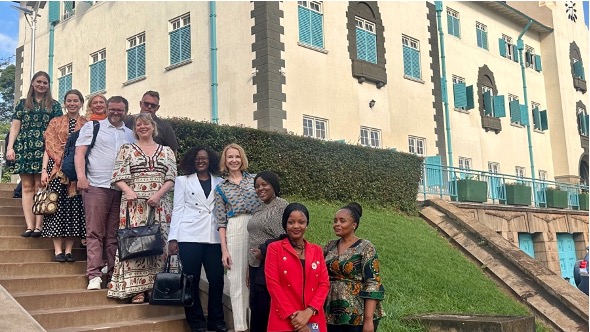
The Norwegian and Tanzanian delegations arriving at Makerere: Lykke Sofie Myrås; Wilma Jenson Plesner; Emilie Hauger Tangen; Prof. Andreas Ytterstad; Prof. Oscar Westlund; Dr. Anne Hege Simonsen; Theodora Theodory, Prof. Kristin Skare Orgeret; Theodorah Munisi; Caroline Malewa and Dr. Eva Solomon.
In the City of Seven Hills, Ivory Tower presents itself as a beautiful landmark atop Makerere Hill. A combination of white and blue, one might associate with sand and water – a free space for thought and reflection, where perspectives are shaped and connections are built across borders. Through tall corridors, a pulsing academic atmosphere fills the air as the morning sun reaches the top of the hill. An anticipatory feeling lingers in the air; it is still an early morning in Kampala.
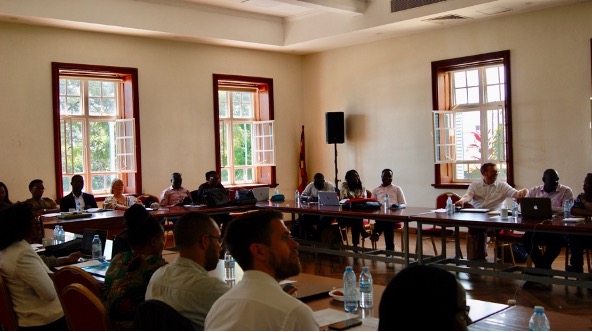
A transnational audience of students, professors, scholars, experts and ambassadors sits among one another. As the sun greets the room through the windows, Norpart Project Coordinator and Head of Department Dr. Nakiwala Aisha Sembatya takes the stage and extends her welcome, describing how the project has aimed to “widen the horizons of both staff and students by producing journalists who can think critically, communicate ethically and report with accuracy, empathy and responsibility”.
In a balance of engaged professors, scholars and nervous master’s students, common ground is found through gratitude for the Norpart project. The conference marks another milestone in the Norpart collaboration between Makerere University, University of Dar es Salaam and Oslo Metropolitan University – OsloMet, bringing together students, researchers and educators to reflect on journalism, exchange and cross-border collaboration. Since 2023, 45 MA students from Dar es Salaam and Makerere Universities have completed the Oslo semester at OsloMet, with five students completing their full degrees in Oslo. Meanwhile, several Norwegian students have conducted research and thesis fieldwork in Tanzania and Uganda. Tanzanian Project Leader, Dr. Eva Solomon and researchers from all three universities have undertaken research on journalism and media.
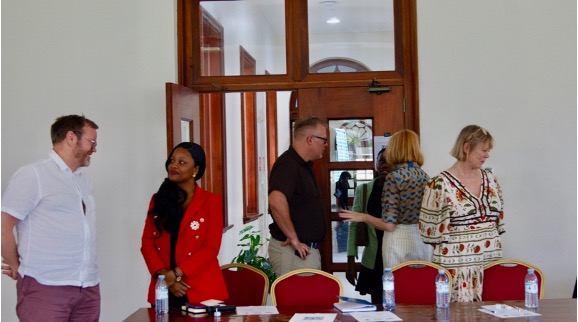
Heads nod throughout the room and appreciation is expressed through generous applause. Embracing the partnership, Secretary of the Norwegian Embassy Mr. Magnus Lorentzen, reinforces Dr. Aisha’s message, emphasizing the journalistic role in gathering and evaluating trustworthy sources. Rooted in community and collaboration, the conference room reflected a diversity of perspectives. Recently, World Press Freedom Index revealed declining rankings for Tanzania in 2026, reaching 117th place and Uganda at 131. Norway remains in a leading position, though not without flaws. Can ideals truly be tested in isolation? Perhaps only through exchange can ideals truly be tested, challenged and understood.
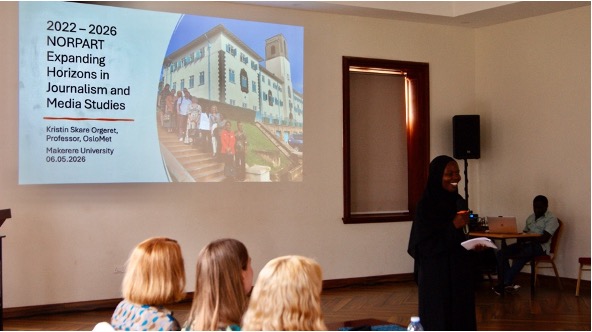
As the sun settles into midday, the room is dimmed and the appearance of familiar faces on screen brightened the atmosphere. Moments of smiles and laughter are shared as the Norpart Project Manager, Professor Kristin Skare Orgeret shares pictures and reflects how the many international projects have evolved over time, often building on each other and creating a collaboration where academic partnerships and personal stories have become deeply intertwined. “What began as institutional cooperation gradually grew into long-standing relationships shaped by shared experiences, mutual learning, and enduring friendships across borders,” she explained.
Professor Helge Rønning played a central role in the early collaboration between Makerere University and the University of Oslo through the NUFU project. During a visit to Kampala with television icon Ingrid Espelid Hovig, Professor Kristin Skare Orgeret and Dr. William Tayeebwa were inspired to develop the cooperation further. Over the years, this has led to several academic books and scholarly articles, as well as to international initiatives, including NORHED I, which resulted in five completed PhDs, and Norpart, strengthening the Makerere – Dar – OsloMet collaboration. The projects have created a solid foundation for continued cross-border research, exchange, and lasting friendships, showing how successful academic cooperation can also become deeply personal.
“When our students come back from OsloMet, they are different,” said Makerere’s Senior Lecturer Dr. Gerald Walulya. He further explained that by ‘trading countries’ the project has “helped shape a generation of ambassadors for each nation while also shaping ‘new’ types of journalists suited for this changing world”. In the middle part of the program, master’s students presented their ongoing thesis projects: climate change, safety of journalists, radio management practices, influencers as journalists and gender representation surrounding Tanzania’s first female president. Each topic builds on current classes across the universities, with special recognition to OsloMet’s Climate Journalism with Professor Andreas Ytterstad, Media in War, Crisis and Conflict with Professor Kristin Skare Orgeret, and Investigative Journalism and Cross Border Cooperation with Professor Roy Krøvel. All highlighting why this collaboration is essential: togetherness in a polarised world.
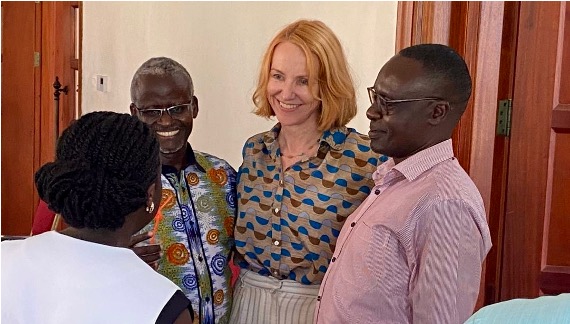
The classroom environment at OsloMet has rarely appeared more connected. Head of Department Dr. Anne Hege Simonsen noted, “I have been amazed by how the atmosphere in the classroom has been lifted when the exchange students were present”. Norwegian classroom culture can at times be characterised by more reserved forms of participation, yet both students and professors from all the three countries agreed that international and professional dynamic encouraged a more engaged, reflective and collaborative learning environment.
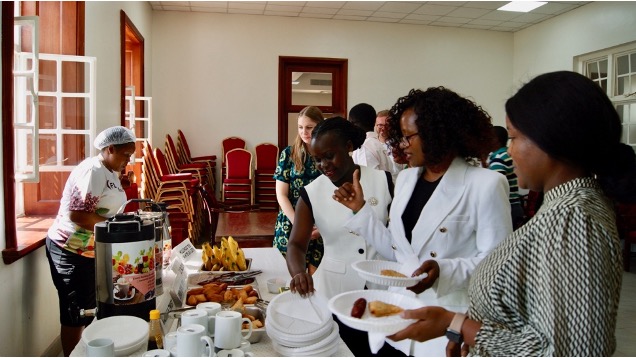
Appreciation moves seamlessly from nostalgia to the present moment as matoke, chapati and freshly pressed juice are served. In deeply human fashion, hugs, laughter and handshakes loosen the atmosphere, making room for personal connection. Setting academia aside for a moment, conversations continue through other shared interests. Professors and students compare harsh winters in Norway to the warm climate in Tanzania and Uganda. Before ‘trading countries’ this time, Norwegians had frantically packed their summer wardrobes, while Ugandans and Tanzanians had finally left their hats and leggings behind at home – perhaps “home” now meaning Norway as well. Complementing the climate, the room fills with vibrant colours and smart clothing suited for the final part of the conference.
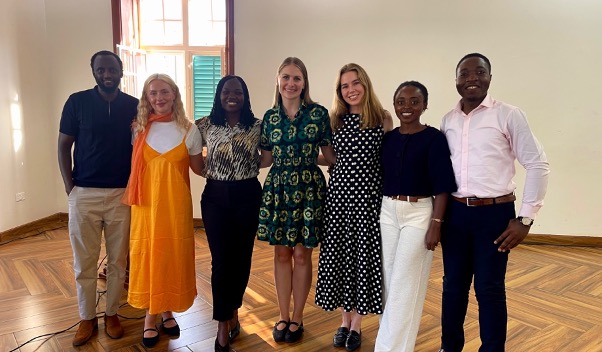
Plates are cleared and a panel discussion is served for dessert – together with cups of black coffee (no sugar) for the Norwegians. Genuine laughter spreads through the room as last year’s Tanzanian students recount their first encounters with Norway’s harsh weather. Through skiing, sledding and everyday student life, another side of exchange life reveals itself. Stories are shared about student accommodations, connecting with fellow exchange students and learning to navigate life far from home. Sometimes it means not knowing how to turn up the heater, other times it means sharing meals from one’s own country. Although not present, Senior Adviser at OsloMet, Erik Adrian Eileng’s name is continually mentioned, accompanied by smiles and shared memories of his exceptional dedication to the students.
Makerere University’s master’s student, Olive Nakatudde, reflects on her time at OsloMet during the spring semester of 2026, “Beyond the lecture rooms, the program teaches adaptability, resilience and cultural awareness, qualities that are important in the interconnected world. The experience not only enriches one’s education but also creates lasting memories, friendships and opportunities for future growth“.
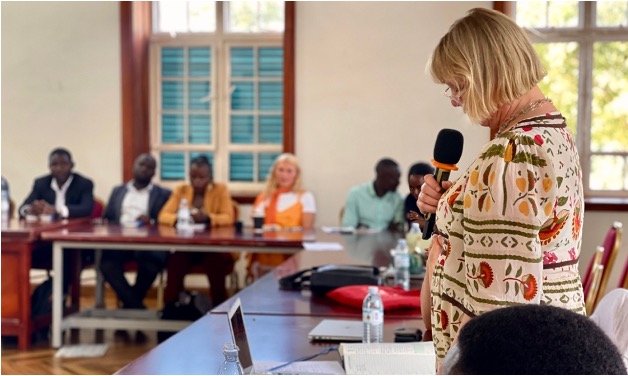
The conference finale unfolds at the intersection of admiration for East-African and Norwegian culture, as Dr. Anne Hege Simonsen, performs “Kasta Beinet” a cappella by Norwegian Onkelfolke. Dressed in a long white floral dress, the Ugandan colour scheme represents the African people, abundant sunshine and brotherhood. Together, the colours reflect the spirit of collaboration and friendship that helped shape the conference. And fittingly, part of Dr. Aisha’s introduction concludes the event, “I do not wish to see this as an end, but rather the continuation of long-term partnership and friendship between us and between our institutions.” Hands move from applause to resting over the heart, a quiet gesture of gratitude, as we thank each other and say goodbye. For now.