Breaking the Wall of Rehabilitation Access: Kumar Sourav Moharana Heads to Falling Walls Lab Berlin

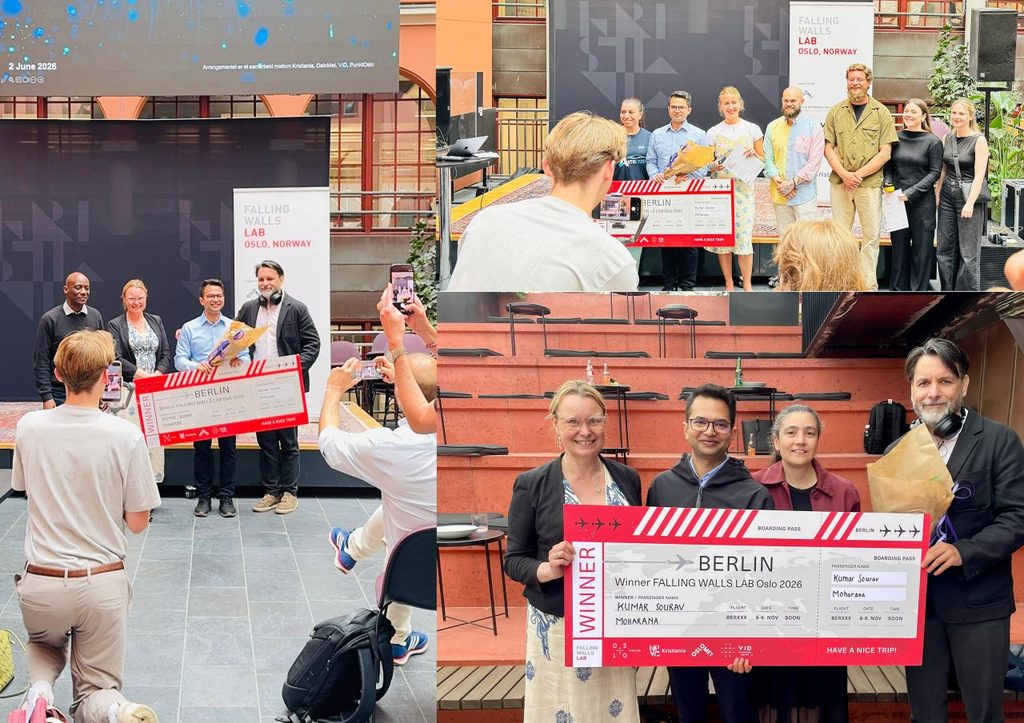
The Design for Health Research Group at OsloMet is delighted to celebrate and support Kumar Sourav Moharana, who will represent Oslo at the prestigious Falling Walls Lab Berlin on 6 November following his victory at the Falling Walls Lab Oslo competition on 2 June.

Kumar’s presentation, “Breaking the Wall of Rehabilitation Access,” explores how Virtual Reality (VR) and digital technologies can make rehabilitation more accessible, engaging, and effective for individuals who need it most. His work reflects an ongoing journey in product design and health innovation, investigating how emerging digital tools can help overcome barriers to rehabilitation and create new opportunities for patients, families, and healthcare providers.

What Is Falling Walls Lab?

Falling Walls Lab is an international forum and initiative of the Falling Walls Foundation, a non-profit organization based in Berlin, Germany. Inspired by the peaceful fall of the Berlin Wall in 1989, the foundation brings together researchers, innovators, entrepreneurs, and change-makers from around the world to address global challenges through a simple but powerful question:

«Which are the next walls to fall?»

The platform connects science, business, and society, providing emerging researchers and innovators with an opportunity to present breakthrough ideas capable of transforming the future.

From Oslo to Berlin

Winning the Oslo competition has given Kumar the opportunity to present his ideas on an international stage alongside some of the world’s most promising innovators. His project highlights the potential of VR-enabled rehabilitation to improve access to care and support more personalized rehabilitation experiences.

A Community Supporting Innovation

The Design for Health Research Group is proud to support Kumar’s journey and to see research and design-driven solutions gaining recognition beyond Norway.

We would also like to acknowledge the organizers of Falling Walls Lab Oslo, including OsloMet – Oslo Metropolitan University and the Department of Product Design, for fostering an environment where purpose-driven research, experimentation, and innovation can flourish.

Special thanks also go to Punkt Oslo, Kristiania University of Applied Sciences, and VID Specialized University for contributing to such an inspiring platform for emerging researchers and innovators.

Wishing Kumar the Best in Berlin

As Kumar prepares to present “Breaking the Wall of Rehabilitation Access” in Berlin this November, we are excited to follow his journey and celebrate this remarkable achievement.

On behalf of the Design for Health Research Group, we congratulate Kumar on this well-deserved success and wish him every success at Falling Walls Lab Berlin.

Good luck, Kumar. We are proud to see your vision for more accessible rehabilitation reaching an international audience and inspiring conversations about the future of health and care services.
Co-Designing the Future of Pediatric Rehabilitation: Highlights from the AdaptEx Workshop

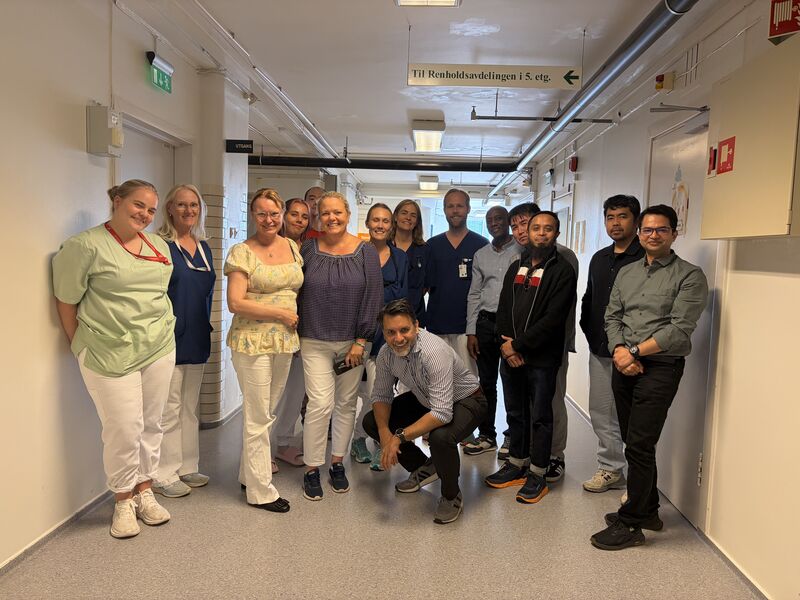
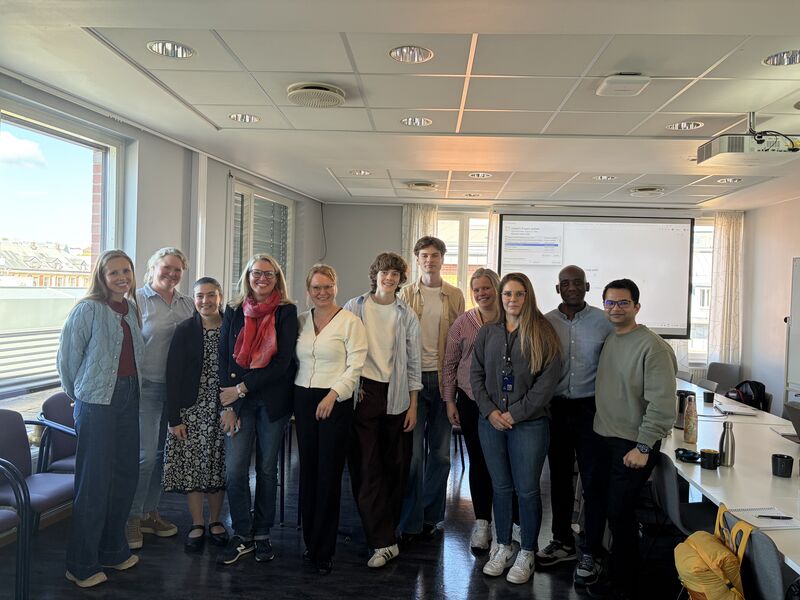
On tUesday, Speteber 1st Design for Health research group at OsloMet had the pleasure of bringing together researchers, designers, and clinicians for an engaging and productive AdaptEx co-design workshop. The workshop united the OsloMet Design for Health team, led by Nenad Pavel and Trust Saidi, with dedicated clinicians from the Oslo Municipality Aker Hospital team around a shared vision: improving rehabilitation outcomes for children with brain injuries through innovative digital solutions.

Designing for Recovery Beyond the Hospital

At the heart of the AdaptEx project is an ambitious and meaningful goal: the development of a digital dashboard that supports home-based rehabilitation for children with brain injury. By combining clinical expertise with human-centered design approaches, we are working to create tools that make rehabilitation more engaging for children, more empowering for families, and more informative for healthcare professionals.

Home rehabilitation presents unique challenges and opportunities. Through collaborative design processes, we aim to ensure that digital solutions are grounded in the real needs and experiences of children, caregivers, and clinicians alike.

The Value of Co-Design

The workshop provided a valuable space for participants to share experiences, identify challenges, and generate ideas for future development. The clinical insights, empathy, and creativity contributed by participants helped shape a deeper understanding of how digital technologies can support rehabilitation journeys beyond traditional healthcare settings.

The discussion highlighted the importance of designing solutions that are not only technologically robust but also meaningful, accessible, and responsive to the everyday realities of families navigating recovery at home.

A Strong and Growing Collaboration

We would like to extend our sincere thanks to everyone who participated and contributed to making the workshop such a success. Special thanks go to Ingvild Rosseland, Åse Bergheim, and their outstanding colleagues from Oslo Municipality for their continued commitment to this collaboration and for the productive partnership we have developed over the years.

Supporting Future Health and Care Services

The AdaptEx project directly aligns with OsloMet’s thematic research area Future Health and Care Services, which promotes innovative, collaborative, and technology-enabled approaches to healthcare. By bringing together expertise across disciplines and sectors, we are working toward solutions that improve care delivery and support better health outcomes where they matter most: in people’s everyday lives.

We look forward to the next stages of the project and to continuing this exciting collaboration as we co-design the future of pediatric rehabilitation.

Inspiring Perspectives on the Future of Safe and Sustainable Health Systems

The Design for Health research group at OsloMet was delighted to welcome Associate Professor Eva Turk for an inspiring guest lecture titled “Safe and Sustainable Health Systems for the Future.” The event was hosted through OsloMet’s thematic research area Future Health and Care Services, bringing together researchers, students, and collaborators from multiple disciplines to explore the challenges and opportunities shaping tomorrow’s healthcare systems.

Eva Turk is an internationally recognized expert in Health Technology Assessment (HTA), digital health, and health policy. She serves as Senior Researcher and Program Lead at the St. Pölten University of Applied Sciences in Austria and holds associate professorships in Slovenia. Throughout her career, she has built an impressive portfolio spanning government, academia, and industry across Austria, Slovenia, and Norway. In addition to her academic leadership, she is actively engaged in global health initiatives through organizations including HTAi, WHO Europe, Women in Global Health, and the Norwegian Red Cross.

Drawing on her extensive international experience, Eva shared valuable insights into how healthcare systems can become safer, more resilient, and more sustainable in the face of evolving societal and technological challenges.

Key Themes from the Lecture

Evidence-Based Innovation

Eva highlighted the importance of bridging established HTA frameworks with the realities of implementing digital health solutions in practice. She emphasized how evidence-based approaches can support meaningful innovation while ensuring quality, safety, and long-term value for patients and healthcare providers.

Building Resilient Health Systems

A central message of the lecture was the need for healthcare systems that are inclusive, community-centered, and capable of adapting to future challenges. Eva underscored the importance of designing solutions that leave no one behind and strengthen resilience at both the system and community levels.

Cross-Sector Collaboration

The lecture also explored the critical role of collaboration across research, policy, industry, and healthcare practice. Eva demonstrated how multidisciplinary partnerships can accelerate innovation and support the development of healthcare solutions that are both effective and sustainable.

Strengthening International Collaboration

For the Design for Health research group, the visit was particularly meaningful as it builds on ongoing research collaborations and the development of joint project proposals with Eva and her international network. Opportunities to engage with leading global experts enrich our research environment and inspire new perspectives on how design, research, and digital innovation can contribute to improved health and care services.

We extend our sincere thanks to Eva Turk for sharing her expertise and inspiring our OsloMet community. Her visit encouraged all of us to reflect on how research-driven innovation and collaborative approaches can help create safer, more sustainable healthcare systems for future generations.

We look forward to continuing our collaboration and exploring new opportunities together in the years ahead.