Pandemics & Society Webinar 2 April, “The Hidden Impact of COVID-19 on Tuberculosis: Excess Burden, Inequalities, and Health System Disruptions”

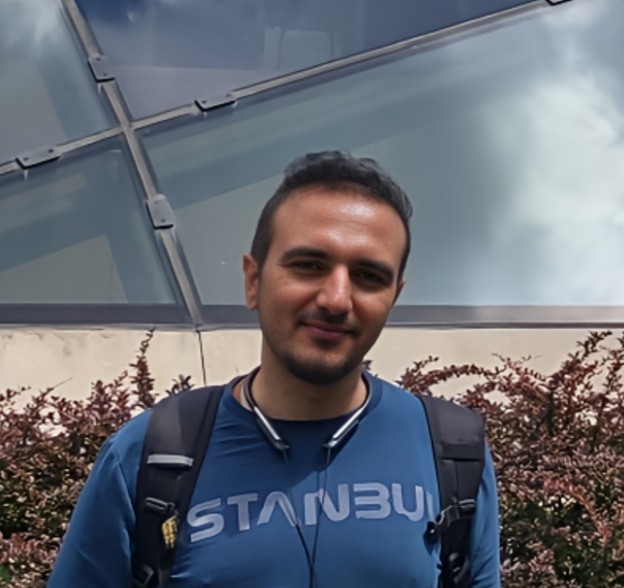
For the eight Pandemics & Society Seminar of our Spring 2026 series we are pleased to welcome Hamed Karami (Georgia State University). The seminar will be held on Thursday, 2 April at the normal time (16:00 CEST). More information about our speaker and the presentation is below. You can sign up for email notifications about the seminar series, including the Zoom details, here.
About the talk:
The COVID-19 pandemic disrupted health systems worldwide, with important consequences beyond direct COVID-19 deaths. In this talk, I examine how these disruptions affected tuberculosis (TB) outcomes, leading to excess burden and widening inequalities. Using data-driven modeling approaches, I highlight global patterns as well as uneven impacts within the United States, with a focus on structural vulnerabilities and lessons for building more resilient TB control systems.
About the speaker:
Hamed Karami is a PhD student in Mathematics and an MS student in Applied Statistics at Georgia State University. He holds a PhD in pure mathematics from Iran University of Science and Technology, as well as undergraduate and master’s degrees in applied and pure mathematics from Shahed University and Sharif University of Technology, respectively. His research focuses on mathematical and statistical modeling of infectious diseases, including control problems, network-based models, and statistical approaches.