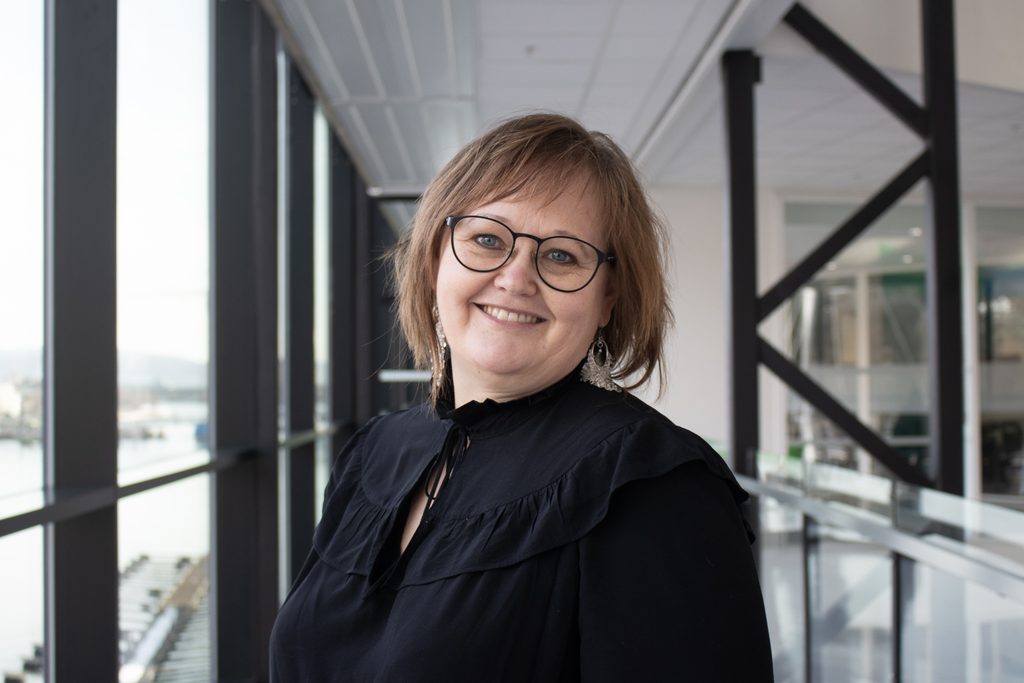
For the 3rd Pandemics & Society Seminar of our Fall 2026 series we are pleased to welcome Vibeke Narverud Nyborg (University of South-Eastern Norway). The seminar will be held on Thursday, 15 October at the normal time (16:00 CEST). More information about our speakers and the presentation is below. You can sign up for email notifications about the seminar series, including the Zoom details, here.
About the talk:
The talk addresses a relatively unexplored area within the study of historical pandemics: the memories of people who survived the influenza pandemic of 1918. Specifically, the talk focuses on how individual recollections and experiences can emerge as representations of a medical catastrophe, and how these memories can shed light on the long-term consequences of the pandemic. Through an analysis of personal narratives, the talk will explore a range of themes and show these can be understood in light of contemporary understandings of disease and health, as well as how people made sense of the crisis that struck, especially related to bereavement.
The talk is based on a paper currently undergoing review.
About the speaker:
Vibeke Narverud Nyborg is an associate Professor in history of medicine and health at University of South-Eastern Norway. Nyborg has been affiliated member of PANSOC since 2021 and among her research focus is qualitative research on historical pandemics in relation to long-term societal effects.
We are pleased to release the schedule for our Fall 2026 seminar series. As in previous series, the seminar will be held via Zoom at 16.00 Central European Time on Thursdays.
To access the Zoom meetings, please join our mailing list here.
10 September: Robert Braid (University of Montpellier), “Crisis Control: Market Regulation after the Black Death”.
8 October: Lauren Steele (RMIT University), “Age-specific mortality patterns across influenza pandemics: evidence from all-cause mortality data across multiple populations”.
15 October: Vibeke Nyborg Narverud (University of South-Eastern Norway), “What can the Collier letters from the mid-1970s tell us about 1918 influenza bereavement?”.
12 November: Moritz Oberndorfer (University of Helsinki), “Parental socioeconomic composition of birth cohorts changed during the COVID-19 pandemic”.
26 November: Thomas Joseph Crellen (National University of Singapore), “Yellow fever in Gibraltar”.
For the 12th and final Pandemics & Society Seminar of our Spring 2026 series we are pleased to welcome Umit Tleshova (Charles University). The seminar will be held on Thursday, 7 May at the normal time (16:00 CEST). More information about our speakers and the presentation is below. You can sign up for email notifications about the seminar series, including the Zoom details, here.
About the talk:
Tleshova will present the first comprehensive six-decade quantitative analysis of gender mortality gaps across 48 countries in the WHO European Region, conducted with Dr. Klára Hulíková Tesárková, Dr. Libor Jelen, and Prof. Dagmar Dzúrová. Using sex-specific life expectancy data and decomposition analysis, the research systematically examines variations in gender gaps across three distinct country groups: post-communist CIS (Commonwealth of Independent States), post-communist EU (European Union), and Europe (others) countries. The analysis reveals significant temporal and regional variations in gender mortality gaps, with critical peaks occurring during key historical periods in both Western and post-communist European contexts. A key finding demonstrates that observed gender gap variability primarily stems from structural, between-group differences rather than country-specific characteristics. Notably, the research identifies distinct pathways through which different regions experienced changes in their gender gaps, with important implications for understanding how demographic, political, and health system factors relate to gender mortality patterns. These findings offer insights for health policymakers seeking to reduce health disparities by targeting the systemic factors that drive long-term gender mortality patterns.
About the speaker:
Umit Tleshova is a PhD candidate in Demography at the Faculty of Science, Department of Demography and Geodemography, Charles University in Prague.
For the eleventh Pandemics & Society Seminar of our Spring 2026 series we are pleased to welcome Sakari Saaritsa & Jarmo Peltola (University of Helsinki). The seminar will be held on Thursday, 23 April at the normal time (16:00 CEST). More information about our speakers and the presentation is below. You can sign up for email notifications about the seminar series, including the Zoom details, here.
About the talk:
Research on the long-run effects of shocks and crises on the health, socioeconomic outcomes and human capital of individuals has developed rapidly in historical demography and economic and social history in recent decades. A fine-grained research corpus has elaborated the negative impact of different kinds of shocks based on the type of event, the life stage of the affected individuals, and the outcomes looked at. While so-called technophysio evolution theory traditionally emphasized the role of nutrition and economic factors in damaging human capital, recent empirical evidence from historical demography suggests that health shocks exert the most significant influence on long-term outcomes. Even when the primary shock is non-epidemiological (e.g., a crisis in livelihoods, war or incarceration), health is typically the primary dimension in which such scars are formed and perpetuated throughout the life course. Such findings could carry high policy relevance.
A classic issue with correctly measuring such effects is the interplay of scarring (long-run damage) and selection (the immediate elimination of more frail individuals from the data by the crisis biasing results upwards). In real-world contexts, causal factors typically cumulate and overlap, and so do their impacts along several dimensions. The interaction of different factors, including different types of crises, gender and inequalities in socioeconomic status (SES), has been identified as a research area where more work is needed. In our ongoing Academy project A Scarred People, building on individual level data construction from historical urban settings in 20th century Tampere and Helsinki, we are focusing particularly on the impact and interaction of three shocks: the 1916 typhoid epidemic; the 1918 Civil War; and the employment crisis of the Great Depression of the 1930s. We are able to look at the heterogeneity in impact of each of these by conditioning on SES (occupation, residence), sex, and age at occurrence. On the outcome side, in addition to end point variables like death, we can look at entire trajectories and life courses over time.
In this talk, we will provide empirical examples of the challenges of identifying the longevity effects of two factors, being exposed to a Typhoid epidemic in 1916 and being a member of the Red Guard in 1918 during the Civil War.
About the speakers:
Sakari Saaritsa is a Professor of Social History at the University of Helsinki. His research interests include the quantitative history of human development (particularly health, education and physiological capital), social inequality, historical indicators of well-being, and relationships between economic and human development over time. He is working with several historical datasets on Finland with local population and individual level data on demographics, anthropometrics, health and education, and involved in efforts to build national historical data infrastructure with Nordic partners. His research has been published in journals including the European Review of Economic History, Social Science History, The History of the Family and Cliometrica.
Jarmo Peltola is docent in Economic and Social History at the University of Helsinki with deep expertise in the economic, social and demographic history of crises, particularly the Great Depression, urban history, particularly of the city of Tampere, and in the development of pioneering economic, social and demographic individual level data unparalleled in Finland. Peltola has published major monographic works and international research articles on e.g., the total history of the Great Depression in Tampere, the demographic and economic history of the city and the development of health and welfare both locally and nationally.
For the tenth Pandemics & Society Seminar of our Spring 2026 series we are pleased to welcome Michał B. Paradowski (University of Warzaw). The seminar will be held on Thursday, 16 April at the normal time (16:00 CEST). More information about our speaker and the presentation is below. You can sign up for email notifications about the seminar series, including the Zoom details, here.
About the talk:
This talk examines how teachers and learners around the world coped when the COVID-19 pandemic forced education online almost overnight. Drawing on survey responses from over 8,000 teachers and students across 118 countries, the study offers one of the most geographically wide-ranging pictures of the emergency shift to remote teaching to date.
The study investigates a wide range of factors that shaped how teachers and students experienced the crisis. These include the level and type of institution teachers worked in, how classes were delivered, and whether the economic context of the country made a difference. The research also looks at the emotional and psychological dimensions of the experience – what drove stress and burnout among educators, and how teachers’ perceptions of their students’ wellbeing fed back into their own. A particular focus is placed on what the shift to online teaching meant for actual learning progress, and whether some groups of learners were more affected than others. On the student side, the talk will explore what distinguished those who coped relatively well from those who found the transition more difficult, and what all of this might mean for the future of online teaching.
Beyond the immediate teaching context, the study examines how the way people navigated the disruption was influenced by individual characteristics, such as having a more outgoing personality or speaking multiple languages. Implications will also be made for the optimal way to operationalise multilingualism.
About the speaker:
Michał B. Paradowski is a professor and teacher trainer at the Institute of Applied Linguistics, University of Warsaw, and a research and language teaching consultant. His work spans second language acquisition, bi- and multilingualism, psycholinguistics, and educational psychology, with a growing focus on how learning is shaped by social and situational factors, including in times of disruption. He has published over 80 scientific works and delivered more than 260 invited lectures, seminars and workshops worldwide.
For the ninth Pandemics & Society Seminar of our Spring 2026 series we are pleased to welcome Raj Kumar Subedi (Georgia State University). The seminar will be held on Thursday, 9 April at the normal time (16:00 CEST). More information about our speaker and the presentation is below. You can sign up for email notifications about the seminar series, including the Zoom details, here.
About the talk:
The COVID-19 pandemic highlighted deep-rooted health inequities globally, with marginalized populations showing disproportionate disease burden. We employed Serfling regression models and multivariable analyses to estimate excess mortality across geographic, demographic, and poverty groups from 2020 to 2022 in Chile. Elderly populations (80+ years) experienced the highest excess mortality (267.35 per 10 000 population), more than 8 times higher than those under 80 years (30.80 per 10 000 population). Multivariable linear regression models showed both Indigenous proportion (coefficient = 53.66, P < .001) and elderly population proportion (coefficient = 5.68, P < .01) as the strong predictors of comuna level excess mortality. Poverty correlated significantly with excess mortality (r = 0.23, P < .001) but this association weakened after adjustment for other covariates in multivariable models. Excess mortality peaked in 2021 rather than in 2020 for most groups, with males initially experiencing higher rates during early pandemic waves. Spatial analyses revealed statistically significant clustering (Moran’s I = 0.119, P < .001) with identifiable hotspots in northern Chile and parts of the south. These findings indicated persistent mortality disparities by age and Indigenous status, independent of poverty, and highlight the urgent need for equity-focused pandemic preparedness. An effective pandemic response should integrate biomedical measures, such as vaccination, with culturally grounded strategies that address structural barriers and the broader social determinants of health.
Raj Subedi is Graduate Research Assistant at School of Public Health, Georgia State University, USA. He has a Master’s degree in Public Health from BP Koirala Institute of Health Sciences and a background in public health research and has previously worked at various organizations, including the Nepal Public Health Foundation and St. Jude’s Recovery Center.
For the eight Pandemics & Society Seminar of our Spring 2026 series we are pleased to welcome Hamed Karami (Georgia State University). The seminar will be held on Thursday, 2 April at the normal time (16:00 CEST). More information about our speaker and the presentation is below. You can sign up for email notifications about the seminar series, including the Zoom details, here.
About the talk:
The COVID-19 pandemic disrupted health systems worldwide, with important consequences beyond direct COVID-19 deaths. In this talk, I examine how these disruptions affected tuberculosis (TB) outcomes, leading to excess burden and widening inequalities. Using data-driven modeling approaches, I highlight global patterns as well as uneven impacts within the United States, with a focus on structural vulnerabilities and lessons for building more resilient TB control systems.
About the speaker:
Hamed Karami is a PhD student in Mathematics and an MS student in Applied Statistics at Georgia State University. He holds a PhD in pure mathematics from Iran University of Science and Technology, as well as undergraduate and master’s degrees in applied and pure mathematics from Shahed University and Sharif University of Technology, respectively. His research focuses on mathematical and statistical modeling of infectious diseases, including control problems, network-based models, and statistical approaches.
For the seventh Pandemics & Society Seminar of our Spring 2026 series we are pleased to welcome Abigail Dumes (University of Michigan). The seminar will be held on Thursday, 19 March at the normal time (16:00 CEST). More information about our speaker and the presentation is below. You can sign up for email notifications about the seminar series, including the Zoom details, here.
About the talk:
Since the onset of the COVID-19 pandemic, an estimated 400 million people worldwide have had Long COVID, a term that describes a range of often disabling symptoms that persist for at least three months after the acute phase of COVID-19 (Al-Aly et al. 2024). In the US alone, federal survey data reveal that around 5.3 percent of all US adults—or 13.7 million people—are “currently experiencing Long COVID” (National Center for Health Statistics 2024). Due to its potential to significantly disrupt activities of daily living, Long COVID can qualify as a disability under the Americans with Disabilities Act, and emerging research has shown that Long COVID disproportionately affects individuals with preexisting disabilities (Cohen and Rodgers 2024). Survey data suggests that there is a correlation between Long COVID and “increased odds of work loss” (Venkatesh et al. 2024), but much less is known about the lived experience of Long COVID and disability in the context of work, particularly among higher education employees. In this paper, I discuss early qualitative data from a multiphase, multidisciplinary mixed methods project focused on University of Michigan-Ann Arbor faculty and staff with Long COVID to begin to shed light on the relationship between Long COVID, work, and disability and to map out a future for more equitable workplace accommodations.
About the speaker:
Abigail Dumes is a medical and cultural anthropologist and an associate professor of Women’s and Gender Studies at the University of Michigan whose research explores the intersectional dimensions of complex chronic conditions. Her first book, Divided Bodies: Lyme Disease, Contested Illness, and Evidence-Based Medicine, was published by Duke University Press in 2020, and she is currently conducting research on Long COVID, work, and disability among University of Michigan-Ann Arbor faculty and staff.
For the sixth Pandemics & Society Seminar of our Spring 2026 series we are pleased to welcome Nathaniel Darling (University of Cambridge). The seminar will be held on Thursday, 12 March at the normal time (16:00 CEST). More information about our speaker and the presentation is below. You can sign up for email notifications about the seminar series, including the Zoom details, here.
About the talk:
This talk presents work conducted jointly with Henrik Salje. The 1918 influenza pandemic was marked by unusually high mortality among young adults. The immune-imprinting hypothesis explains this pattern as a cohort effect arising from antigenic mismatch: individuals first exposed in childhood to influenza strains dissimilar to the 1918 virus were less protected and therefore experienced higher mortality. We test this hypothesis by examining age-specific mortality patterns across the pandemics of 1918, 1957, 1968, and 2009. Using long-run, cause- and age-specific mortality data for a panel of countries, we estimate excess mortality for each age group and each pandemic year within a consistent framework, and reconstruct cohort-level measures of antigenic mismatch based on historical circulation. Initial results suggest that imprinting mismatch captures important elements of the observed age patterns, yet the fit remains incomplete, pointing to additional mechanisms beyond imprinting that shaped pandemic mortality.
About the speaker:
Nathaniel Darling is a PhD student based in the Cambridge Group for the History of Population and Social Structure (CAMPOP). His research seeks to model the infectious disease dynamics shaping historical mortality patterns.
For the fifth Pandemics & Society Seminar of our Spring 2026 series we are pleased to welcome Won-tak Joo (University of Florida). The seminar will be held on Thursday, 26 February at the normal time (16:00 CEST). More information about our speaker and the presentation is below. You can sign up for email notifications about the seminar series, including the Zoom details, here.
About the talk:
Previous studies have documented the health and socioeconomic disadvantages associated with in-utero exposure to the 1918 influenza pandemic. Utilizing mortality records from Social Security Numident data, which cover nearly all deaths in the United States between 1988 and 2005, this study estimates the effects of in-utero pandemic exposure on old-age mortality. Baseline results indicate a longevity reduction of 0.2 years among males born in 1919 compared to those born between 1915-1918 or 1920-1922. However, when restricting the sample to individuals born in 1919 or earlier and incorporating sibling fixed effects, the longevity disadvantage is more pronounced for females (ß = -2.3, p < 0.01) than for males (ß = -1.4, p < 0.1). The effects of in-utero exposure, weighted by city-level influenza intensity, reveal similar patterns. I assess the robustness of these findings using data from crowd-sourced genealogy datasets, which include mortality records from young to old ages, and discuss potential mechanisms that may explain the long-term mortality consequences of the pandemic.
About the speaker:
Won-tak Joo is an assistant professor of sociology at the University of Florida. His interests are in social demography, social networks, and computational sociology. His current projects explore (1) socioeconomic differences in social network changes during later-life transitions (e.g., disease diagnosis, retirement), and (2) the individual and family consequences of epidemics using large genealogy and census datasets.