HROMADA – Nordic-Baltic Knowledge Network for the Rebuilding of Ukraine – held its third conference at the Stockholm School of Economics 12 November. It was followed by a workshop for HROMADA members on the following day.
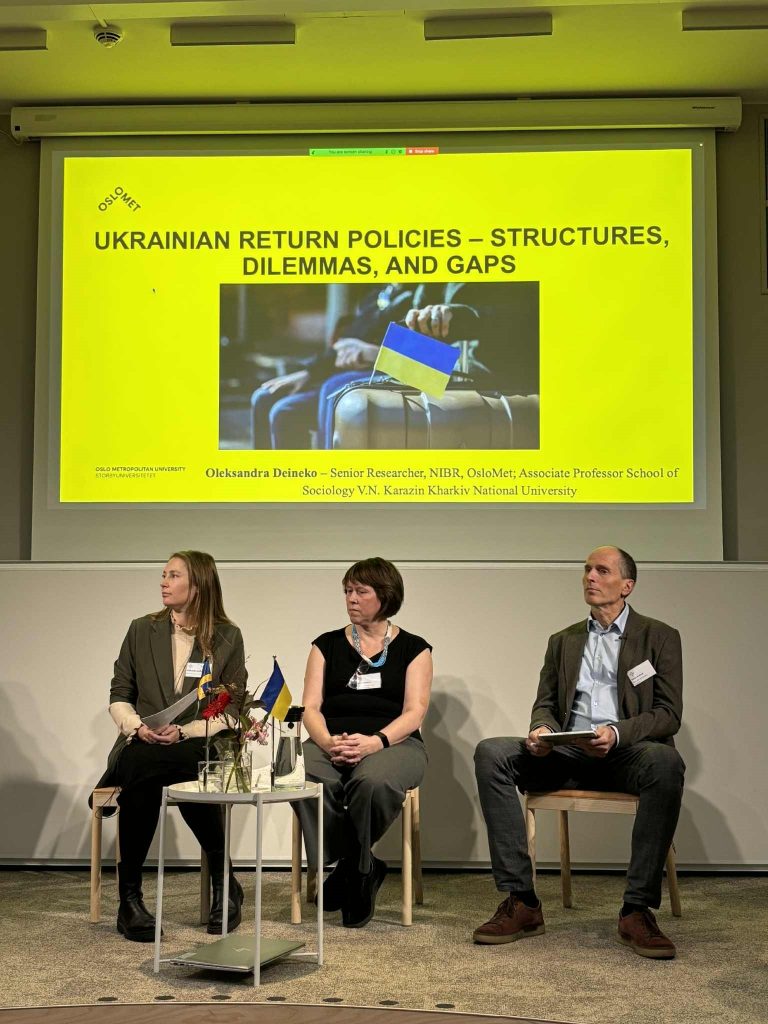
Oleksandra Deineko, Hanna Vakhitova and Aadne Aasland in panel II
At the conference several issues that are high on the agenda and relevant for Nordic-Baltic support for Ukraine’s development were discussed. After introductory speeches and a keynote on sanctions by Maria Perrotta Berlin, Assistant Professor at the Stockholm Institute of Transition Economics, the programme featured four main panels:
- Panel I: Mutual Resilience: Ukraine–Nordic–Baltic Dialogue on Energy Transition and Security – here speakers from Ukraine and the Nordic-Baltic region explored how renewable and decentralised energy models in the Nordics can inform Ukraine’s transition, and how Ukraine’s experience in protecting energy infrastructure under conflict can offer lessons for the region.
- Panel II: Preventing a Demographic Crisis in Ukraine – Understanding Mobility, Return, and Staying Decisions – this panel addressed the long-term demographic consequences of the war, including large-scale displacement, low return rates, and ongoing emigration. It asked how Ukraine can avoid a deeper demographic crisis, and what research tells us about the motivations of those who left or stayed.
- Panel III: Robust Public Administration for Ukraine’s Reconstruction and European Integration – focused on the governance dimension of reconstruction and EU-integration: how to build public administration capacity, attract and retain talent, use digital technologies for transparent governance, and how Nordic-Baltic-Ukrainian cooperation can support this.
- Panel IV: Empire and Exile: Russian Deportation in Historical Perspective – examined the historical dimension of deportations under Russian/imperial rule, and their legacies in the context of current war and forced movements. The discussion was accompanying an exhibition on the history of deportations.
The day following the main conference, a dedicated workshop for HROMADA members with, among others, a dozen presentations of prospective blog posts for the HROMADA blog.
Next year’s conference will (tentatively) be held in Riga during the first week of October 2026.