Hopp til innholdet

Consumption Studies: The force of the ordinary

Consumer research deals with the acquisition, use and disposal of goods and services. Our workplace, SIFO, the National Institute for Consumer Research in Norway, dates back to the 1930s, when home economics and testing of products were predominant. The work aimed at guiding consumers, at that time called housewives, through the ‘jungle’ of novel consumer goods. More recently, SIFO’s work combines social science and textile technology to study the social and technical aspects of consumption.

In this chapter, we ask: how can knowledge of clothing consumption contribute to the work on sustainable fashion? We will answer the question through examples from interdisciplinary projects on textiles at SIFO, as well as from consumer research. However, we will not give an overview of consumer research on clothes and sustainability. But first, an admission: fashion – the topic of this book – operates according to a different logic from our field of work. We would have posed the question differently: how can consumer research – and all the other fields of expertise covered in this book –contribute to more sustainable patterns of clothes production and consumption? Therefore, we also have to include a discussion of the concept of fashion.

Made to fit: Å kle en avvikende kropp- handikap og klær

Klær er helt sentralt for menneskers deltakelse i samfunnslivet og for selvfølelse og selvrespekt. Hvor vanskelig det er å kle kroppen avhenger både av den anledningen vi kler oss for og den kroppen som skal kles. I denne rapporten retter vi søkelyset mot klær tilpasset handikappede. Å ha et handikap kan innebære sosiale barrierer og fysiske begrensninger som gjør det vanskelig å finne klær i et marked som i hovedsak tilbyr masseprodusert konfeksjon. For å kartlegge problemet har vi foretatt en litteraturstudie, en brukerundersøkelse og en markedsundersøkelse. Dette er gjort for å finne ut 1) hvilken kunnskap som eksisterer på feltet, 2) hvordan handikappede selv opplever utfordringen med å kle en avvikende kropp og 3) i hvilken grad det finnes et marked for handikapklær og/eller hvorvidt et slikt marked har potensiale som forretningsområde for Fjellrypa.

The Rationalisation of Consumption Reasons for Purchasing Outdoor Recreational Outfits

In Norway, there is a broad consensus that experiencing nature and performing physical activities outdoors is healthy, important and typical Norwegian. The Norwegian explorer Fridtjof Nansen’s expression ‘simple outdoor life’ is a great national symbol. In recent years we have seen a rapid technological development of outdoor recreational outfits and a massive increase of the quantity of different clothing and equipment for these activities on the market. This is due to both a specialisation of clothing for different activities and a fast turn over of these kinds of products.

In this paper we will discuss what the drivers for objectification of outdoor leisure are, as seen from the consumers’ point of view. In addressing this question, focus was on how the ‘standard-package,’ that is what is considered as ordinary and necessary, has changed and what consumers tell us about their motivations for buying new equipment and how they explain the necessity and need for new equipment. Technological innovations within clothing and fabric for optimal performance in skiing, running and biking are welcomed by many people, especially high income families. However, this development consists of a dilemma because the consumption growth takes place within activities regarded as simple and in a contrast to modern excess consumption and environmental strains.

Sustainable clothing design: use matters

Many life cycle assessment studies document that the use period is the most resource-demanding phase during the clothing life cycle. In this paper, we discuss how design can help to reduce the environmental impacts of clothing. Motives behind clothing disposal, acquisition practices and maintenance habits are analysed based on two surveys, qualitative interviews of households, and examination of disposed clothing. The main reasons for clothing disposal were changes in garments, followed by size and fit issues, taste-related unsuitability, situational reasons, functional shortcomings and fashion or style changes. Several design solutions can enable the users to keep and use the clothes longer, and reduce the need for laundering, thus potentially decreasing the total environmental effects of clothing consumption.

Leisure and sustainable development in Norway: part of the solution and the problem

The article presents the results of two succeeding Norwegian studies on the environmental impacts of leisure consumption. The first study presents data on the total consumption of leisure products and services by Norwegians, showing that leisure consumption increases more than everyday consumption, the most energy-intensive leisure activities increase the most, leisure activities have become more dependent on transportation and that leisure activities are to an increasing extent based on more material consumption. The second study consists of case studies from four leisure activities in Norway that have experienced the greatest increases in consumption over the last two decades: outdoor recreation clothing, cabins, leisure boating and leisure transportation.

The case studies show that the problems connected with reducing the environmental impacts of leisure consumption are numerous and complex, and cannot be solved alone by technological improvements in leisure products and services. We conclude that new policies have to be developed which can on a short-term basis promote changes of leisure consumer habits in a more environmentally friendly direction, and on a long-term basis alter the existing strong links between economic growth and leisure consumption.

Materialised Ideals: Sizes and Beauty

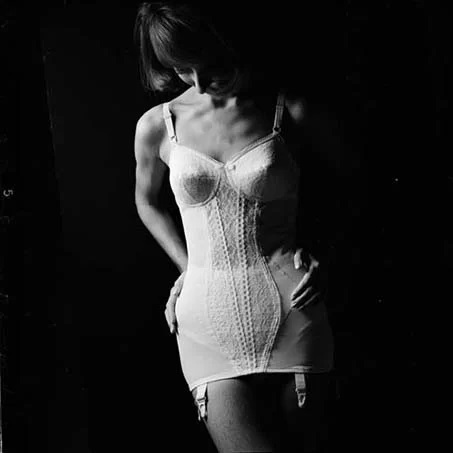
Today’s clothing industry is based on a system where clothes are made in ready-to-wear sizes and meant to fit most people. Studies have pointed out that consumers are discontent with the use of these systems: size designations are not accurate enough to find clothing that fits, and different sizes are poorly available. This article discusses in depth who these consumers are, and which consumer groups are the most dissatisfied with today’s sizing systems. Results are based on a web survey where 2834 Nordic consumers responded, complemented with eight in-depth interviews, market analysis on clothing sizes and in-store trouser size measurements.

Results indicate that higher shares of the consumers who have a body out of touch with the existing beauty ideals express discontentment with the sizing systems and the poor selection available. In particular, large women, very large men, and thin, short men are those who experience less priority in clothing stores and have more difficulties in finding clothes that fit. Consumers tend to blame themselves when the clothes do not fit their bodies, while our study points out that the industry is to blame as they do not produce clothing for all customers.

Klær og utstyr for en hver anledning: Friluftslivets spesialisering

Den tiden vi i Norge bruker på friluftsliv har holdt seg stabil de siste årene, samtidig som forbruket av utstyr til denne typen fritid har vokst raskt. Dette var en av konklusjonene i en rapport Vestlandsforskning og SIFO publiserte i 2007(Hille et al). Rapporten bruker bred pensel for å få en oversikt over miljøkonsekvensene av Norsk fritidsforbruk. Miljøkonsekvenser blir regnet i form av energiforbruk. Rapporten omhandler forbruket av energi i forhold til bruk av tid og penger på fritid. Importen av sportsutstyr til Norge økte ifølge SSBs Utenrikshandelsstatistikk fra 12.200 tonn i 2001 til 25.085 tonn i 2005, altså vel en dobling på fire år. I og med at den norske produksjonen i dag er svært liten gir dette et godt bilde av forbruksutviklingen. I samme periode var det nesten en tredobling av importen av fritidsbåter, målt i vekt.