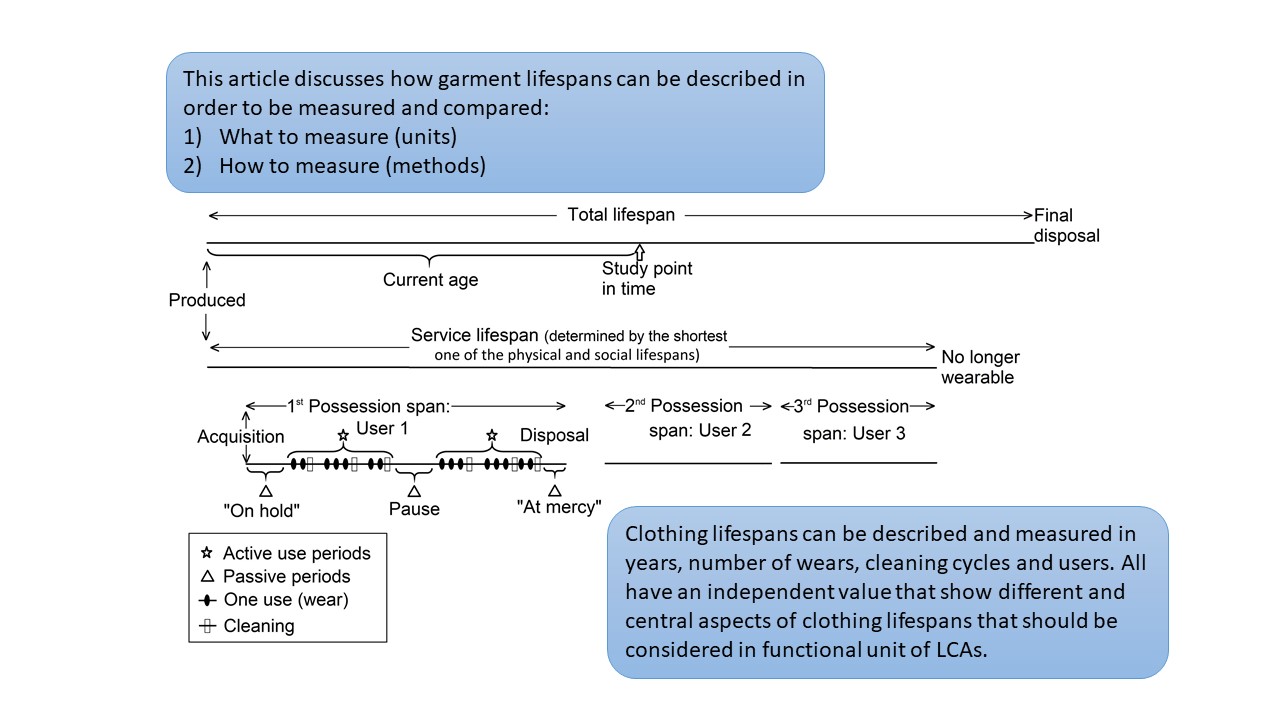
Increasing the use of each product, most often called longer lifespans, is an effective environmental strategy. This article discusses how garment lifespans can be described in order to be measured and compared. It answers two sub-questions: (1) what to measure (units), and (2) how to measure (methods). We introduce and define terms related to clothing lifespans and contribute to discussions about an appropriate functional unit for garments in life cycle assessments (LCA) and other environmental accounting tools. We use a global wardrobe survey to exemplify the units and methods.
Clothing lifespans can be described and measured in years, the number of wears, cleaning cycles, and users. All have an independent value that show different and central aspects of clothing lifespans. A functional unit for LCAs should emphasise both the number of wears for all users as well as the service lifespan in years. Number of wears is the best measure for regular clothing, while number of years is most suited for occasion wear, because it is important to account for the need of more garments to cover all the relevant occasions during a specified time period. It is possible to study lifespan via carefully constructed surveys, providing key data relating to actual garment use.