Pandemics & Society Webinar 12 February, “The COVID-19 experience in Denmark”.

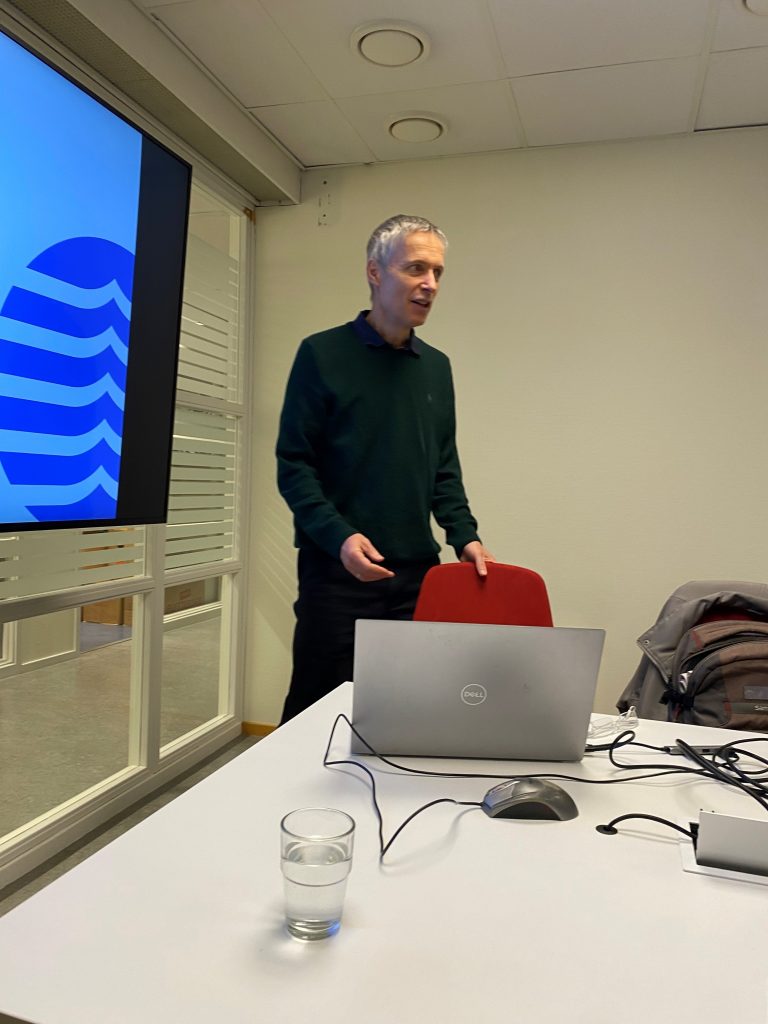
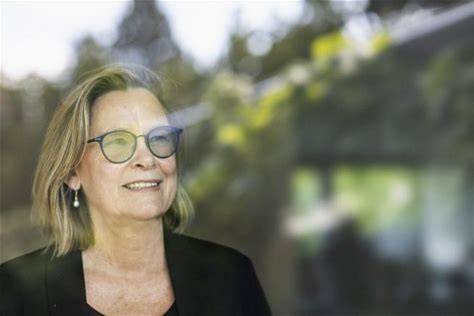
For the fourth Pandemics & Society Seminar of our Spring 2026 series we are pleased to welcome Lone Simonsen (PandemiX Center). The seminar will be held on Thursday, 12 February at the normal time (16:00 CEST). More information about our speaker and the presentation is below. You can sign up for email notifications about the seminar series, including the Zoom details, here.

About the talk:

When a new pandemic virus emerges in a naive population, the only control options are nonpharmaceutical interventions (NPIs) until vaccines or effective treatments become available. Here, we report on the Danish suppression strategy and use of a combination of NPIs with a notable absence of extremely strict measures (such as stay-at-home orders). Only 7% of Danes were infected (serological evidence) in the first year of the pandemic, compared with 50% in Lombardy in the first wave alone. This low attack rate was accomplished by initial rapid intervention with a free-of-charge mass testing program beginning in October 2020, a strong digital data infrastructure, timely contact tracing and voluntary home isolation, real-time reporting of surveillance data, and a high degree of public trust. The individual contribution of each NPI to the pandemic control is difficult to assess; yet, evidence points to the mass testing program as being particularly effective in removing infected individuals from the pool. In January 2021, vaccines became available, and 96% of Danes over 50 years of age were vaccinated twice with an mRNA vaccine by summer. On February 1, 2022, while facing the Omicron variant and with the older adult newly boosted, Denmark became the first country to drop all NPIs. A few months later, 70% of the population had been infected with the Omicron variant, showing the SARS-CoV-2 transmission potential when unmitigated. Denmark was only close to intensive care unit capacity during the second wave in winter 2020-2021, when 5% of the population was infected. In conclusion, the effectiveness of the combined NPIs is evident due to the low ( < 10%) attack rate in the first two waves before vaccines became available, far from the experience of unmitigated COVID-19 in Lombardy in spring 2020, with a 50% attack rate and catastrophic levels of severe morbidity and mortality.

You can read the full paper here: A disease suppression strategy in action: The impact of non-pharmaceutical interventions in the COVID-19 pandemic in Denmark – ScienceDirect

About the speaker:

Lone Simonsen is a Professor of Population Health Sciences, at the Department of Science and Environment at Roskilde University. Her research is highly interdisciplinary and involves colleagues and methodologies from fields ranging from history to mathematics. Over the past 25 years she has worked internationally as an epidemiologist and researcher. She is the center leader of PandemiX Center of Excellence (Center for Interdisciplinary Study of Pandemic Signatures), supported by the Danish National Research Foundation (DNRF).

New CAS project: “Scarred people”

Centre leader Mamelund has been awarded a NordIAS Visiting Fellowship from the Centre for Advanced Study in Oslo (CAS) to visit Tampere Institute for Advanced Study for three weeks in April. This visit will enhance rare academic collaboration and dialogue across Norway and Finland in the fields of mathematical pandemiology (Mamelund, Chowell, Gaddy, Raitoharju) and economic and social history of war (Peltola, Saaritsa, Gaddy, Taskinen).

The aim of the “Scarred people” project is to model excess all-cause spatial mortality in Tampere due to scarring events like the like typhoid epidemics in 1916, the Finnish civil war in 1918, Spanish flu in 1918-20, and unemployment during the Great Depression of the 1920s, using Serfling models and GIS.

The context of a civil war and pandemic in 1918 is especially interesting as it makes us able to tease out interactions of disease, crowding in prison camps, executions, and undernourishment. At the peak, there were almost 10 000 POWs at the camp in Tampere, compared to a normal city population of 45 000. Past scholars of the Spanish flu have hypothesized about the impacts of malnutrition on mortality during the pandemic, but malnutrition in 1918 generally happened in contexts in which high-quality data is not available. Using our collective expertise in disease modelling and the context of the Finnish civil war to study the experience of the pandemic in the POW camp will lead to a better understanding of the pandemic globally.

Our Finish partners have 1) individual cause-specific mortality data (650-800 deaths/year) with the possibility to link deaths to population and red guard membership data, as well as occupation, address, age, gender, and time at the prison camp; 2) weekly statistics of morbidity with causes in the city (in Finland, the city doctors had to report every case to the city health board); and 3) individual hospitalization records for the 1918-21 period from both the city hospitals (City archive) and the hospital in the prison camp (National archive). These latter data have not been collected yet, but we will discuss how to photograph and transcribe this data during the visit.

Expected contributions to Tampere IAS include 1) a workshop to set up data and discuss emerging findings; 2) Guest lectures by Mamelund at Tampere IAS and the Universities of Tampere and Helsinki; 3) Half day academic presentations for larger audience at Tampere; 4) Active participations in academic and social activities at the Tampere IAS, and Tampere and Helsinki universities; 5) Mentoring of students, including a Master student (Antti Puska) who is studying the Spanish flu in Tampere, 1918-1921; 6) An evaluation of the visit and the outcome of the visit to CAS Oslo; 7) Draft of at least one scientific journal article; 8) Collaborations on proposals for new research funding.

Collaborators at Tampere IAS and Tampere University:
1. Ilari Taskinen (Postdoctoral Research Fellow, Tampere University & previously at Tampere IAS 2023-25)
2. Emma Raitoharju (University Lecturer, Faculty of Medicine & Health Technology, Tampere University)

Collaborators at University of Helsinki:
3. Jarmo Peltola (Senior Research Fellow, Economic and Social History, Faculty of Social Sciences, University of Helsinki, Finland)
4. Sakari Saaritsa (Professor of Social History, Director, Master’s Programme in Society and Change, Economic and and Social History, Faculty of Social Sciences University of Helsinki, Finland)

Affiliated collaborators:
6. Gerardo Chowell (Georgia State University).
7 Hampton Gaddy (LSE).

New guest researcher: Vitalie Ștîrba, Charles University in Prague

Vitalie Ștîrba will be visiting PANSOC from 9 February to 13 March.

Ștîrba is a demographer and a PhD student in the Department of Demography and Geodemography at Charles University in Prague, where he study avoidable cancer mortality in European countries. His doctoral research focuses on the effects of cancer mortality on life expectancy dynamics, trends in leading preventable and treatable cancer sites, lung cancer mortality and tobacco control policies, and the role of multimorbidity in mortality trends among cancer patients.

Ștîrba has a bachelor’s degree in Geography, a master’s degree in Demography, and a master’s degree in Public Administration; His dissertations focused on population censuses, internal migration, and avoidable mortality. In recent years, Ștîrba has participated in several projects related to population forecasting, historical demography, and regional development in Moldova.

At PANSOC, Ștîrba is interested in collaborating with local researchers to exchange experiences, particularly by exploring how historical events shape the health of yearly cohorts, and learning new techniques in demographic analysis.

Pandemics & Society Webinar 5th February, “Why did the global mpox outbreak of 2022 fade out?”.

For the third Pandemics & Society Seminar of our Spring 2026 series we are pleased to welcome Ulrik Hvid (PandemiX Center and the Niels Bohr Institute in Copenhagen). The seminar will be held on Thursday, 5 February at the normal time (16:00 CEST). More information about our speaker and the presentation is below. You can sign up for email notifications about the seminar series, including the Zoom details, here.

Blurb:

Over the summer of 2022, an outbreak of clade IIb mpox swept the globe, but then seemed to fade as quickly as it had arrived. The disease was heavily concentrated among men who have sex with men and had a high comorbidity with HIV, indicating risky sexual behavior. What happened? Did the risk-group get immunized? Did the fear of infection lead risk groups into abstinence? Did the smallpox vaccine save us?

You can read the full paper here: Relationship dynamics and behavioral adaptations in the control of the 2022 mpox epidemic | PNAS

Bio:

Ulrik Hvid is a PhD student at the PandemiX Center and the Niels Bohr Institute in Copenhagen. Trained in biophysics at the Niels Bohr Institute, he uses the methods of network science and complexity theory to understand the dynamics of disease spread.