Hopp til innholdet

The Consumer Perception of Odour

  • av

Human olfaction sense is one of the highly underestimated senses since historical times. Fortunately, this has changed in recent times, as the perception of odour or scent by people has received increasing attention through several research works from different scientific disciplines.

Myter og sannheter om ullvask

  • av

Det eksisterer en del myter om hvordan ull best kan vaskes. Enkel og riktig klesvask er viktig både for at minst mulig av ullklær ødelegges, og for å belaste klima og miljø minst mulig.

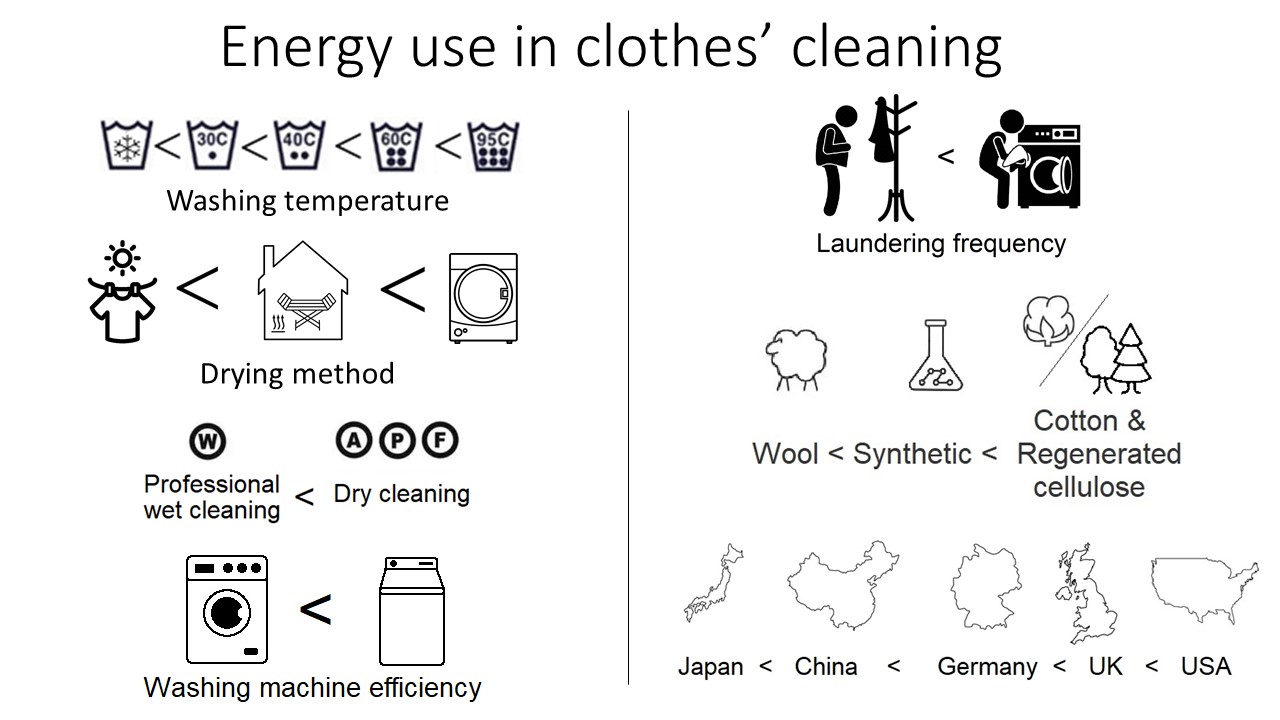
modell som viser energiforbruk klesvask

Laundry Care Regimes: Do the Practices of Keeping Clothes Clean Have Different Environmental Impacts Based on the Fibre Content?

  • av

Clothing maintenance is necessary for keeping clothing and textiles functional and socially acceptable, but it has environmental consequences due to the use of energy, water and chemicals. This article discusses whether clothes made of different materials are cleaned in different ways and have different environmental impacts. It fills a knowledge gap needed in environmental assessments that evaluate the impacts based on the function of a garment by giving detailed information on the use phase. The article is based on a quantitative wardrobe survey and qualitative laundry diary data from China, Germany, Japan, the UK and the USA.

The largest potential for environmental improvement exists in reducing laundering frequency and in the selection of washing and drying processes, and through a transition to fibres that are washed less frequently, such as wool. Adopting best practice garment care would give larger benefits in countries like the US where the consumption values were the highest, mainly due to extensive use of clothes dryers and less efficient washing machines combined with frequent cleaning. These variations should be considered in environmenta assessments of clothing and when forming sustainability policies. The results indicate the benefits of focusing future environmental work on consumer habits and culture and not only technologies.

Microfibres from apparel and home textiles: Prospects for including microplastics in environmental sustainability assessment

  • av

Textiles release fibres to the environment during production, use, and at end-of-life disposal. Approximately two-thirds of all textile items are now synthetic, dominated by petroleum-based organic polymers such as polyester,polyamide and acrylic. Plastic microfibres (b5 mm) and nanofibres (b100 nm) have been identified in ecosystems in all regions of the globe and have been estimated to comprise up to 35% of primary microplastics in marine environments, a major proportion of microplastics on coastal shorelines and to persist for decades in soils treated with sludge from waste water treatment plants.
In this paper we present a critical review of factors affecting the release from fabrics of microfibres, and of the risks for impacts on ecological systems and potentially on human health. This review is used as a basis for exploring the potential to include a metric for microplastic pollution in tools that have been developed to quantify the environmental performance of apparel and home textiles. We conclude that the simple metric of mass or number of microfibres released combined with data on their persistence in the environment, could provide a useful interim mid-point indicator in sustainability assessment tools to support monitoring and mitigation strategies for microplastic pollution. Identified priority research areas include: (1) Standardised analytical methods for textile microfibres and nanofibres; (2) Ecotoxicological studies using environmentally realistic concentrations; (3) Studies tracking the fate of microplastics in complex food webs; and (4) Refined indicators for microfibre impacts in apparel and home textile sustainability assessment tools.

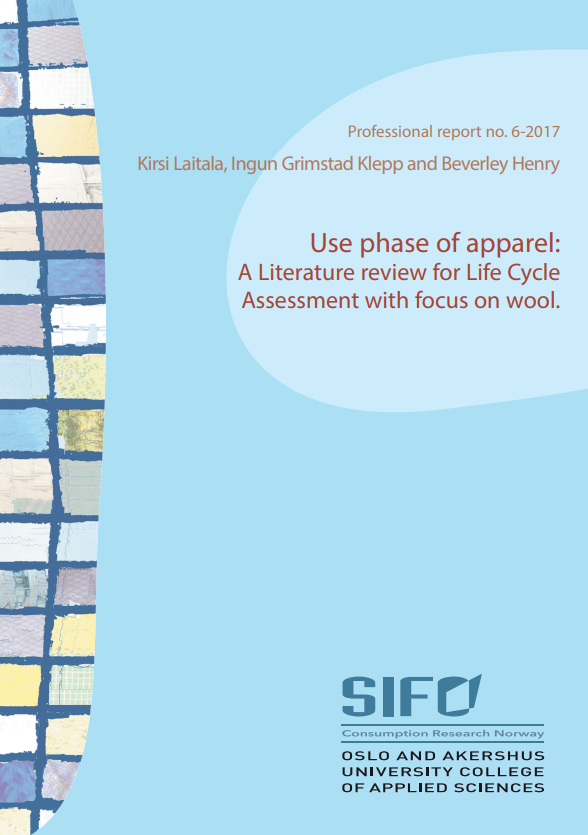
Use phase of apparel: A Literature review for Life Cycle Assessment with focus on wool.

  • av

This report presents a literature review of clothing use phase. The purpose is to support improved methodological development for accounting for the use phase in Life Cycle Assessment (LCA) of apparel. All relevant textile fibres are included in the review. However, the main focus is on wool. We ask whether the use of wool has different environmental impacts than clothes in other fibres. The report builds on a review of literature from the past 20 years. The review showed that clothing made from different materials are used, and reused in different ways. Wool is washed differently as it has about ten degrees lower washing temperature than the average laundry in Europe. Wool is also more likely to be either dry-cleaned or washed by hand than other textiles. Moreover, when dried, it is less likely to be tumble-dried.

Global laundering practices: Alternatives to machine washing

  • av

This article discusses laundering practices around the world including alternative methods such as washing by hand, airing, steaming, and dry-cleaning. These methods, which have received little attention in research, are often more suited toproducts made of wool, silk or other materials able to be cleaned using gentler techniques than more commonly used fibers such as cotton and synthetics. The material is based on extensive literature review from the past 20 years and reanalysis of previously unpublished survey data.The results show that washing by hand is common and that is the main laundering method in most rural areas of developing countries, but also significant for smaller portion of laundry in developed countries. Dry cleaning is less common, and mainly used for specific clothing items. Simple method such as airing can reduce the washing frequency, and thus reduce the environmental impacts resulting from the cleaning of clothes.

What’s the Problem? Odor-control and the Smell of Sweat in Sportswear

  • av

Sport and fitness are increasing in popularity, and so is awareness of body odor. Both are aspects people wish to gain control over, as promised by the marketing of sportswear with odor-controlling properties. This article discusses how the heightened awareness of body odor has developed, and how unpleasant odor varies between textiles made of different materials. A sensory analysis by a consumer panel was used to evaluate the odor intensity of 13 different fabric samples taken mainly from sportswear.

The so-called odor-control textiles smelled less intense than similar polyester samples without such treatment. Wool and cotton smelled significantly less intense than both odor-control and polyester when the samples were sweaty or aired. After washing, the odor-control textiles had a level of odor intensity that was in between that of the cotton and woolen samples. The odor-control treatment reduced the smell, but not enough to make a difference on laundering frequency, and the textiles smelled still more strongly than wool.