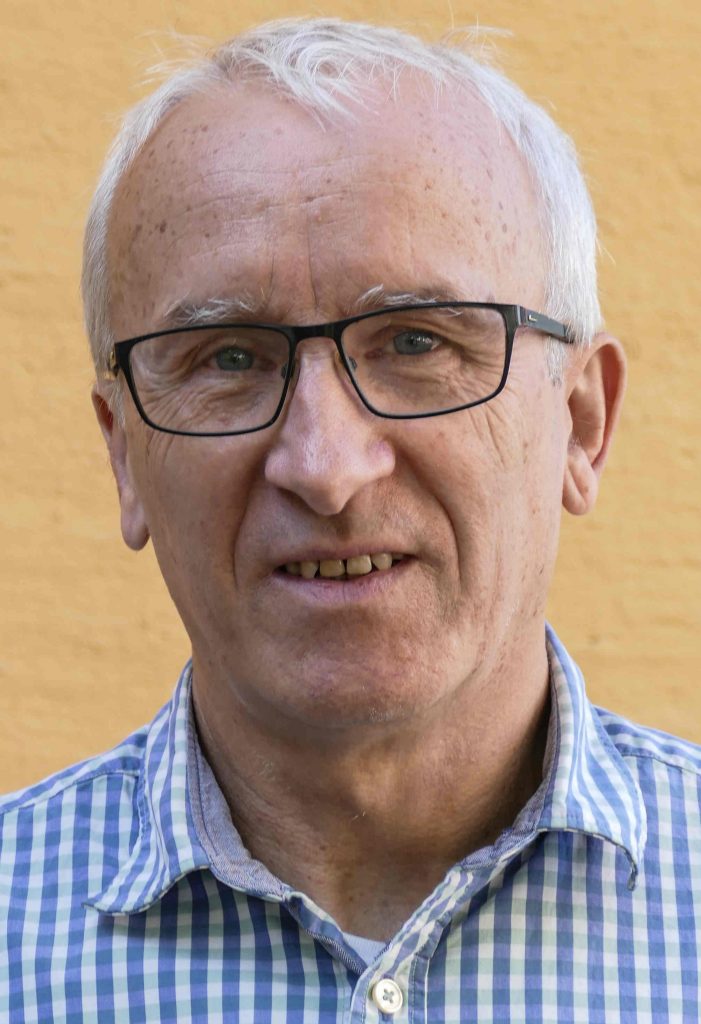
Two years after completing his CAS project on Indigenous vulnerability to pandemics, Svenn-Erik Mamelund and parts of the old team is back at the centre — picking up threads that remain vital to understanding both past and present health crises.
Why does it feel like coming home when returning to Centre for Advanced Study (CAS) at The Norwegian Academy of Science and Letters? I am here interviewed by Julie Ellinor Frølich Dalseth and give my answer to this question and explain the new research we do as part of a Short-Term Fellowship at CAS in November and December 2025:
Centre leader Mamelund is nominated name of the year in Academia in 2025 by the readers of the Newspaper Khrono. This is the third time Mamelund has been nominated for this prize. First times were in 2021 and 2020. In the latter instance he was one of three finalists.
Benjamin Schneider, prior post-doc at PANSOC just got a Young FRIPRO Grant from the Research Council of Norway. The project, which will be based at the University of Oslo, but with a partner at the Work Research Institute at OsloMet, will study “Technological Change, Labor Representation, and Job Quality: A Comparative Historical Analysis, c. 1830—1980.”
For the eighth Pandemics & Society Seminar of our Fall 2025 series we are pleased to welcome Sheilagh Ogilvie (All Souls College, University of Oxford). The seminar will be held on Thursday, 20th November at the normal time (1600 CEST). More information about our speaker and the presentation is below. You can sign up for email notifications about the seminar series, including the Zoom details, here.
Blurb: How do societies use institutions – the humanly devised rules of social interaction – to tackle epidemic disease? Controlling Contagion (Princeton University Press, 2025) uses evidence from seven centuries of pandemics to show how societies tackled externalities – situations where my action creates costs or benefits for others in addition to those that I myself incur. It explores how markets, states, communities, religions, guilds, and families dealt with the negative externalities of contagion; the positive externalities of social distancing, sanitation, and immunisation; and the cross-border externalities of quarantine, vaccine diplomacy, and river agreements. It shows how, long before scientific medicine, human societies coordinated and innovated to deal with biological shocks.
Biography: Sheilagh Ogilvie is the Chichele Professor of Economic History at the University of Oxford and a Fellow of the British Academy. She explores the lives of ordinary people in the past and tries to explain how poor economies get richer and improve human well-being. She is interested in how social institutions shaped economic development since the Middle Ages. She has recently launched a research project on “Serfdom and Economic Development, c. 1000-1861”.
Centre leader Svenn-Erik Mamelund is ranked 41 among the «Highly Ranked Lifetime Scholars» (ScholarGPS 2025) globally in the field of «Pandemic», defined as eminent authors (active, retired, and deceased) whose Top Percentage Ranks places them in the top 0.05 % of all scholars due to their lifetime scholarly contributions (Highly Ranked Scholars | Pandemic | ScholarGPS). Highly Ranked Scholars are the most productive authors (by number of publications) whose works demonstrate exceptional impact (citations) and outstanding quality (h-index).
Mamelund is also on Elsevier/Stanford University 2025 top 2% list among Public Health researchers globally (ranked 1322 of 75495) (Top SCINET – Top 2% Scientists). This shows that he and his work has relevance outside his own field of Pandemic studies.
For the seventh Pandemics & Society Seminar of our Fall 2025 series we are pleased to welcome Andrea Kifyasi (University of Dar es Salaam). The seminar will be held on Thursday, 13th November at the normal time (1600 CEST). More information about our speaker and the presentation is below. You can sign up for email notifications about the seminar series, including the Zoom details, here.
Blurb: The 1957-58 Asian flu was one of the global pandemics caused by the influenza ‘A’ virus, subtype H2N2. This flu pandemic claimed approximately one to four million lives, making it one of the deadliest pandemics in history. Generally, published research literature on Asian flu is scarce. A few studies document its history in Europe, the Americas, and Asia. Limited information exists regarding the history and socioeconomic consequences of the pandemic in Africa. This paper aims to fill this lacuna by exploring the history of the pandemic in colonial Tanganyika. It demonstrates that, although the virus primarily affected Asia, Europe, and North America, Africa was also impacted, indicating that the continent was equally vulnerable to global pandemics. Tanganyika, for instance, was among the first African colonial territories severely affected by the virus, experiencing its impact at an early stage. This paper critically examines the responses of the colonial government, the World Health Organization, and the community in their efforts to combat influenza, highlighting the urgency of the situation. Overall, the paper illuminates that the flu infected many individuals and sparked significant panic in both the colonial public health sector and the general community. However, compared to the 1918-19 Spanish flu, the Asian flu recorded lower morbidity and mortality rates due to its nature and the effective use of antibiotics and other non-biomedical measures. Focusing on Tanganyika, this paper employs a qualitative analytical method on relevant archival and published sources to uncover the history of the pandemic in colonial Africa.
Biography: Andrea Azizi Kifyasi is a senior lecturer at the Department of History, University of Dar es Salaam, Tanzania. Kifyasi specialises in medical history and is interested in global health, China’s aid to Africa, medical diplomacy, and Cold War politics. He earned his PhD at the Department of History, University of Basel, Switzerland, in 2021, a Master of Arts in Chinese Studies at Zhejiang University, China, in 2016, a Master of Arts in History at the University of Dar es Salaam in 2015, and a bachelor degree in Arts with Education (Hons.) at the University of Dar es Salaam in 2011.
For the sixth Pandemics & Society Seminar of our Fall 2025 series we are pleased to welcome Christoph Gradmann (University of Oslo). The seminar will be held on Thursday, 6th November at the normal time (1600 CEST). More information about our speaker and the presentation is below. You can sign up for email notifications about the seminar series, including the Zoom details, here.
Blurb: Tuberculosis as a chronic infectious disease seems to sit oddly with common notions of what is to be considered epidemic or endemic. As a result, the conditions presence is often endemic in character, but the term itself is rarely employed. However, the question of an epidemic or endemic character was explicitly addressed was in studies of African tuberculosis between the world wars. Around 1930, researchers were exploring its presence in Africa, and many were favouring Lyle Cummins’ hypothesis that, much like European colonisation, the condition was a recent arrival in Africa. This meant that there had to be a quickly spreading epidemic into a susceptible population. In my paper, I will look at the epidemiological surveying that was done in Northern Tanganyika in exploration of Cummins’ theory. What does it teach us about colonial science? What happened to Cummins’ explanation when available data – as they were – supported it less and less?
Biography: Christoph Gradmann is professor of the history of medicine at the University of Oslo, Department of Community Medicine and Global Health. His research interests range from 19th ct medical bacteriology, through 20th ct drug development, antibiotics resistances to the history of tuberculosis Africa. He has published several monographs, numerous editions, guest editorships and many papers. He is the author of ‘Laboratory Disease: Robert Koch’s Medical Bacteriology, JHUP 2009’, ‘Global Health and the New World Order’ (with Claire Beaudevin, Jean-Paul Gaudillière Anne Lovel and Laurent Pordie), Manchester University Press, 2020 and of ‘Another Magic Mountain: Kibong’oto Hospital and African Tuberculosis, 1920-2000.’ Ohio University Press, 2025.
Global excess tuberculosis mortality during COVID-19: a country-level modeling study of policy and development correlates
Abstract:
The COVID-19 pandemic disrupted global tuberculosis (TB) control efforts, leading to a surge in TB-related excess mortality, particularly in low- and middle-income countries. Pandemic mitigation measures, such as lockdowns, reallocation of healthcare resources, and reduced access to diagnosis and treatment, contributed to delayed TB care and disease progression. Quantifying this collateral damage is crucial to bolstering health system resilience.
We estimated country-level excess TB mortality between 2020 and 2023 using annual TB mortality data reported by the World Health Organization (WHO). Our approach leverages the SubEpiPredict toolbox of the ensemble n-sub-epidemic modeling framework, calibrated to pre-pandemic trends (2010–2019) to forecast expected TB deaths in the absence of COVID-19 disruptions. We selected the best-fitting model based on AICc and compared projected and reported deaths to quantify excess mortality, incorporating both normal and Poisson error structures. We further examined associations between excess TB mortality and country-level indicators, including the COVID-19 Stringency Index, Global Health Security (GHS) Index, and Socio-demographic Index (SDI). It is also noteworthy that for each estimate of excess TB deaths, we provide an associated uncertainty.
Our global estimate of 755,876 excess TB deaths (95%CI: 591,099 to 965,015) aligns closely with the WHO estimate of approximately 700,000 excess deaths. Therefore, it can be estimated a global relative excess mortality of 12.8% (95%CI: 11.6% to 14.2%), compared to the WHO estimate of 14.6% (95% CI: 5.9% to 26.7%). We found substantial geographic heterogeneity, with the highest TB excess mortality rates observed in southern Africa, South Asia, and parts of South America. Countries with high GHS or SDI scores did not necessarily exhibit lower excess TB mortality, suggesting that pandemic-specific disruptions and competing priorities may have overridden structural advantages. Weak-to-moderate correlations were observed between excess mortality and pandemic stringency, peaking in 2021 and waning by 2022, possibly reflecting health system adaptation.
This study presents a systematic, model-based analysis of global excess TB mortality during the COVID-19 pandemic, emphasizing disparities in pandemic response impacts across countries. The findings highlight the need for integrated and resilient public health systems capable of maintaining essential services amid global crises. Our methodology can support real-time monitoring of collateral effects of pandemics on endemic diseases and guide strategic investments in TB surveillance and care continuity.
Absract: Across Europe, changes in the labour market structure and fertility rates have been pressuring countries to adopt policies that support parenthood. Previous research has analysed parental leaves but has not compared other types of family support, such as access to childcare services or work arrangements. This study aimed to conduct a comparative analysis of the public policies implemented in 2022/2023 across 12 European countries through document analysis. Despite the international regulations, high heterogeneity was found. Some countries, such as Sweden and Norway, promoted well-compensated individual parental leaves, higher leave take-up rates among mothers and fathers, working time flexibility, and full-time childcare services. Conversely, others, such as Italy, Spain, and Portugal, showed limited public spending, fragmented public childcare services, short well-paid parental leaves, and an imbalance in leave take-up rates among mothers and fathers. This comparative analysis highlights and discusses the existing policy options according to countries’ economic, social, and demographic outcomes.