Video from 21 October Webinar

If you missed this week’s webinar, you can catch up here:
https://drive.google.com/file/d/1op1HBfBqw7e3qZ9c6nrHZOY8MLwaSww5/view?usp=sharing
And all our past webinars are here:
Weekly Zoom seminars held by invited international pandemic researchers.

If you missed this week’s webinar, you can catch up here:
https://drive.google.com/file/d/1op1HBfBqw7e3qZ9c6nrHZOY8MLwaSww5/view?usp=sharing
And all our past webinars are here:

Please join us October 28 at 1600 CET for the next PANSOC webinar. Contact jessicad@oslomet.no if you need a Zoom link.
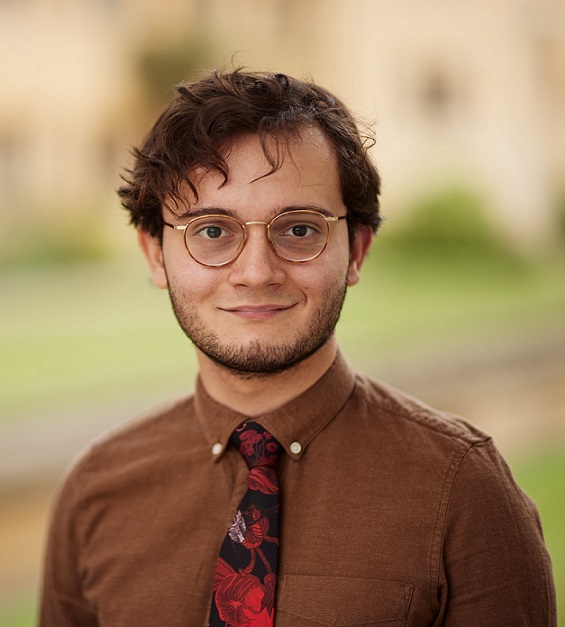
Hampton Gaddy, University of Oxford, will present: “Re-estimating the global and national death tolls of the 1918-20 pandemic: Updating Johnson and Mueller (2002).”
The last two decades have seen the study of the 1918-20 influenza pandemic emerge as a field in its own right; the quantitative and qualitative description of most aspects of the pandemic have improved greatly in their depth and rigour. However, there has been little organised progress towards refining the available estimates of how many deaths the pandemic caused on global, regional, and national levels since the often-cited work of Johnson and Mueller (2002). In this paper, I perform an extensive literature review to chart the progress of the last twenty years in this area, and in doing so, I propose new consensus estimates of the pandemic’s death toll within more than 140 national borders. From those estimates, I produce three main results. First, I suggest that the pandemic killed 45 to 60 million people globally. This estimate equates to 2.4% to 3.2% of the world population at the time and is the narrowest well-founded global estimate to date. Second, I note the main geographical and contextual gaps in the field’s understanding of the pandemic’s mortality on the national level. In particular, I point out the lack of research on indigenous and military populations, as well as Eastern Europe, China, the Middle East, North Africa, East Africa, and Southeast Asia. Third, I use my revised national mortality estimates to demonstrate that several high-profile findings about the pandemic, its global correlates, and its global effects are poorly founded.
Hampton Gaddy is an MPhil Candidate in Sociology and Demography at the University of Oxford. His work on this topic was awarded the Oxford Institute of Human Sciences’ 2021 Wilma Crowther Prize for best BA dissertation.

Please join us for our next webinar – contact jessicad@oslomet.no if you need a Zoom link.
From Cholera to COVID19: Continuity and Change in Iran’s Pandemic Experience.
Amir A. Afkhami will present an overview of pandemic cholera’s seminal role in the emergence and development of modernity in Iran during the nineteenth and twentieth centuries including cholera’s transformative impact on the country’s governance and changing perspectives on medicine, disease, and public health. And the continuity of these historic and political determinants in Tehran’s public health policy against the current COVID19 pandemic.
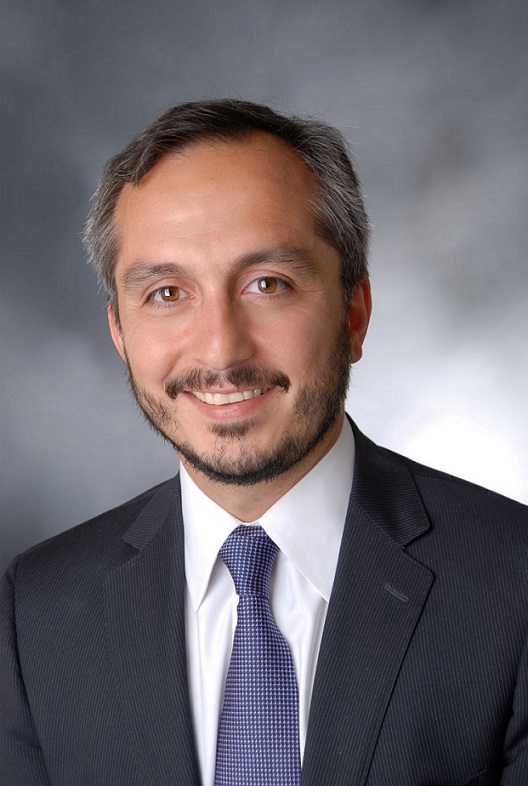
Amir A. Afkhami, MD, PhD, DFAPA is an associate professor with joint appointments in psychiatry, global health, and history at the George Washington University. He is also the clerkship director and director of medical student education at the George Washington University School of Medicine’s Department of Psychiatry. He is a Distinguished Fellow of the American Psychiatric Association (APA) and recipient of the APA’s Roeske Award for Excellence in Medical Student Education. He is the author of A Modern Contagion: Imperialism and Public Health in Iran’s Age of Cholera (Baltimore: Johns Hopkins University Press, 2019). Previously, he served on the legislative staff of US Sen. Debbie Stabenow (D-MI) as an RWJF Health Policy Fellow, and has led a number of international capacity building initiatives in conflict zones including the U.S. State Department’s Iraq Mental Health Initiative to rebuild Iraq’s mental health delivery capabilities.

Watch the latest webinar here:
https://drive.google.com/file/d/1CX8iZ4_mVED_2YIMuHOLIr6t9EF1_ImO/view?usp=sharing
You can read more about some of the referenced research here:
Plague in seventeenth-century Europe and the decline of Italy: an epidemiological hypothesis
Epidemics, Inequality and Poverty in Preindustrial and Early Industrial Times
And catch up on other past webinars here:
Due to unexpected circumstances, the webinar with Lianne Tripp will not be held. We hope to reschedule it in the future.

Contact jessicad@oslomet.no if you need a link to our Thursday’s webinar 16:00-17:00 (CET).
Guido Alfani, Bocconi University, will present:
“Unravelling the Mysteries of Seventeenth-Century Plagues: The Contribution of Micro-Demographic Approaches”
Of all the major pandemics of the past, those which have been caused by plague have attracted the greatest attention. And yet, most studies focused on the big picture, looking at the overall demographic, economic and social impact of plagues – and not even of all plagues, but especially of the main pandemic of medieval and early modern times: the Black Death of 1347-52. For such an early period, the available sources somehow restrict the possibility of gaining insights into the epidemiological (and social) mechanisms that allowed Yersinia Pestis to cause what remains the worst pandemic in European history, with an overall mortality rate of about 50% in the continent and in the broader Mediterranean area. As a consequence of this, many aspects of this pandemic remain mysterious, including possibly the main one: how exactly could plague kill such a large share of the population? Arguably, looking at the last great European plagues of the seventeenth century, which in the South of the continent led to mortality rates not very far from the Black Death, offers insights into the inner workings of all plague epidemics of medieval and early modern times. This, because for the seventeenth century a greater variety of historical sources is available, which allow to proceed to micro-demographic analyses of a kind that would be impossible for earlier events. Although studies of this kind remain rare, also due to the substantial investment in data collection from archival sources that they require, they are already leading to a significant change in the way we think of past plagues, and they seem to hold the promise to one day solve some long-standing historical mysteries.
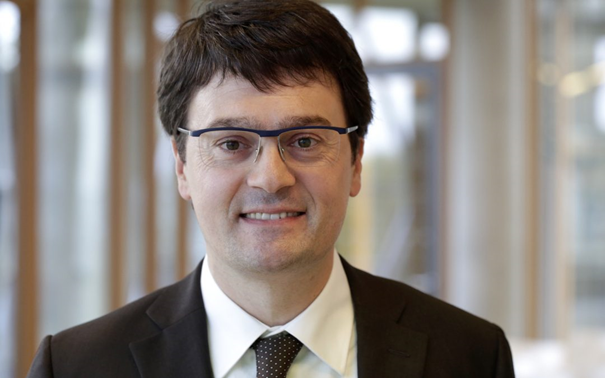
Guido Alfani is Professor of Economic History at Bocconi University, Milan (Italy). He is also an Affiliated Scholar of the Stone Center on Socio-Economic Inequality, New York (U.S.). An economic and social historian and an historical demographer, he published extensively on inequality and social mobility in the long run, on the history of epidemics (especially of plague) and of famines, and on systems of social alliance. Recent works include The Lion’s Share. Inequality and the Rise of the Fiscal State in Preindustrial Europe (2019, with Matteo Di Tullio) and Famine in European History (2017, with Cormac Ó Gráda). During 2012-16 he was the Principal Investigator of the project EINITE-Economic Inequality across Italy and Europe, 1300-1800 (www.dondena.unibocconi.it/EINITE), funded by the European Research Council (ERC), and from 2017 he is the Principal Investigator of a second ERC project, SMITE-Social Mobility and Inequality across Italy and Europe 1300-1800.
The video from Thursday’s webinar is now available. Watch Howard Phillips’ talk here:
https://drive.google.com/file/d/119FUT3Iki4TBNbtFPfyuiAOxNnkuoE-b/view?usp=sharing
Here are links to the performances discussed in the video:
From the talk: South African composer Philip Miller’s arrangement of the song, “Influenza(1918)” written by South African choral composer Reuben T. Caluza in response to the “Spanish Flu” pandemic. The project raises funds to assist singers and musicians who are currently unable to earn money during the COVID 19 Lockdown.
https://www.philipmiller.co.za/projects/influenza-1918
From Siddharth Chandra during Q&A:
A revival/adaptation of a book that was written over 100 years ago in the form of a play intended to educate the public about dos and don’ts during a pandemic. Acknowledgments to: Michigan State University (Asian Studies Center), University of Michigan (Center for Southeast Asian Studies), and the American Institute for Indonesian Studies, as well as Javanese dhalang (puppet master) Ki Purbo Asmoro and his group and Kathryn (Kitsie) Emerson for co-organizing the event and providing the real-time translation.

If you missed the last webinar with Mary Sheehan, you can catch up here:
https://drive.google.com/file/d/1eDqwle_IN2UuAhKXA1eD9HEk9SUqLtGY/view?usp=sharing
And find recordings of other past talks here:

Contact jessicad@oslomet.no if you need a link for the webinar on September 30.
Howard Phillips, University of Cape Town will present “The Silence of the Survivors: Why Did Survivors of the ‘Spanish’ Flu in South Africa Not Talk about the Epidemic?”
To dissect the label ‘forgotten’ which is as inaccurately applied across the board to the great influenza pandemic of 1918-1919 in South Africa as the label ‘Spanish’, this paper will draw a clear distinction between two categories of survivor, viz. institutions and individuals. In the case of institutions like the state, the military, the professions and faith-based communities, their silence stemmed mainly from a deliberate wish not to memorialise what was for them a comprehensive rout as they failed, by and large, to meet the needs of those dependent on them for protection or succour. On the other hand, the long silence of individuals about their experiences in the pandemic was, in the main, not the result of active suppression of memories but more a consequence of a reluctance to actively revive distressing memories of a doleful and frightening period of their lives. That they had not deliberately buried such memories in amnesia is made clear by the readiness with which, sixty years later—by when the pain of such memories had eased—over 170 of them willingly shared their graphic recollections of the pandemic in interviews with the author. Drawing on these almost unique recollections, this paper seeks to construct why, when and how their silence turned into speaking, thereby adding important dimensions to one-dimensional concepts of both silence and survivors.

Have you missed any of our recent Pandemics & Society Seminars? You can view recordings of all of our seminars since Spring 2021 below.
By series:
Spring 2021
Fall 2021
Spring 2022
Fall 2022
Spring 2023
Fall 2023
Spring 2024
Fall 2024
Spring 2021
March 18: Siddharth Chandra, Michigan State University, USA: “Demographic impacts of the 1918 influenza pandemic.”
Part 1 https://drive.google.com/file/d/1zGeicnUvdoal34NnqXzmEW3iVqc2986S/view?usp=sharing
Part 2 : https://drive.google.com/file/d/1gjEg9_RmzkII9CrYOlgnydZDY1JUSrPw/view?usp=sharing
March 25: Lone Simonsen, Roskilde University, Denmark: “The First Year of the COVID-19 pandemic.”
https://drive.google.com/file/d/1IYI5u69u_UcUQKTqDfXU4g3vd5MwxfYr/view?usp=sharing
April 15: Rick J. Mourits, International Institute for Social History, Amsterdam, the Netherlands: “Occupational characteristics and spatial inequalities in mortality during 1918-9 influenza pandemic in the Netherlands.”
https://drive.google.com/file/d/1kaS6-ZPXIUD3gE6tVqPyzv-9jt34e-pX/view?usp=sharing
April 22: Lisa Sattenspiel, University of Missouri, USA: “Comparing COVID-19 and the 1918 flu in rural vs. urban counties of Missouri.”
https://drive.google.com/file/d/1nGAq4NiDNLSZ29k6SwP1QOSRk1mU6nX9/view?usp=sharing
April 29: Taylor Paskoff University of Missouri, USA: “Determinants of post-1918 influenza pandemic tuberculosis mortality in Newfoundland.”
https://drive.google.com/file/d/1ITGdw3NVFmFvlczoe3dV07cBk_oab3zW/view?usp=sharing
May 7: Sushma Dahal & Gerardo Chowell-Puente, Georgia State University, USA: “Comparative analysis of excess mortality patterns during pandemics in Arizona and Mexico.”
https://drive.google.com/file/d/1PJMxgZsjcoIZtDqGPVd8AQPrgp5nnM0h/view?usp=sharing
May 20: Jessica Dimka, Oslo Metropolitan University: “Disability, Institutionalization, and the 1918 Flu Pandemic: From Historical Records to Simulation Models.”
https://drive.google.com/file/d/1yw2hcIrlOnntC03VwvKbCVu7TouQX7zj/view?usp=sharing
August 19: Elizabeth Wrigley-Field (University of Minnesota) & Martin Eiermann (University of Berkeley): “Racial Disparities in Mortality During the 1918 Influenza Pandemic in United States Cities.”
https://drive.google.com/file/d/1QdMvRDzGcc_v9ltZNptunYdY2BNhTIx3/view?usp=sharing
Fall 2021
September 9: Ida Milne, Carlow College: “Forgetting and Remembering the Great Flu: Collecting and Shaping Narratives.”
https://drive.google.com/file/d/1AZxdaQ_rNktQ6bNetm8fBBghfBrBIf1F/view?usp=sharing
September 16: Mathias Mølbak Ingholt, Roskilde University, Denmark: “Occupational Characteristics and Spatial Differences During an Intermittent Fever Epidemic in Early 19th Century Denmark.”
https://drive.google.com/file/d/1mgG0ENPAPqCpTcbkhR5XJlffGJx7__s7/view?usp=sharing
September 23: Mary Sheehan, University of Melbourne: “Women and the Spanish Influenza Pandemic in Melbourne, Australia, in 1919.”
https://drive.google.com/file/d/1eDqwle_IN2UuAhKXA1eD9HEk9SUqLtGY/view?usp=sharing
September 30: Howard Phillips, University of Cape Town: “The Silence of the Survivors: Why Did Survivors of the ‘Spanish’ Flu in South Africa Not Talk about the Epidemic?”
https://drive.google.com/file/d/119FUT3Iki4TBNbtFPfyuiAOxNnkuoE-b/view?usp=sharing
October 7: Guido Alfani, Bocconi University: “Unravelling the Mysteries of Seventeenth-Century Plagues: The Contribution of Micro-Demographic Approaches.”
https://drive.google.com/file/d/1CX8iZ4_mVED_2YIMuHOLIr6t9EF1_ImO/view?usp=sharing
October 21: Amir Afkhami, The George Washington University: “From Cholera to COVID19: Continuity and Change in Iran’s Pandemic Experience.”
https://drive.google.com/file/d/1op1HBfBqw7e3qZ9c6nrHZOY8MLwaSww5/view?usp=sharing
October 28: Hampton Gaddy, University of Oxford: “Re-estimating the global and national death tolls of the 1918-20 pandemic: Updating Johnson and Mueller (2002).”
https://drive.google.com/file/d/1qsOf1GMe0G-mkEVB9Uz7wQje43tb2tvL/view?usp=sharing
November 11: Sharon DeWitte, University of South Carolina: “Social Inequality and Pandemic Mortality: The Biosocial Context of the 14th-Century Black Death.”
https://drive.google.com/file/d/1ro1D39YQSP1i-fSYGRNbzAeDRK9n485a/view?usp=sharing
November 18: PANSOC’s Master’s Students Carla Louise Hughes (“The Association between the 1918 Influenza Pandemic and Suicide Rates in Norway”) and Lara Maria Dora Steinmetz (“Vaccine hesitancy in Eastern Oslo during COVID-19: Associated sociodemographic factors and subsequent reasons.”)
https://drive.google.com/file/d/1-WN_mISdwjzUkK89AmxAoxK97J21gldp/view
December 2: Madeleine Mant, University of Toronto Mississauga: “Going Viral: COVID-19 and Risk in Young Adult Health Behaviour Models.”
https://drive.google.com/file/d/1vSYEgDcwWGFr_o7dAYI86V1Ds7vROGYO/view?usp=sharing
December 16: John Eicher, Pennsylvania State University – Altoona: “A Digital History Approach to Analyzing Memories of the 1918 Flu Pandemic.”
https://drive.google.com/file/d/1e6JIeH8keW1o1xVFYKr8fGbqhCEw_922/view?usp=sharing
Spring 2022
January 27: Christina Torjussen, University of South-Eastern Norway and PANSOC: “Kong Sverre – The Death Ship.”
https://drive.google.com/file/d/1GRr6MnyeonSxwJn_YJKknD_lwftulIVf/view?usp=sharing
February 3: Chinmay Tumbe, Indian Institute of Management Ahmedabad: “India and 1918 Influenza Pandemic: Mortality Estimates and Correlates.”
https://drive.google.com/file/d/1pLm4e4ZSYLbXiZ_vJh00trmsLTz1n-5j/view?usp=sharing
February 10: Binoy Kampmark, RMIT University Melbourne, “‘Killing cockroaches with a nuclear weapon’: The Victorian Pandemic Management Bill.”
https://drive.google.com/file/d/1jCAC4nuXflKxSwwnEwVHl6nEIBIvN_em/view?usp=sharing
February 24: David Roth, The Australian National University, “The effects of the 1918-1919 influenza pandemic on mental patients in New South Wales – Work-In-Progress.”
https://drive.google.com/file/d/1JEZxxkVuquBdjwwYJKahn1-b9iL_DmsB/view?usp=sharing
March 10: Tamara Giles-Vernick, Institut Pasteur: “Complex local vulnerabilities and the COVID-19 pandemic in France.”
https://drive.google.com/file/d/1nMWPZdNHYWge82FR8rQZg0jvRKTIJRs0/view?usp=sharing
March 17: Margarida Pereira, PANSOC, “The 2020 Syndemic of Obesity and COVID-19 in an Urbanized World.”
https://drive.google.com/file/d/1jqiHIJBDFekAhQVZsVK0mOoUFai9iHwm/view?usp=sharing
March 31: Lianne Tripp, University of Northern British Columbia: “Overlooking the demographic data: COVID-19 in First Nations in Canada.”
https://drive.google.com/file/d/1dzevzFE3Xd2Or6nldnGQNYoFfIxcTdtV/view?usp=sharing
April 7: Amanda Wissler, University of South Carolina & Cleveland Museum of Natural History, “The Long-Term Impacts of Pandemic Disease: Health and Survival after the 1918 Influenza Pandemic.”
https://drive.google.com/file/d/1uwlgjGVzWOOeomnnWMWjY_jOG9BraxHG/view?usp=sharing
April 21: Jord Hanus, University of Antwerp, “Socioeconomic Status and Epidemic Mortality in an Urban Environment: Mechelen (Belgium), 1600-1900”
https://drive.google.com/file/d/1qRr-rQYmLISHhmax8wX8fGK0iSx9aaSb/view?usp=sharing
May 5: Vibeke Narverud Nyborg, University of South-Eastern Norway and PANSOC, The exploration of state health legislations as possible driving forces to non-pharmaceutical interventions (NPIs) during the 1918 pandemic in different Norwegian regions.”
https://drive.google.com/file/d/1nHUYYH4hiVvuef_3G7u8UL3xhYSWuY4S/view?usp=sharing
May 12: Carolyn Orbann, University of Missouri, “Co-circulating respiratory diseases at the end of the 1918 influenza pandemic.”
https://drive.google.com/file/d/1wG_MNSGx8FQWiBvSvOWiL2oYLh_Xcwxo/view?usp=sharing
Fall 2022
September 15: Kirsty Short, The University of Queensland, “Obesity and viral disease: lessons for pandemic preparedness.”
https://drive.google.com/file/d/1KitOcdQl7lxjqhP8f-CdE_Sbvm71bfQW/view?usp=sharing
September 22: Nele Brusselaers, Antwerp University & Karolinska Institutet & Ghent University, “How science affected Covid-19 policy in Sweden.”
https://drive.google.com/file/d/1Z25XYP35uTOTE604L6E3RUOvNlR480Xf/view?usp=sharing
September 29: Sushma Dahal, Georgia State University, “Investigating COVID-19 transmission and mortality differences between indigenous and non-indigenous populations in Mexico.”
https://drive.google.com/file/d/1pCAQJTT6VNlJSpUK0sF2DPgCIHSF8V2z/view?usp=sharing
October 6: Alexi Gugushvili, University of Oslo, “The COVID-19 Pandemic and War: The Case of Ukraine.”
https://drive.google.com/file/d/130_BjrV1NUIvIZqkL1HNrO6LgfM3mXJF/view?usp=sharing
October 20: Masato Shizume, Waseda University, “The Great Influenza Pandemic in Japan: Policy Responses and Socioeconomic Consequences.”
https://drive.google.com/file/d/1NqroXG-sQFi_fBlOLeHIjSO0yna4UHHo/view?usp=sharing
October 27: Ben Schneider, Oslo Metropolitan University, “Work and the 1918–20 Influenza Pandemic in the US.”
https://drive.google.com/file/d/1Rlm0NWN5yvDEvRvQFgkuaX513oxTBn40/view?usp=sharing
November 3: Heather Battles, The University of Auckland, “A historical syndemic? Measles and scarlet fever in goldfields-era Victoria.”
https://drive.google.com/file/d/1wGDnk0bHbdKqzZTMVBrVLW8GZkZZx8Dy/view?usp=share_link
November 17: Esyllt Jones, University of Manitoba, “Contested Concepts of Borders and Containment in the Great Influenza Pandemic Era in Canada.”
https://drive.google.com/file/d/1yCbJfDJqvSsxpYHgtX1r4gDmAJTSBXFc/view?usp=sharing
December 1: Tobias A. Jopp and Mark Spoerer, University of Regensburg, “Tracing the temporal and spatial course of the Spanish flu in Germany.”
https://drive.google.com/file/d/1bMJyCdaY_TqPRUoVqKjhXCyZqvfnsVw1/view?usp=share_link
Spring 2023
January 19: Taylor P. van Doren, Sitka Sound Science Center, “Risk perception, resilience, and future population health challenges due to COVID-19 in Southeast Alaska.”
https://drive.google.com/file/d/1wJ9crhaDJRYC5r8AfQf1wOsDVPExteEQ/view?usp=share_link
February 2: Marama Muru-Lanning, University of Auckland, Hongi (pressing of noses), Harirū (handshakes) and Hau (sharing breath): In the time of COVID-19.”
https://drive.google.com/file/d/1aGdxALLBpRoEED_DCysHMKXIfcjzXKWB/view?usp=share_link
February 16: Mikaela Adams, University of Mississippi: “Influenza in Indian Country: Indigenous Sickness and Federal Responsibility during the 1918-1920 Pandemic.”
https://drive.google.com/file/d/1rs6VrpLBChBDphEo6otpm-pTL2t48TWx/view?usp=sharing
March 2: Luissa Vahedi, Washington University in St. Louis: “COVID-19 and Violence against Women and Girls: Understanding Synergies, Long-term Consequences, and Lessons Learned for a More Equitable Future.”
https://drive.google.com/file/d/1Cqp5jjJsd8S2Xm4na6sggEY6Mttir1ZE/view?usp=share_link
March 16: Elisa Perego, University College London: “Long Covid: history, research, future challenges.”
https://drive.google.com/file/d/197ZYQ3QD1GiqxXOR4K5Qisqy7QULpTRY/view?usp=sharing
March 23: Helga E. Bories-Sawala, University of Bremen: “The forgotten pandemic that created today’s America: A look at the history textbooks of Québec.”
https://drive.google.com/file/d/1wvyonGLl33j1OfbggRV-q5yrdRfrezLv/view?usp=sharing
April 20: Courtney Heffernan, University of Alberta: “Tuberculosis elimination in low prevalence settings: research and implementation.”
https://drive.google.com/file/d/1hMHcehOHZC9_CKCRlgWd37u1VIBQkbRe/view?usp=share_link
April 27: Marcia Anderson, University of Manitoba: “The Impacts of the COVID-19 Pandemic for First Nations Peoples and Communities: the role of leadership and governance in addressing policy gaps and barriers to access.”
https://drive.google.com/file/d/1PZc4GDE_4kImJFqKSVcFVPYWXsfbZ1rq/view?usp=sharing
Fall 2023
August 24: Eevi Juuti, University of Oulo, “Built Environments and Pandemics: An Introduction to the RECIPE Project”
https://drive.google.com/file/d/1TIGvh_8yWdEa4EoB98SqAjW-J_IhnZJL/view
September 7: Maria Dunbar, PANSOC, “Historical endemic diseases and syndemic demographic effects”
https://drive.google.com/file/d/1hkFTs8NjbnBTuhH65i0gw2Z7-mPeQCIT/view
September 14: Rebecca Main, University of Stirling, “Plague and Bronze Age Migrations“
https://drive.google.com/file/d/1JlUMnk1ya6k-437-VFm9f-psbgC3WK3f/view
September 21: Erik Hornung, University of Cologne, “Political Effects of the 1918 Influenza Pandemic“
https://drive.google.com/file/d/1wZUBIN5S5C5pWoaRAHx_45W1tCuoNzu_/view?usp=sharing
October 12: Francis Gealogo, Ateneo de Manila University, “Cholera & Spanish Flu in the Philippines“
https://drive.google.com/file/d/1fxRe3pyd5y0nnN7WtUZjNURBoIIEaefH/view?usp=sharing
October 19: Uddhav Khakurel, PANSOC,”The Grenfell Mission and the 1918 influenza pandemic in Labrador“
https://drive.google.com/file/d/1NlMYsZBUtdW0Mea_M3rABy2he_sJ99hP/view
November 2: Natalie Bennett, Newcastle University, “Vaccination and Unequal COVID-19 Mortality in England“
https://drive.google.com/file/d/1j-4FhWHKYkFGRVlpnyu_YMqBX_2wRpbD/view
November 9: Lauren Steele, University of Queensland, “Age Patterns of Mortality Across Influenza Pandemics“
https://drive.google.com/file/d/19TTrQ4-9BM_vu3Jz2aou_arH-D41sseC/view?usp=sharing
November 30: Kristina Thompson, Wageningen University, “COVID-19 Lockdowns and Mental Health, A Simulation Approach“
https://drive.google.com/file/d/161k32uqnSYUos0TLPAWp0CVIEMW89fX8/view?usp=sharing
Spring 2024
22 February: Nita Bharti, Penn State, “Navigating gaps and biases in surveillance data“
https://drive.google.com/file/d/1qMGVsR1rC5Os7O8wx03JsND2P-dqrpNB/view?usp=sharing
29 February: Thomas Finnie, UK Health Security Agency, “Using cellular-scale models to inform public health decision making“
https://drive.google.com/file/d/1tQ4xZnTqfTkDRhIyTKAwDvrzdyc8mP5D/view
7 March: Mark Bailey, University of East Anglia, “The Economic Impact of the Black Death in England, 1350 to 1400“
https://drive.google.com/file/d/1ccLVxWAIRlPbONI7NLL8PSIFiDYhdnVH/view?usp=sharing
18 April: Islay Shelbourne, St Andrews University, “Popular understandings of contagion during the 1918–19 influenza pandemic“
https://drive.google.com/file/d/1F7uc68ovktzzIbRUOeMuAWVQLPIDaJbE/view?usp=sharing
2 May: Sergi Basco, Universitat Barcelona, “Socioeconomic mortality differences during the Great Influenza in Spain“
https://drive.google.com/file/d/1k-4hkzGqhO9_FdrTUaNDkG0A7Lhj7z0K/view
23 May: Christos Konstantopoulos, McGill University, “Forgotten Pandemic? Revisiting the “Spanish” Influenza on the First World War’s Macedonian Front“
https://drive.google.com/file/d/11D-ttvpkd87iZqUOuHScPAGLZ_XCi9OV/view
Fall 2024
5 September: Áine Doran, Ulster University, “What can we learn from historical pandemics?“
https://drive.google.com/file/d/14CCdnJG9ndbvy8oh8idLx7vKHERG7Dd2/view
19 September: Jonathan Kennedy, Queen Mary University of London, “How Germs Shaped History“
https://drive.google.com/file/d/1mcBIIjsBioAKaggw3O6PwA9rBVSaHJ48/view
3 October: Spike Gibbs, Universität Mannheim, “Wages and inequality in the Middle Ages“
https://drive.google.com/file/d/1_mQJYRDfLz_BDlY5u5xaOFPqcu_c3SaF/view
31 October: Jeff Clement, Augsburg University, “COVID-19 is (Probably) Not an Exogenous Shock or Valid Instrument“
https://drive.google.com/file/d/1RY345Cga61Man8DufmVCp2Wd_F04MmoE/view
7 November: Andrea Tilstra, University of Oxford, “Projecting the long-term effects of the COVID-19 pandemic on U.S. population structure“
https://drive.google.com/file/d/1Muq03rngLnf6JoOCW2fmQg7xBbR9gpXI/view
14 November: Paul Skäbe, Universität Leipzig,”Racialized Epidemiologies: The Case of Black Americans During the Great Influenza, 1918–1920“
https://drive.google.com/file/d/1RoM39OPGgIx6mKA5rOwp6JaLOcqOMp09/view
5 December: Srijita Pal, University of Southern California, “The First Wave of the 1918 Influenza and the Western Front“
https://drive.google.com/file/d/1PodKhC9u6_SyFt91CArD8-jw5KGIXIli/view