Hopp til innholdet

Why Cotton as Linen? The Use of Wool in Beds in Norway

  • av

Cotton is the “natural” choice and the dominating material in bed linen and sleepwear in Norway as in many other European countries. Regulation of temperature and humidity are important for good sleep, but they are not cotton’s strong points. There must have been other than the functional reasons which made cotton the winner in the bedding market. This article builds on literature about bedding in Norway from the 1800s and survey questions from 1951. We ask the question: what materials have been used and why? Wool was used in all bed textiles, both closest to the body and the layers over and under, from the cheapest chopped rags to the most costly textiles. The decline was seen throughout the 1800 and 1900s, but only in the 1960s does wool become totally absent as a next to skin bed textile. The cheap imports of cotton made cottage industry and home production unprofitable and the new emphasis on cleanliness gave cotton a clear leverage.

Klesforbruk i Norge

Denne rapporten gir en samlet gjennomgang av sentrale temaer omkring klesforbruket i Norge. Rapporten er skrevet for å danne grunnlag for en oppdatering av SIFOs Referansebudsjett innen klær og sko og samtidig gjøre kunnskapen om klesforbruk lettere tilgjengelig for alle interesserte. De enkelte kapitlene tar opp ulike sider ved forbruk av klær som har relevans for SIFOs Referansebudsjett. Vi diskuterer den totale mengden klær og klærs levetid, og går gjennomalle forbruksfasene fra anskaffelse, bruk i ulike anledninger, vedlikehold, gjenbruk og til avhending.

 Woolbed

Ingun Grimstad Klepp, Kirsi Laitala og Tone Skårdal Tobiasson Sammendrag Vi har undersøkt mulighetene for å gjeninnføre ull som sengetekstil. Barrierer for bruk av ull i nattøy og sengetøy blant norske og svenske forbrukere er…  Woolbed

Deviant bodies and suitable clothes

Suitable clothes are clothes that make the body socially accepted. The theme of this article concerns what people with deviant bodies do when suitable clothes are difficult to find; clothes that make their bodies fit in in everyday social contexts. Based on interviews with Norwegian men and women, the focus is on those people who have bodies that deviate from the present Western bodily ideals of thinness, fitness and no deviances.
The article relates the interviews to research in two different fields: disability studies and fashion studies. A primary focus is on the relationship between acceptance of one’s own body—“making the best out of it,”—and respondents’ different strategies for coping with the situation. The final discussion addresses the relationship between the clothes market and deviant bodies. Focusing on a group of people with special problems related to clothes might bring forth new knowledge in general. In addition, a change in the status of the market may have positive effects for those already excluded from this market.

Klærs levetid – LCA på liv og død

  • av

Et av de mest fremtredende trekkene ved de siste 50 års tekstilforbruk er veksten i mengde. Import av klær har økt med 67 % i de siste tjue årene, og ligger nå på 15 kg per innbygger i Norge (SSB, 2014). Vi vet lite om denne veksten, men at den henger sammen med en nedgang i priser og en oppgang i kjøpekraft, er åpenbar. I samme periode har andelen av husholdningenes forbruk av klær og sko falt fra 6,6 % til 5,4 % av utgiftene (SSB, 1999, 2013). Til tross for denne nedgangen har klesforbruket målt i volum økt. Dette har ikke skjedd uten miljøkonsekvenser. Carbon trust (2011) har estimert at 3 % av globale klimautslipp, målt i CO2-ekvivalenter, stammer fra produksjon og vask av klær. I tillegg kommer utslipp av skadelige kjemikalier, uetiske arbeidsforhold, problemer med dyrevelferd, og høyt forbruk av energi, vann og land-arealer (Fletcher, 2008).

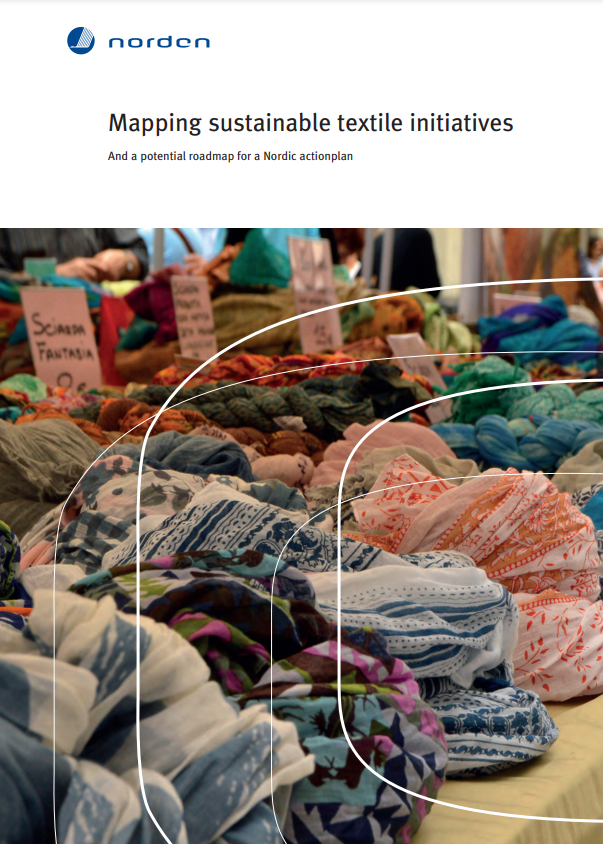
Mapping sustainable textiles initiatives: And a potential roadmap for a Nordic actionplan

This report aims to chart a plan for a coordinated Nordic effort towards sustainable development in textiles and identify ongoing initiatives in the area. The aim was an ambitious plan with a potential for significant reductions in environmental pressures, but also green growth. To reach these goals, we staked out four regions a Nordic plan should include.

Making Clothing Last: A Design Approach for Reducing the Environmental Impacts

  • av

This article discusses the extent it is possible to delay clothing disposal through improved design, thus reducing negative environmental impacts. This has been done by including user centered design methods into more traditional quantitative consumer research to give new insights for design. Empirical data on reasons for disposal of 620 clothing items from 35 persons in 16 Norwegian households was collected. In total, 70 different disposal reasons were registered, which were combined into seven main categories.

Clothing disposal habits and consequences for life cycle assessment (LCA)

  • av

This chapter discusses the effects of end-of-life scenarios to the life cycle assessment (LCA) calculations. Consumers’ decisions in the disposal phase of clothing are crucial from an environmental point of view, as they affect the lifespan of clothing, as well as the potential for reuse and recycling. In doing this, examples of Norwegian consumers’ clothing use and disposal practices are used.
We will present statistics for the current situation in Norway as well as qualitative material on clothing disposal practices and discuss disposal methods and frequencies. Instead of assuming that all clothes are disposed of equally regardless of type of garment, person and place, the LCA analyses should be nuanced in relation to knowledge of disposal practices. Analysis also shows also that if improvements are made in facilitating reuse, clothing lifespans could easily be prolonged.

His mother’s dress: growth in the number of clothes

Eivind Stø likes a tell an illustrative story about his mother who went through World War II with only one dress due to rationing. Today women have many dresses; more than we can wear out in 5 years. Since 1990, Norway’s clothing imports have almost doubled (Statistics Norway, 2014) and we did not lack clothing in 1990. This chapter discusses what we know about this change. What do we know about the number of clothes in use? When did they multiply to such an extent? What sources and methods do we have to describe this growth? In general, growth should be a more central theme in the environmental debate, especially when it comes to clothing and other items where growth in numbers is completely decoupled from a corresponding increase in satisfaction. As long as we produce (and purchase) far more clothes than we need, quantity should be an essential theme.

Patched, Louse-ridden, Tattered: Clean and Dirty Clothes

“Patched, louse-ridden, tattered—clean, beautiful, gem.” As children we recited this rhyme in Norwegian: “Lappete, lusete, fillete—ren, pen, edelsten,” as we picked petal after petal from a daisy. All the words can be understood as descriptions of the child’s future clothes. Clean is the turning point in the rhyme. Clean is thus seen as the first step on the way towards the gem, and it conveys here the same meaning as in the saying “whole and clean is the greatest finery.” Both emphasize clean clothes as crucial to the judgment of a person’s appearance. In the world of fashion it has been alleged that “anything goes.” This is probably true if we restrict “anything” to small variations in the look, decor, color, and style of clothes. However, our way of dressing also depends on more absolute norms.
This article explores the norms that deal with the relationship between clean and dirty clothes. Despite the fact that there is abundant research on cleanliness and laundering on the one hand, and clothes and clothes habits on the other, there are few points of intersection between the two fields. The article is an attempt at seeing these two themes in conjunction. It investigates how clothes, by being kept clean, make bodies socially acceptable. The article looks at how the demand for cleanliness varies in relation to age, gender, and class, and compares these demands to what we know about decency.