Hopp til innholdet

What’s the Problem? Odor-control and the Smell of Sweat in Sportswear

  • av

Sport and fitness are increasing in popularity, and so is awareness of body odor. Both are aspects people wish to gain control over, as promised by the marketing of sportswear with odor-controlling properties. This article discusses how the heightened awareness of body odor has developed, and how unpleasant odor varies between textiles made of different materials. A sensory analysis by a consumer panel was used to evaluate the odor intensity of 13 different fabric samples taken mainly from sportswear.

The so-called odor-control textiles smelled less intense than similar polyester samples without such treatment. Wool and cotton smelled significantly less intense than both odor-control and polyester when the samples were sweaty or aired. After washing, the odor-control textiles had a level of odor intensity that was in between that of the cotton and woolen samples. The odor-control treatment reduced the smell, but not enough to make a difference on laundering frequency, and the textiles smelled still more strongly than wool.

Wool as an Heirloom: How Natural Fibres Can Reinvent Value in Terms of Money, Life-Span and Love

  • av

This paper addresses a main challenge for natural fibres; falling prices and increased focus on quantity versus quality. This is a challenge not only related to economic issues and profit, but is also unsustainable in an environmental perspective and in light of the challenges the textile sector and the world face. The paper uses wool as an example and in a surprising approach links the history and century-old traditions of natural fibers to an environmental thinking which supplements the traditional thinking around circular economy and LCA. Fabrics with a long life are the ones that have the lowest environmental impact (Fletcher and Tham2015; Laitala2014). Longevity or lifespan is a complex phenomenon in which both technical and social, or aesthetic aspects, are intertwined.

Wool you wear it? – woollen garments in Norway and the United Kingdom

  • av

This article was developed from the project ‘Valuing Norwegian Wool’ initiated by the Norwegian National Institute for Consumer Research to generate knowledge on how wool can contribute to sustainable textile consumption, and how value creation can be increased in the Norwegian wool industry. The article will compare consumer perceptions, attitudes, practices and knowledge concerning wool as a material and as garments in Norway and in the United Kingdom, through a case study of wardrobes owned by six middle-class families.
The aim is to generate knowledge about the diverse web of aspects that influence consumption of woollen garments. The wardrobe study as a method aims to include the materiality of garments in clothes research in a more direct way. Analysing the materiality in connection with the social and cultural aspects of clothes gives us a better understanding of the relations between materiality and practice.

Why Cotton as Linen? The Use of Wool in Beds in Norway

  • av

Cotton is the “natural” choice and the dominating material in bed linen and sleepwear in Norway as in many other European countries. Regulation of temperature and humidity are important for good sleep, but they are not cotton’s strong points. There must have been other than the functional reasons which made cotton the winner in the bedding market. This article builds on literature about bedding in Norway from the 1800s and survey questions from 1951. We ask the question: what materials have been used and why? Wool was used in all bed textiles, both closest to the body and the layers over and under, from the cheapest chopped rags to the most costly textiles. The decline was seen throughout the 1800 and 1900s, but only in the 1960s does wool become totally absent as a next to skin bed textile. The cheap imports of cotton made cottage industry and home production unprofitable and the new emphasis on cleanliness gave cotton a clear leverage.

 Woolbed

Ingun Grimstad Klepp, Kirsi Laitala og Tone Skårdal Tobiasson Sammendrag Vi har undersøkt mulighetene for å gjeninnføre ull som sengetekstil. Barrierer for bruk av ull i nattøy og sengetøy blant norske og svenske forbrukere er…  Woolbed

Deviant bodies and suitable clothes

Suitable clothes are clothes that make the body socially accepted. The theme of this article concerns what people with deviant bodies do when suitable clothes are difficult to find; clothes that make their bodies fit in in everyday social contexts. Based on interviews with Norwegian men and women, the focus is on those people who have bodies that deviate from the present Western bodily ideals of thinness, fitness and no deviances.
The article relates the interviews to research in two different fields: disability studies and fashion studies. A primary focus is on the relationship between acceptance of one’s own body—“making the best out of it,”—and respondents’ different strategies for coping with the situation. The final discussion addresses the relationship between the clothes market and deviant bodies. Focusing on a group of people with special problems related to clothes might bring forth new knowledge in general. In addition, a change in the status of the market may have positive effects for those already excluded from this market.

Environmentally Sustainable Textile Consumption—What Characterizes the Political Textile Consumers?

The textile and clothing industry is considered as one of the most polluting industries in the world. Still, the regulation of environmental hazards connected to the industry is very limited, and much responsibility is placed on the shoulders of consumers. One of the few ways that ordinary consumers can seek to influence the textile and clothing industry is through their own consumption practices and their wallet. This article departs from the discourse on sustainable consumption and the role of the consumer as an agent for change, and the article investigates the characteristics of the consumers who practice deliberate environmentally sustainable consumption of textiles and clothing. This is done through the lens of political consumption. Based on a cross-national survey conducted in five Western European countries, factors that have been found to predict general political consumption in previous research are tested on the field of textiles and clothing. The findings demonstrate both similarities and some discrepancies with previous studies of political consumption as well as significant country variations.

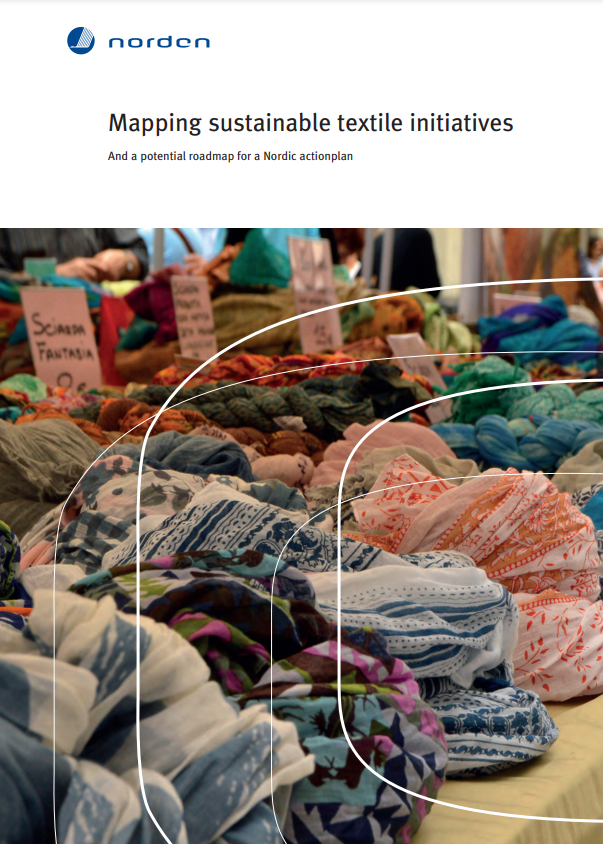
Mapping sustainable textiles initiatives: And a potential roadmap for a Nordic actionplan

This report aims to chart a plan for a coordinated Nordic effort towards sustainable development in textiles and identify ongoing initiatives in the area. The aim was an ambitious plan with a potential for significant reductions in environmental pressures, but also green growth. To reach these goals, we staked out four regions a Nordic plan should include.

Making Clothing Last: A Design Approach for Reducing the Environmental Impacts

  • av

This article discusses the extent it is possible to delay clothing disposal through improved design, thus reducing negative environmental impacts. This has been done by including user centered design methods into more traditional quantitative consumer research to give new insights for design. Empirical data on reasons for disposal of 620 clothing items from 35 persons in 16 Norwegian households was collected. In total, 70 different disposal reasons were registered, which were combined into seven main categories.

Clothing disposal habits and consequences for life cycle assessment (LCA)

  • av

This chapter discusses the effects of end-of-life scenarios to the life cycle assessment (LCA) calculations. Consumers’ decisions in the disposal phase of clothing are crucial from an environmental point of view, as they affect the lifespan of clothing, as well as the potential for reuse and recycling. In doing this, examples of Norwegian consumers’ clothing use and disposal practices are used.
We will present statistics for the current situation in Norway as well as qualitative material on clothing disposal practices and discuss disposal methods and frequencies. Instead of assuming that all clothes are disposed of equally regardless of type of garment, person and place, the LCA analyses should be nuanced in relation to knowledge of disposal practices. Analysis also shows also that if improvements are made in facilitating reuse, clothing lifespans could easily be prolonged.