
International research seminar: Living together for a sustainable common future

Seminar 8th – 9th June 2026, Western Norway University of Applied Sciences, Bergen

At the Western Norway University of Applied Sciences there is a strong research interest in perspectives on nature preservation, sustainability, circular economy, ecocriticism, the human – nature/environment and sensing relations, embodied knowledge and the role and consequences of consumption in outdoor life traditions. These are fields that often compete for influence.

At this seminar we will take a step back to basic questions about our future living conditions and take the concept of conviviality, our way of living together, as a starting point and steppingstone. This starting point critically reverses the individualistic search for wellbeing and increases the focus to solidarity and living together. Even if so called green spaces and time spent on outdoor activities are proved beneficial for health, using nature as a remedy and searching for wellbeing in nature have been criticized for being individualistic and related to overconsumption and the risk of destroying parts of the natural world.

Keynote speakers:

  • Thomas Fuchs, Professor at Heidelberg University, Germany
  • Helga Synnevåg, Professor at Volda University College, Norway
  • Ingun Grimstad Klepp, Professor at Oslo Metropolitan University, Norway

Read more about the seminar and sign up by clicking here (hvl.no).

Repairability of clothing and textiles: Consumer practices and policy implications

Authors: Anna Schytte Sigaard and Kirsi Laitala

Abstract

Extending product lifetimes through repair is a central strategy in sustainable consumption and circular economy initiatives. This article examines how consumers evaluate textile damages and potential to repair, drawing on wardrobe interviews with 28 Norwegian households. Over a six-month period, we tracked 3211 clothing and household textile items going out of use, of which only 107 (3.3 per cent) had been repaired or altered prior to disposal, almost exclusively as home repairs. Based on participant evaluations, we developed a three-level repair scale that reflects perceived repair complexity and feasibility. This scale, combined with item-level damage data, reveals both practical and conceptual challenges in promoting textile repair. Repairability in textiles is more complex than in other product groups, such as electronics, because many common damages fall outside the scope of conventional repair schemes. We argue for a practice-based understanding of repairability that accounts for the interaction between damage types, consumer competences, cultural meanings and systems of provision. Our policy recommendations highlight the need to go beyond product design and service provision to also support social learning, cultural normalization and the integration of repair into everyday life, recognizing its social and cultural significance as essential for effectively extending clothing lifespans.

Click here to read the article in full (intellectdiscover.com)

Avoiding synthetic fibres by choice: Strategies employed by businesses and their policy recommendations
Authors: Irene Maldini, Ingun Grimstad Klepp and Kate Fletcher

Abstract

Clothing and textiles are increasingly made of synthetic (fossils-based) fibres, enabling rapid growth in overall production volumes in this sector, with significant environmental impact. This research aims at understanding the strategies of companies that are actively working to confront this trend by trying to avoid or reduce synthetic content in their products. Fifteen companies are interviewed to gather their strategies in resisting synthetic fibres. These include four companies born with a plastic-free mindset, five companies that define themselves as a wool or cotton company despite using other materials, and six companies that aim at reducing synthetic use as part of a broader approach to sustainability and the quality of the products offered. The study analyses the barriers and enablers that affect their endeavours and proposes a series of policy recommendations to counter current developments. Barriers experienced by companies include synthetics’ low price, their physical characteristics enabling elasticity, durability and impermeability, the narrative of plastic recycling as a questionable sustainable solution, the bias of sustainability indicators and production technologies, and specific fashion trends calling for the material characteristics mentioned above. Some enablers mentioned are concerns from the company leadership about the growth of synthetics and associated microplastic release, the role of public policy and procurement in driving the change, resistance to synthetics by users in specific products (e.g. childrenswear), efforts to produce with the company’s own recycled materials, and to achieve a more intensive use of their products. The study concludes with policy recommendations such as stopping subsidizing petrochemicals, sanctioning overproduction practices, promoting true pricing and discriminating tax rates, improving sustainability metrics, targeted R&D support for natural and local materials and a fibre-to-fibre focus for recycling policy, so that the overall volume of textile production and the content of synthetics in it can be reduced.

Click here to read the article in full (intellectdiscover.com)

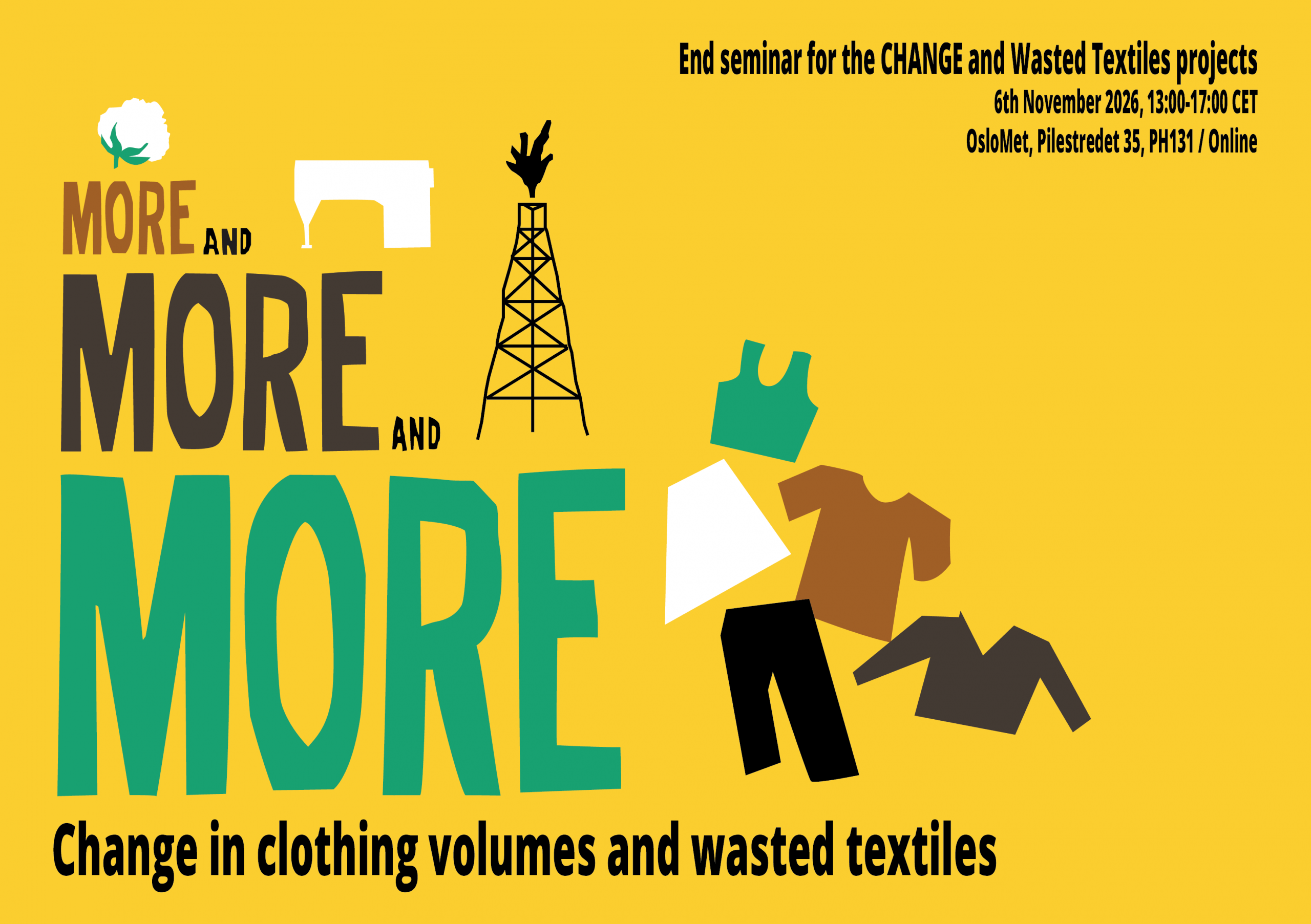
MORE and MORE and MORE: Change in clothing volumes and wasted textiles

Hybrid seminar torsdag 6. november 2025, 13:00-17:00 CET.
OsloMet, Pilestredet 35 / Online.
Vi inviterer til sluttseminar for CHANGE og Wasted Textiles projektene.

The title and the illustration of the seminar are inspired by the book «More and More and More: An All-Consuming History of Energy» by Jean-Baptiste Fressoz, which describes how energy innovation has not led to energy transitions, but rather the use of more and more and more energy. We found this to be a suitable title also for a seminar that concludes two projects, which have studied the drivers of the increasing volumes of clothing from two different angles.

The seminar will be chaired by Prof. Kate Fletcher, MMU, and Jens Måge, SirkNorge and present central findings from both projects, ranging from historical knowledge to contemporary consumption and political implications of the research, through to following and future research.

While the final program is still in the making, we invite you to save the date.


PROGRAMME

13:00 – Welcome

13:05 – Context

Two projects, two approaches to the same problem
// Ingun Grimstad Klepp, Professor in Clothing and Sustainability, SIFO, OsloMet

13:20 – New knowledge

Circular Habits, Linear Results – Do Repair and Reuse Slow Wardrobe Growth?
// Kirsi Laitala, Senior Researcher, SIFO, OsloMet

More than enough: Gender and clothing volumes in Norwegian wardrobes
// Vilde Haugrønning, PhD Candidate, SIFO, OsloMet

Textile disposal volumes from Norwegian households
// Anna Schytte Sigaard, PhD Candidate, SIFO, OsloMet

The limitations of product durability and longevity to reduce environmental impacts
// Irene Maldini, Senior Researcher, SIFO, OsloMet

Sustainability impact analysis of Extended Producer Responsibility for the Norwegian consumer textiles sector
// Meron Assefa Arega, Senior Researcher, SINTEF

Working to reduce plastic and production volumes in fashion education and business
// A conversation between Gisle Mardal, NF&TA and Tone Skårdal Tobiasson, NICE Fashion

The upcoming EPR legislation and the market experiences we have gained to date
// Kerli Kant Hvass, Assistant Professor, Aalborg University

Direct impact: Experiences from open discussions over museum objects
// Bjørn Sverre Hol Haugen, Norsk Folkemuseum

16:00 – Offspring

New projects and applications: Continuations of and reactions to the examined perspectives
// Ingun Grimstad Klepp, Professor in Clothing and Sustainability, SIFO, OsloMet. and Kate Fletcher, Professor of Sustainability, Design and Fashion Systems, MMU

16:25 – Mingling and refreshments

Watch the seminar recording below:

re-(t)exHile / Oslo – tekstilkunst, ansvar og globalt avfall

Utstilling og seminar oktober 2025, 16:00-19:30, 18. oktober 2025, 12:00 – 17:30
Deichman Bjørvika

Et kraftfullt kunstprosjekt som syr sammen historier om mote, miljø og koloniale strukturer.

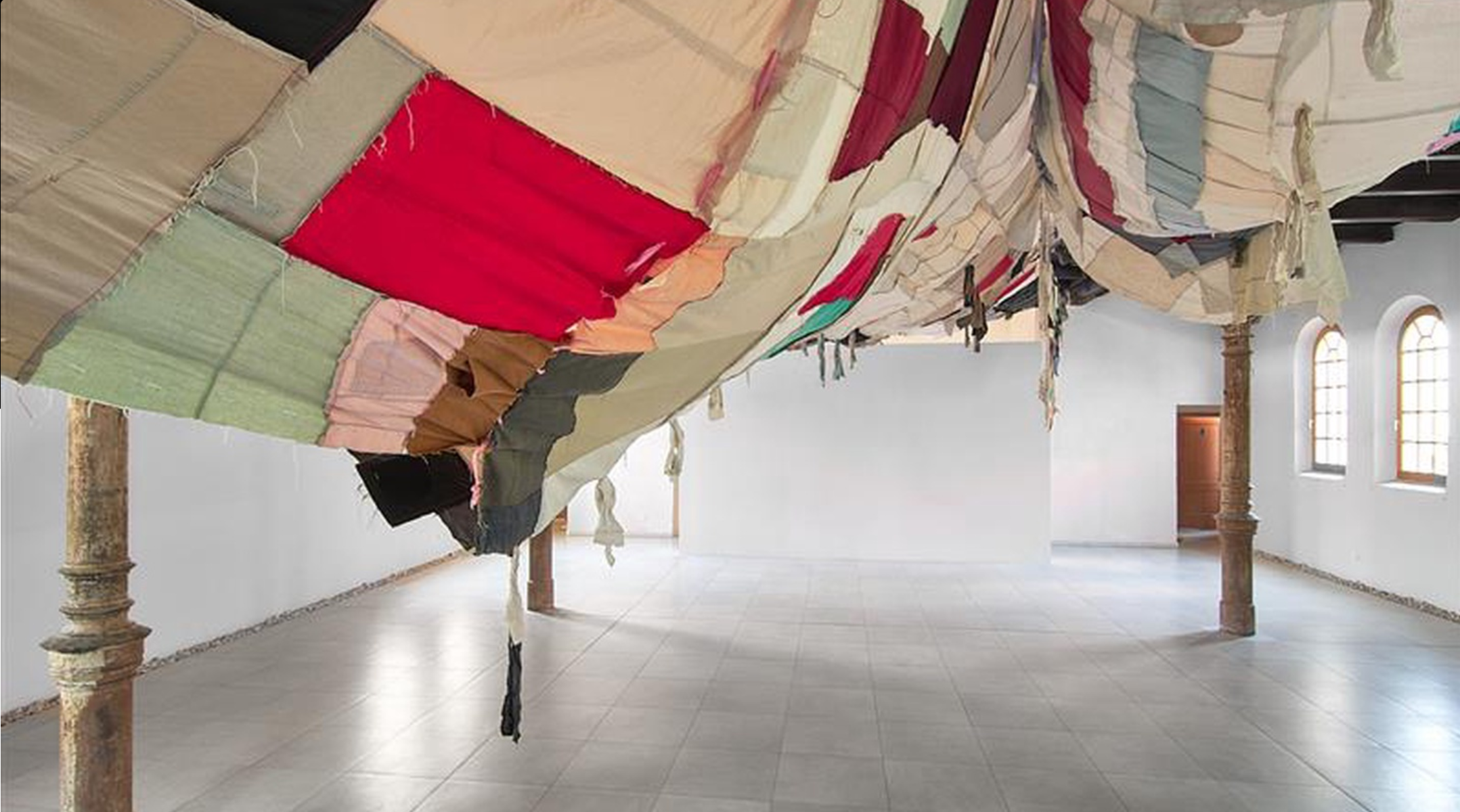
re-(t)exHile er et internasjonalt kunstnerisk forskningsprosjekt som undersøker konsekvensene av den globale tekstilavfallskrisen. Prosjektet startet i Lagos og har siden vokst gjennom kollektivt syarbeid og tekstilinstallasjoner i Slovakia, Chile – og nå Oslo.

I oktober kommer prosjektet til Deichman Bjørvika i samarbeid med KORO, med en installasjon og et internasjonalt seminar. Her inviteres publikum til å reflektere over fast fashion, overproduksjon og Europas rolle i den globale strømmen av brukte klær. Kunstverket utvides gjennom samarbeid med studenter fra KHiO og frivillige fra ulike bakgrunner.

Prosjektet avsluttes med en performativ intervensjon i Oslo Rådhus, der tekstiler fra alle prosjektets kapitler samles – som en visuell og symbolsk gest mot de gjentakende koloniale mønstrene i moteindustrien.

Et prosjekt av Maria Alejandra Gatti, Martinka Bobrikova, Oscar de Carmen og Anto Lloveras

Program

Fredag 17. oktober

16:00 Velkommen ved KORO og Erik Kaspartu

16:10 Introduksjon til re-(t)exHile og rundebordssamtale

17:00 Foredrag: Making fast fashion out of fashion – Ingun Grimstad Klepp

17:50 Foredrag og dokumentar: Sowing imagination – Andrei Fernandez

18:40 Foredrag: The violence of donated clothing – Sunny Dolat

19:00 Filmvisning: Delivery Details – The Nest Collective

19:20 Avslutning

Lørdag 18. oktober

12:00 Velkommen

12:05 Foredrag: Responsible Consumers and the Environmental Impact of Fashion – Outi Pyy

13:10 Workshop: Broken No More: The Art and Joy of Repair – Marium Durrani

14:50 Foredrag: Congruence of Cloth – Kallol Datta

15:50 Foredrag: Displacement grammars – Rodolfo Andaur

16:40 Rundebordssamtale med alle gjester, moderert av Kwame Aidoo

17:30 Avslutning

Klikk her for å lese mer om arrangementet (deichman.no).

Nytt prosjekt med forfriskende endring i perspektivet på natur og bærekraft

Tekst: Kjersti Lassen

Prosjektet GREEN BLOOD: Undressing hierarchies to reduce pressure on land through Forest Finn perspectives vil gi innsikt i forholdet vårt til naturen gjennom kulturen til skogfinnene, en av våre nasjonale minoriteter.

Prosjektet har fått 10,5 millioner fra Norges forskningsråd som forskerprosjekt for fornyelse, under temaet Arealer under press.

Green Blood er utviklet av Ingun Grimstad Klepp, Kate Fletcher og Lisbeth Løvbak Berg. Klepp er mangeårig professor i klær og bærekraft ved SIFO, og har doktorgrad i friluftsliv med feltarbeid på Finnskogen. Kate Fletcher ved Manchester Metropolitan University forsker på klær, design og bærekraft med vekt på forholdet til natur, mens Lisbeth Løvbak Berg er forsker med bakgrunn som klesdesigner med vekt på bærekraft.

– Det er åpenbart for alle som ønsker å se det at vår måte å bruke naturen på er katastrofal, sier Klepp.

– Etter å ha arbeidet i mange år innenfor «bærekraft» blir det tydeligere og tydeligere at den politikken som utformes, ofte under overskriften «sirkulærøkonomi» ikke leder til reduserte miljøbelastninger og ikke bygger på forskning.

– Grønt Blod er derfor en forfriskende endring i perspektiv. Vi skal ikke banke hodet mer i den muren mot endring som kort kan kalles vekst, men forsøke å finne sporer til endring i oss selv, og i en av mange kulturer med andre tradisjoner for å være i naturen, sier hun.

Slektskap til skogfinsk kultur

Navnet Grønt blod er litt tvetydig, forteller Klepp.

– Det referer til at vi alle er natur og ikke bare er brukere av natur som noe utenfor oss selv. Det kan også forstås som en arv, slik blått blod er å ha adelige slektninger vil grønt blod være slektskapet til skogsfinsk kultur. Om dette kun forstås som et «blodsbånd» eller forstått mer som alle som føler på dette slektskapet lar vi være åpent.

Hun mener det er mye å lære av den skogfinske kulturen.

– Det er mye vi ikke vet. I høst åpner et praktfullt nytt museumsbygg for skogfinsk kultur. I prosjektet samarbeider vi med muset, og vi vil bruke dans og bevegelse, klær og sko for å åpne opp for andre måter å være i og med naturen.

Ull i politikk, produksjon og bruk

Foredrag under ULLVEKA på Voss
Sted: Fleischers Hotell Tid: 4.10.2025, kl. 14:00
Foredrag med Ingun Grimstad Klepp

Samandrag

Politikk: Manglande satsing på og diskusjon om lokal tekstilsproduksjon. Korleis kjem ull ut i diskusjonar om «sirkulær» økonomi? Eller… kvifor er
norsk ull ein miljøversting i EUs system ut frå grøne påstandar, samtidig som ull er svanemerka?
Produksjon: Kvar blir norsk ull produsert? Og kva er tilstanden for ull andre stader i Europa? Kva vert gjort av produktutvikling og då særleg for den ulla som ikkje er eigna for garnproduksjon?
Bruk: Det kan vera heilt praktisk som vask og stell, men kan også handla om haldningar til ull, og korleis ulla blir brukt av norske forbrukarar. Kan også vera brukseigenskapar for ulike typar ull og kva som passar til kva, og kvifor (med andre ord kva er kvalitet?).

Klikk her for meir infromasjon om Ullveka 2025 og påmelding (ulluken.no)

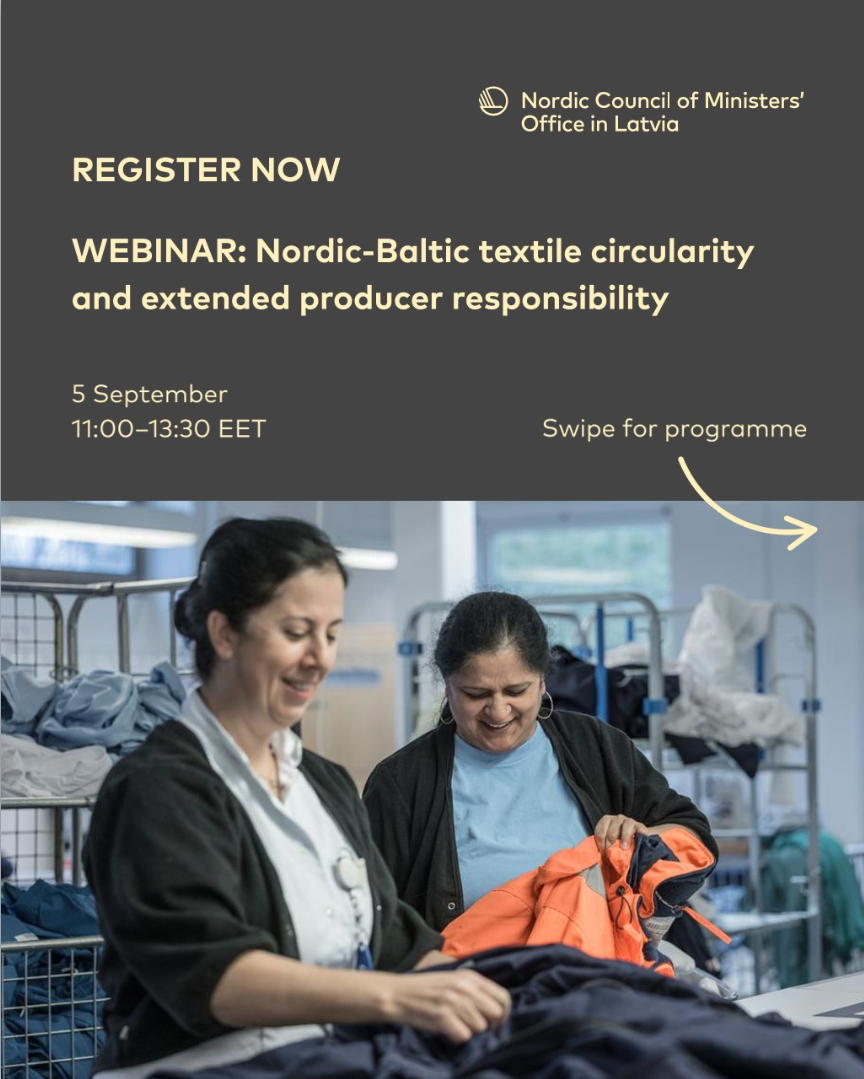
Nordic-Baltic Textile Circularity and Extended Producer Responsibility (EPR)

Webinar 5th September 2025, 10:00–12:30 CET

The Nordic Council of Ministers’ Office in Latvia invites you to a webinar.

What is the status of textile circularity in the Nordic-Baltic region, and how could Extended Producer Responsibility (EPR) help accelerate collection, sorting, reuse and recycling of post-consumer textiles?

What lessons can be drawn from early national efforts in Latvia and the Netherlands – and which pitfalls should be avoided?

PROGRAMME HIGHLIGHTS

Panel I: Textile circularity in the Nordic-Baltic region With contributions from Pirjo Heikkilä, Kaj Pihl, Rudrajeet Pal, Viktorija Nausėdė and Kerli Kant Hvass, PhD. Moderated by Dace Akule.

Panel II: Towards effective EPR in the Nordic-Baltic region Featuring Piret Otsason, Mairita Luse, Aistė Rakauskienė, Janine Röling, Jens Maage and Traci Kinden. Moderated by Kerli Kant Hvass, PhD.

Closing reflections (13:20 EET / 12:20 CET) By Betina Simonsen, CEO of Lifestyle & Design Cluster (DK).

Register here: https://lnkd.in/dShwbGrs

Tekstilbønder: Kartlegging av fiber- og tekstilproduksjon i Norge

Sammendrag

I dette notatet legger vi frem resultatene fra en kartleggingsundersøkelse gjennomført i prosjektet Tekstilbønder og motelandbruk: Ny giv for lokal utnyttelse av alle landbrukets ressurser, ledet av Fibershed Norge. Ut ifra svar fra 124 små og 8 større aktører ser vi at grasrota i den norske tekstile verdikjeden er mangfoldig, med hovedvekt på strikkere/vevere og/eller produsenter av dyrefiber fra både sau og andre fiberdyr. Respondenter fra alle deler av den tekstile verdikjeden er representert, også noe dyrking av fiberplanter. Salg og rammevilkår er de største flaskehalsene. Svarene bærer preg av mangesysleri og stor samarbeidsvilje i en verdikjede preget av dårlig lønnsomhet og lite politisk støtte.

Les notatet her.

CISUTAC Sustainability Forum #1: Engaging citizens in sustainable consumption of textiles and textiles waste separation

Webinar 13th May, 11 – 12:30 CET

The CISUTAC Sustainability Forum’s new webinar series is designed to inspire dialogue and share practical knowledge for a more sustainable textile sector. Sessions will bring together experts, innovators, and changemakers to explore actionable strategies for closing the loop and promoting circularity across the textile value chain. Professor Ingun Grimstad Klepp will participate in the first edition, taking place on 13 May and hosted by ACR+ (Association of Cities and Regions for Sustainable Resource Management). This session will focus on key findings related to textile waste collection. Also explored will be real-world case studies from across Europe and examining how citizen behaviour can directly impact waste prevention.

Agenda

  • 11:00-11:05- Welcome & Introduction | Serena Lisai, ACR+

PART 1: ENGAGING CITIZENS IN TEXTILE WASTE SEPARATION

  • 11:05-11:15 – The role of Local and Regional Authorities in engaging citizens to sort textile | Jean-Benoît Bel, ACR+ 
  • 11:15-11:25 – Engaging inhabitants in high-rise building in textile waste separation: the experience of Gothenburg | Sandra Alm, City of Gothenburg 
  • 11:25-11:35 – Discussion and Q&A

PART 2: ENGAGING CITIZENS IN SUSTAINABLE CONSUMPTION

  • 11:35-11:45 – Understanding consumer behaviour to drive change | Ingun Grimstad Klepp, clothing research group at Consumption Research Norway (SIFO)
  • 11:45-11:55 – Redirecting communication towards circular alternatives: UNEP principles for sustainable fashion communication | Minori Lee, UNEP 
  • 11:55-12:05 – How to influence citizens’ textile behaviours | Martyn Lowder, WRAP 
  • 12:05-12:20 – Discussion and Q&A
  • 12:20-12:30 – Closing remarks

Click here to register.