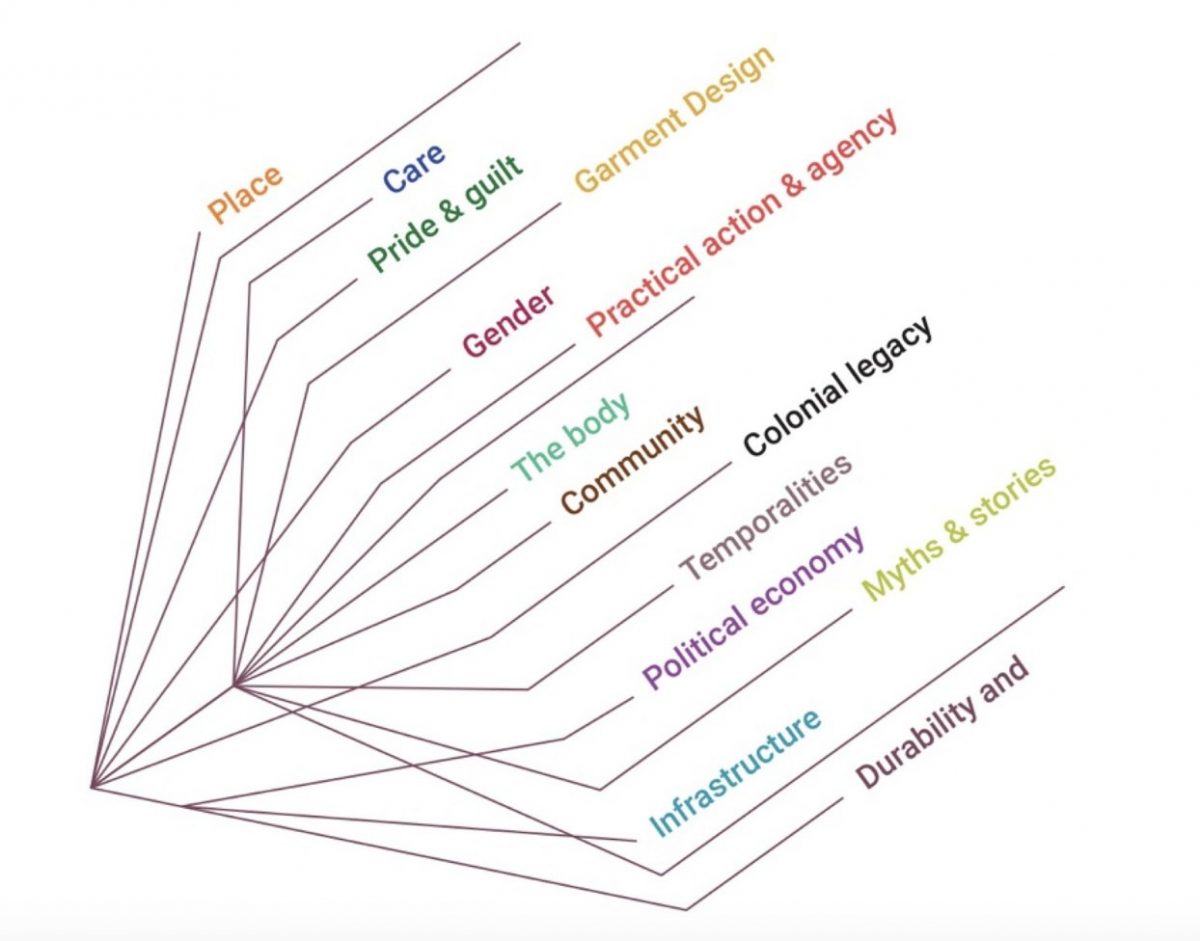
‘Creating’ variety without waste: Pre-industrial dress practices as inspiration for updating the sustainability discourse

Authors: Ingun Grimstad Klepp, Bjørn Sverre Hol Haugen, Marie Ulväng, Pernilla Rasmussen, Ingrid Haugsrud

This study explores how ideas of variety were created and practised among women and men of different social strata in Norway and Sweden before the big changes in the second half of the nineteenth century. Three researchers with in-depth knowledge of clothing during that period look at their material through questions they developed based on current clothing and sustainability discourse. The material consists of both written (diaries, inventories, etc.) and oral sources and clothes. We look at acquisition and use of clothes in the period of 1780–1850 to understand how variety was achieved to discuss whether historical research can inform today’s debate on clothing and the environment. Despite strong limitations in terms of regulations for trade, strict dressing codes, expensive textiles and a restricted economy, variety was achieved. An important prerequisite was that the fabrics themselves were seen as valuable and durable, while the shape, trimmings, accessories and the like could be varied. Buying new ready-made clothes was not yet an option. Access to clothes and accessories was an intricate web involving both caring, sharing (lending, renting, inheritance and shared access) and alterations done by amateurs and professionals. The wardrobe was a well-planned system with movement between occasions and over time, consisting of clothes with different functions and temporalities. The present debate with an emphasis on circular economy solutions and the industry as the main stakeholder overlook clothing as a complex cultural and historical phenomenon. Variety in clothes can be achieved in much less resource-intensive ways by focusing on more valuable fabrics.

Reference

Klepp, Ingun Grimstad ; Haugen, Bjørn Sverre Hol; Ulväng, Marie; Rasmussen, Pernilla; Haugsrud, Ingrid (2024). ‘Creating’ variety without waste: Pre-industrial dress practices as inspiration for updating the sustainability discourse. Clothing Cultures. Vol. 11.
https://doi.org/10.1386/cc_00088_1

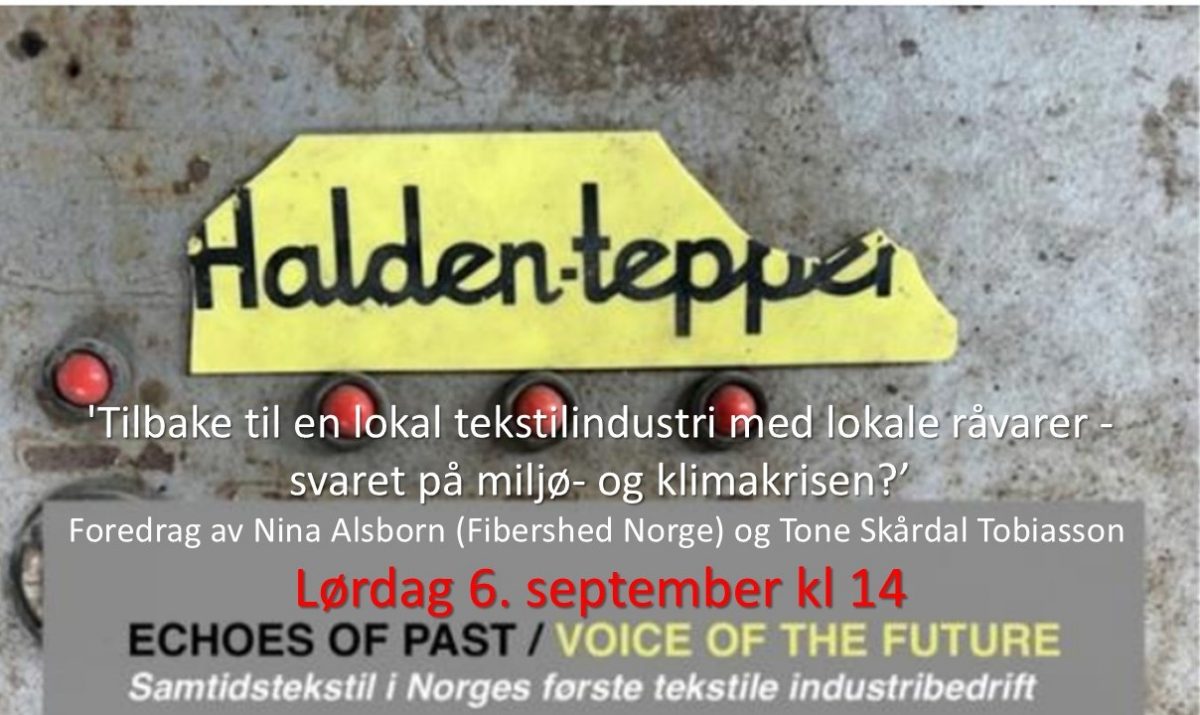
Fortidens nøkler til fremtidens løsninger?

‘Tilbake til en lokal tekstilindustri med lokale råvarer – svaret på miljø- og klimakrisen?’

Lørdag 6. september kl 14
Fosseveien 14 Tisledal, Halden

Foredrag av Nina Alsborn (Fibershed Norge) og Tone Skårdal Tobiasson (journalist og forfatter)

I møte med den globale miljø- og klimakrisen som tekstil og motebransjen er en stor bidragsyter til, har EU lansert en strategi de mener skal gjøre fast fashion umoderne (out of fashion). Men med virkemidler som går i full fart i feil retning. Norge – som annerledeslandet – kan sitte på løsningen på den samme krisen – med fortiden som nøkkelen til fremtidens løsninger. Nøkkelen ligger i lokale råvarer, spinnerier, veverier og strikkefabrikker og et fornyet fokus på mangesysleriet, lokale samarbeidsformer i nasjonale og regionale nettverk, og ikke minst politikk som heier på at vår kulturarv på alle plan har en verdi i fremtidens økonomi.

Nina Alsborn er lektor, tekstilhåndverker og kursleder med master i tradisjonskunst, og har et brennende engasjement for bærekraftige, helnorske tekstilverdikjeder. Som tidligere produksjonsleder ved et småskala spinneri og medgrunnlegger av Fibershed Norge, jobber hun for å styrke grasrota i norsk tekstilproduksjon gjennom samarbeid, kunnskapsdeling og lokal ressursutnyttelse.

Tone Skårdal Tobiasson er journalist, redaktør og forfatter, styremedlem i Union of Concerned Researchers in Fashion, og vara i styret til Fibershed Norge. Hun er ansvarlig for norsk tekstilindustri i Store norske leksikon og medforfatter av blant annet Local Slow and Sustainable Fashion: Wool as a Fabric for Change, Norsk strikkehistorie og Lettkledd – velkledd med lite miljøbelastning.

Kunstutstillingen Echoes of past – voice of the future setter søkelys på tekstilen i kunst og industri med virksomheten til Haldens Bomuldspinderi & Væveri som bakteppe.

Fabrikken er Norges første tekstile industribedrift, og ble etablert i Tistafossen av Mads Wiel i 1813 som Mads Wiels Bomuldsfabrique. På sitt største, rundt 1960, var bedriften et bredt tekstilforetak som spant, farget, vevet og etterbehandlet bomull, ull og kunstfiber. Fabrikken eide 7 bygg, hadde 41 spinnerimaskiner, 157 vevstoler og 420 ansatte. I 1971 var det slutt, konkurransen fra import tok knekken på norsk tekstilindustri.

I 2009 kjøpte kunstnere en av fabrikkbygningene, senere kjøpte flere kunstnere seg inn i et annet av fabrikkens bygg. I dag har 21 kunstnere arbeidsplass i Tistedal.

Utstillingen vil finne sted i en rå industrihall på 350m2 i Fosseveien Atelierfellesskap, Fosseveien 14.

Initiativtakerne til prosjektet er Julie Skarland, Lisa Pacini, Gidsken Braadlie og Anne Knutsen. I tillegg har vi invitert Franz Schmidt, Andrea Galiazzo, Kristina Müntzing og Karin Lindell til å vise arbeider i utstillingen.

Kledd for tilhørighet: Barns bruk av klær for å skape likhet

Authors: Ingrid Haugsrud, Ingun Grimstad Klepp & Clara Julia Reich

Clothes are an important part of everyday life. Having the right clothes
for the occasion and weather is a strong norm that is crucial to fitting in. Based
on wardrobe studies with 9 12-year-old boys and girls, as well as interviews with
22 parents, we have investigated the children’s wardrobe and their efforts to appear
properly dressed in their own, peers’ and parents’ eyes. Uniforms are an alternative
to current school dress practices that both adults and children are familiar with.
Children perceive it as a way to play with other styles, or as a way to create equality.
Adults highlight the potential of school uniforms to mitigate commercial pressure.
The children emphasized the value of being similarly dressed and showed inventive
and fun ways to develop competence around creating equality. To be oneself is to
be like one’s peers. Children take active responsibility for creating equality.

Klikk her for å lese hele kapittelet.

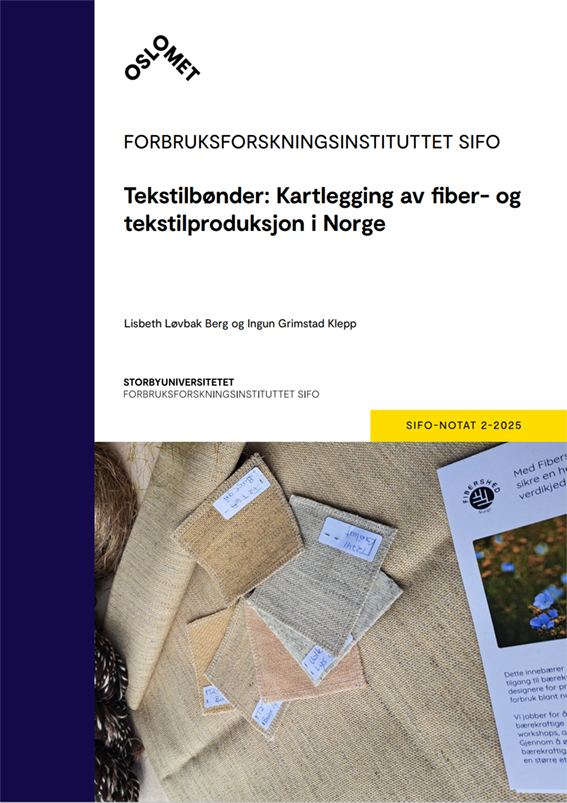
Tekstilbønder: Kartlegging av fiber- og tekstilproduksjon i Norge

Sammendrag

I dette notatet legger vi frem resultatene fra en kartleggingsundersøkelse gjennomført i prosjektet Tekstilbønder og motelandbruk: Ny giv for lokal utnyttelse av alle landbrukets ressurser, ledet av Fibershed Norge. Ut ifra svar fra 124 små og 8 større aktører ser vi at grasrota i den norske tekstile verdikjeden er mangfoldig, med hovedvekt på strikkere/vevere og/eller produsenter av dyrefiber fra både sau og andre fiberdyr. Respondenter fra alle deler av den tekstile verdikjeden er representert, også noe dyrking av fiberplanter. Salg og rammevilkår er de største flaskehalsene. Svarene bærer preg av mangesysleri og stor samarbeidsvilje i en verdikjede preget av dårlig lønnsomhet og lite politisk støtte.

Les notatet her.

The environmental impact of product lifetime extension: a literature review and research agenda

Authors: Irene Maldini, Ingun Grimstad Klepp & Kirsi Laitala

Abstract

Consumer goods environmental policy is increasingly focusing on product durability and product lifetime extension (PLE) to reduce their impact. Given the growing societal relevance of PLE, this review investigates the discourse about its environmental effects, and the empirical knowledge that substantiates this discourse. One hundred and nine relevant articles were selected from 388 distinctive records identified in two databases, Scopus and Web of Science. The statements about the environmental effects of PLE in these publications were extracted and analysed, and a detailed process of backward citation tracking was followed to identify the empirical base substantiating these statements, leading to 85 additional publications that were included in further analyses.

The findings show that the main environmental benefits expected from PLE are related to reductions in the volume of goods produced, which result from expected reductions in demand due to delayed product replacement. However, this reasoning is based on two under-researched assumptions about consumer and industry behaviours: that the demand for new products is driven by replacement, and that decisions on production volumes in the industry are driven by consumer demand. The empirical base in the field is dominated by quantitative assessments that reproduce these assumptions rather than studying them. The findings from a handful of field studies that investigate the presumed behaviour, question that it applies. Therefore, a research agenda is proposed to better understand the relations between product lifetimes and material flows and the influence of consumer and industry behaviour over them. Moreover, given the current gap between the durability discourse and the empirical knowledge that would be needed to substantiate it, recommendations are made for academics, policy makers, advocacy groups, and businesses environmental strategists to moderate their expectations from product longevity measures.

Click here to read the full article (elsevier.com).

Comparing Male and Female Wardrobes: Gender Dynamics in the Practice of Dressing

Authors: Vilde Haugrønning, Ingrid Haugsrud

Abstract

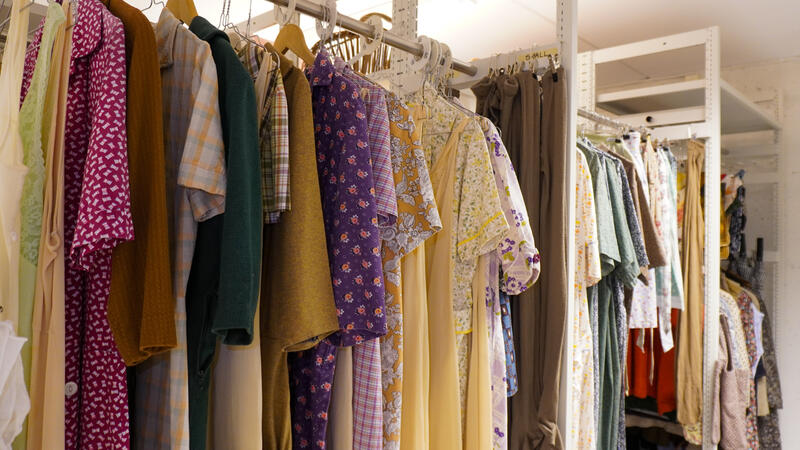
This chapter explores the influence of gender on clothing consumption and the impact on differences in clothing volumes between men and women. Based on a qualitative and quantitative wardrobe study, we employ Schatzki’s (2002) social ontology of practice combined with Butler’s (1990) gender performance concept to examine the relationship between gender and clothing consumption in 15 households in Norway. The findings show that women had on average 497 items and the men had 258 items, and the main difference between male and female wardrobes was due to the number of items per occasion. These findings highlights the complexities and tensions faced by women in navigating clothing norms and maintaining a balance in the practice of dressing between appropriate dress, feminine expressions and having an ideal and more sustainable wardrobe. This chapter contributes to a better understanding of the interplay between occasions and gender dynamics that shape clothing consumption patterns. Moreover, it illustrates the potential of ‘occasion’ as an analytical concept and the implications of gender in clothing consumption, challenging the prevailing studies on clothing and fashion that often overlook the nuanced practices and actions that influence clothing volumes.

Klikk her for full artikkel (emerald.com) eller ta kontakt med forfatterne.

Overcoming barriers for «strong» sustainable consumption policy: the case of the Amsterdam Doughnut

Forfatter: Irene Maldini

Abstrakt


This case study of the Amsterdam Doughnut highlights how barriers for “strong” sustainable consumption policy pinpointed in the literature were to some extent overcome in the city policy of Amsterdam, the Netherlands, in the period of 2018–23. The study builds on interviews conducted in 2020 and 2023 with key stakeholders participating in the policymaking process, and on the analysis of relevant policy documents. It identifies a few factors that played a role as levers of the barriers mentioned in the literature. These factors facilitated the inclusion of upper consumption limits in a few policy areas at a conceptual and strategic level. However, resistance to “strong” sustainable consumption measures hindered their translation into concrete actions, targets, and implementation. Lastly, a change of emphasis in the city strategy towards the “social foundation” of the Doughnut Economy framework during the period under study led to a stronger focus on the lower levels of sufficiency, leaving the emphasis on the upper levels behind.

Klikk her for full tekst (taylorFrancis.com).

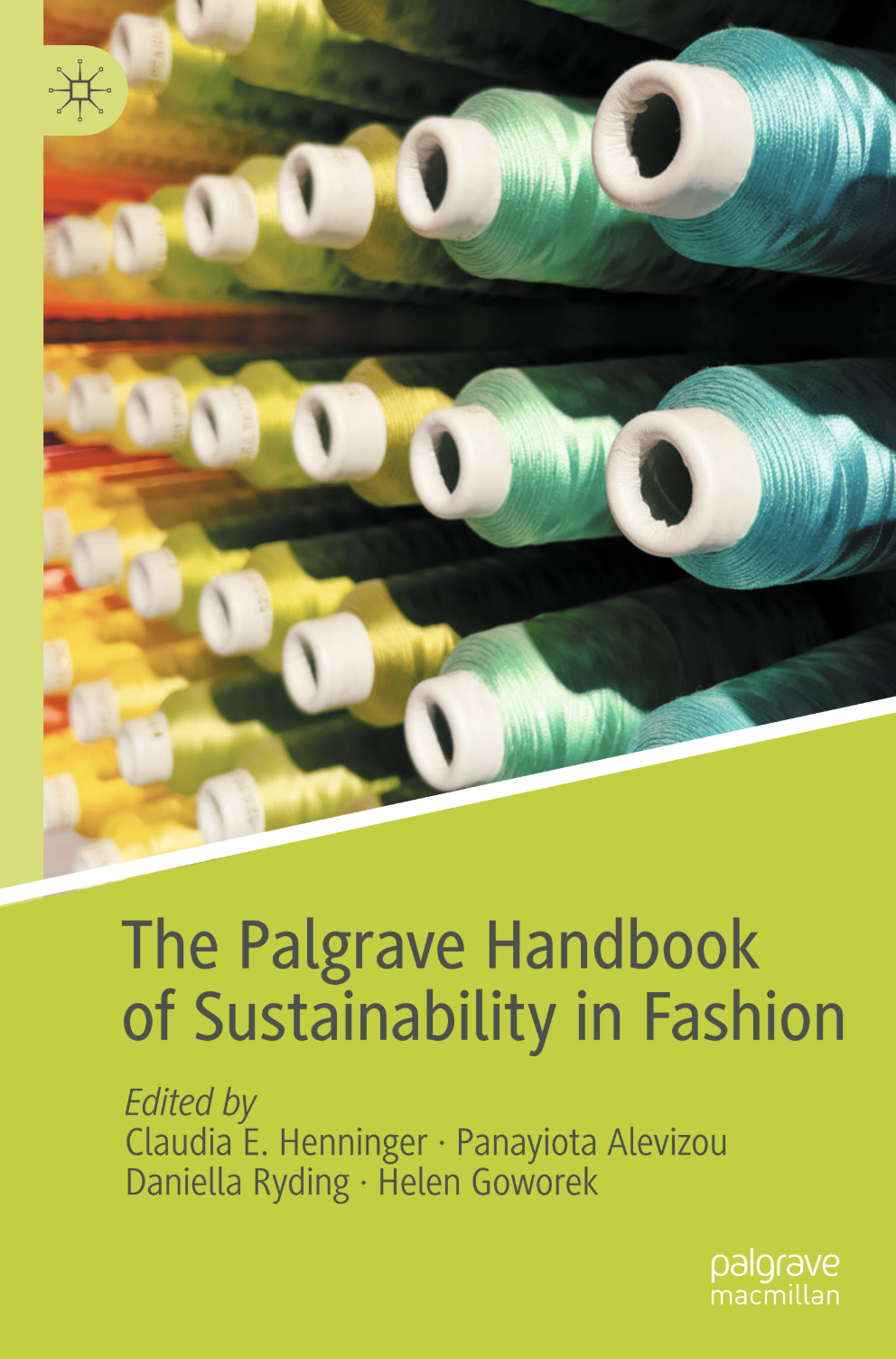
Clothing Care – The Palgrave Handbook of Sustainability in Fashion

Forfattere: Ingrid Haugsrud, Ingun Grimstad Klepp and Kirsi Laitala

Abstract

The impact of the fashion industry on the environment is undoubtedly size-able. In response, the last decade has seen various changes in the fashion industry landscape, from new digital technologies that enhance zero waste productions, the emergence of the digital platform economy, to the development of innovative materials. This Handbook captures key innovations within the fashion industry and brings together work from leading academics, but also practitioners in the field. Offering a comprehensive and global perspective, it covers core topics such as: technological innovations and their impact on sustainable fashion, alternative models of consumption, the circular economy, the role of activism and the future of sustainable fashion. With clear managerial implications, chapters uniquely supplement conceptual work with short practitioner-led case studies that bridge the gap between theory and practice, making this a valuable resource for students and researchers.

Klikk her for lenke til boka og teksten (springer.com)

Decentering Durability: Decarbonizing and Decolonizing Ideas and Practices of Long-Lasting Clothes

Authors: Kate Fletcher and Anna Fitzpatrick

Abstract

Durability is widely recognized as a key feature of materially resource-ful, lower-carbon clothing lives. Yet most of what is known about long-lasting garments is rooted in Euro-American ways of thinking, andreproduces its structures, priorities, values and resulting actions. Thispaper brings a decolonial concern to understandings of clothing durabil-ity to enlarge the conceptual boundaries around it, including those thatbreak apart dominant ideas and approaches to clothing durability inorder to show difference. It presents both the “workings” and the“findings” of a small research project, ‘Decentering Durability’, examin-ing both how research is conducted as well as what is uncovered at the intersection of decolonizing and resource-efficient, decarbonizing agen-das for fashion.

Click here for the full article (tandfonline.com) or contact the authors for a copy.

Holding on or letting go: Conflicting narratives of product longevity

Forfattere: Lisbeth Løvbak Berg, Marie Hebrok

Abstract

Increasing product longevity is seen as an effective way to reduce consumption within the circular economy. This paper explores narratives of product longevity, focusing on textiles, household appliances, and furniture as expressed by Norwegian business representatives and consumers. The study reveals dominant narratives of physical and emotional durability among businesses. Conversely, consumers emphasise managing consumption volumes and their relationship with products based on use contexts and life events. While both groups recognise the importance of physical durability, there’s a disconnect regarding how emotional attachment can be created between user and product, and the significance of production volumes. The study suggests that narratives of product longevity, shift focus from production to consumption, distancing from questions of volume and growth and that efforts should take ‘life durability’ of products into account when designing strategies and interventions aimed at extending product lifespans, including business models and policy directly targeting lower production volumes.

For å lese eller laste ned hele artikkelen, klikk her (sciencedirect.com).